

466 Manget Street, Marietta, GA 30060
To contact a resident: (678) 886-2678
For more information about senior living options: (866) 208-4318
The Blue Garnet Personal Care Home Costs & Pricing
The Blue Garnet Personal Care Home offers competitive pricing for its residents compared to the average costs in Cobb County and the broader state of Georgia. For semi-private rooms, the monthly fee is set at $1,800, significantly lower than the county's average of $2,367 and the state average of $2,529. Similarly, private room rates at The Blue Garnet are priced at $2,000, while residents in Cobb County typically pay around $2,788 and those throughout Georgia face an average cost of $2,864. This positioning not only provides an affordable option for potential residents but also reflects The Blue Garnet's commitment to delivering quality care without compromising on financial accessibility.
| Floor plans | The Blue Garnet Personal Care Home | Cobb County | Georgia |
|---|---|---|---|
| Semi-Private | $1,800 | $2,367 | $2,529 |
| Private | $2,000 | $2,788 | $2,864 |
Senior living communities with a similar price nearby
-
from -$300 / mo

Americare Group
$1,500 / month21.6 miles away -
from +$300 / mo
Premium Personal Care Home
$2,100 to $2,850 / month5.8 miles away -
from -$300 / mo
Yellow Rose at Worley
$1,500 to $2,000 / month6.3 miles away -
from -$300 / mo

Ivy Spring Retirment Cottage
$1,500 / month4.3 miles away -
from -$85 / mo

Park at Johns Creek
$1,715 to $2,115 / month22.9 miles away
Overall Review of The Blue Garnet Personal Care Home
Pros
 The mother loves Blue Garnet.
- The rooms are warm and cozy with ambiance.
- The staff are welcoming and full of joy.
- The staff look and sound motivated.
- The residents enjoy board games and puzzles.
- The Blue Garnet PCH offers more than three meals a day with snacks, personal care, watchful oversight, chair yoga, and art classes, among other activities.
Cons
 The facility had a strong odor of old, harsh urine.
- The reviewer was immediately turned off by the facility.
- It was described as a disgrace and not worth the money.
- They would not recommend this unit to a stray animal.
- It was more than she could afford.
- The facility needed more space.
- The rooms were small, not homey or warm, just plain and nothing special.
- They didn’t really do much.
Review
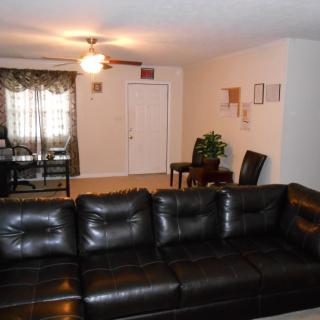
The Blue Garnet Personal Care Home in Marietta is best suited for seniors who prize a warm, sociable, home-like atmosphere and value a staff who appears genuinely engaged. For residents who relish daily opportunities for interaction, board games, puzzles, chair yoga, and art classes, and who want regular supervision and a menu that includes multiple meals with snacks, this setting can feel like a compact, supportive community rather than a clinical facility. The rooms are described as warm and cozy, contributing to a sense of homeliness that makes daily routines feel manageable rather than institutional. In short, it serves well for socially oriented residents who prioritize companionship and visible staff attentiveness over expansive space or clinical sophistication.
However, this community warrants alternatives for certain circumstances. The most serious caveat is cleanliness, one visit report described a strong urine odor and an overall impression of neglect, a red flag that cannot be dismissed. Affordability matters too; for some families the price and room size do not align with expectations, and several reviews note the rooms are small and not particularly spacious or homey. For residents with higher medical needs, memory care requirements, or a demand for larger, more modern accommodations, other communities may offer superior clinical resources and more generous living spaces. In sum, those prioritizing pristine environments, ample private space, or robust medical programming should shop elsewhere.
Pros versus cons: The bright spots are meaningful and tangible. Staff warmth and apparent motivation translate into a caring, engaged daily experience, while activities, meals, snacks, and ongoing oversight give residents structure, belonging, and social contact. For many, these factors alone can justify a smaller footprint or more modest accommodations, and they are the core reason why one resident thrived there for years. Yet the negatives carry real weight. The odor issue speaks to housekeeping standards and trust, not merely aesthetics, and undermines comfort and safety. Small rooms limit personalization and mobility, reducing long-term comfort and possibly increasing frustration. Price concerns compound the challenge, making it hard to justify a higher-cost option with limited space and uncertain housekeeping reliability.
Guidance for families: Schedule a thorough on-site evaluation focused on cleanliness and space. Ask for a walk-through during different times of day to detect any odors, check the frequency and rigor of housekeeping, and verify room sizes and availability of larger units if needed. Confirm what "more than three meals" means in practice, including snacks and special diets, and compare with other communities’ meal quality. Probe staff tenure, training, and caregiver-to-resident ratios, and request recent resident satisfaction notes. Finally, obtain full pricing details, including what is included vs. optional, to determine true value in light of room size and care level.
Decision-ready framing: For a family prioritizing social vitality, staff warmth, and a homey vibe, and who can tolerate smaller living spaces and potential cleanliness concerns, The Blue Garnet offers genuine strengths that can translate into years of comfortable days. For those where pristine cleanliness, larger private rooms, or stronger clinical resources are non-negotiables, exploring alternatives is essential. Memory-care needs, higher-level medical oversight, or a preference for a facility with more expansive common areas and modern fixtures should push decisively toward other options. The key is aligning the resident’s values with the facility’s concrete realities before any commitment.
Bottom line: The Blue Garnet Personal Care Home presents a workable choice for socially inclined seniors who can live comfortably with compact rooms and a watchful eye on housekeeping, and who can afford the value proposition of robust social programming. It is not suitable for families that cannot tolerate odor or cleanliness concerns or for residents requiring strong clinical resources or expansive living space. A careful tour, candid questions, and side-by-side comparisons with comparable communities will determine whether this setting fits. When aligned with the resident’s preferences and the family’s budget, it can be a satisfying home; when misaligned, the choice should clearly sit elsewhere.
 Board and Care Home
 Activities off-site
 Beautician on-site
 Indoor common areas
 Outdoor common areas
 Private
 Respite or short term stays offered
 Wheelchair accessible showers
 William B Hartsfield-Atlanta International (22 miles away)
 Ambulatory care
 Diabetic care
 High acuity care
 Medication management
 Meals provided








 Financing Long-Term Nursing Home Care Through Social Security: A Thorough Exploration
 Essential Knowledge on Pneumonia in Older Adults
 Exploring Palliative Care in the Home: A Comprehensive Overview