
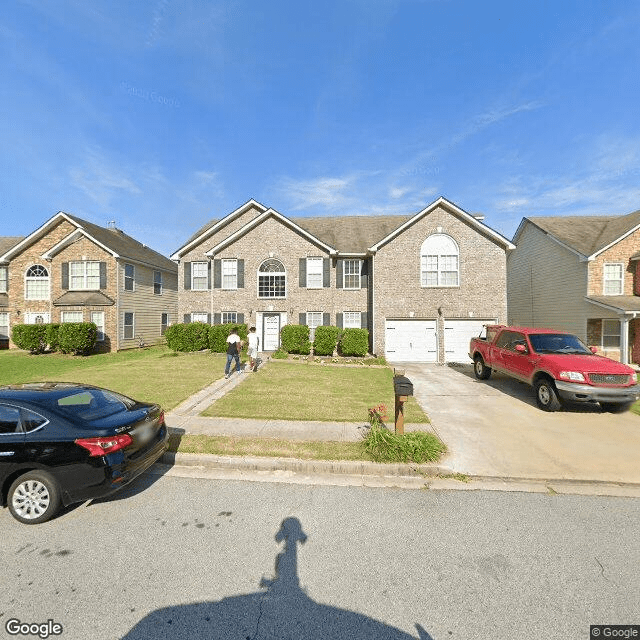
6631 Chason Woods Court, Jonesboro, GA 30238
To contact a resident: (678) 817-3903
For more information about senior living options: (866) 208-4318
Precious Touch Personal Care Home Costs & Pricing
Precious Touch Personal Care Home offers competitive pricing for its services when compared to regional and state averages. For semi-private accommodations, residents can expect to pay $1,500 per month, substantially lower than the Fayette County average of $2,236 and the Georgia state average of $2,529. Private rooms at Precious Touch are priced at $2,000, which also presents a cost-effective option relative to the county's $2,493 and the state's $2,864 averages. While the 1-bedroom option at Precious Touch is listed at $5,499 - a higher rate than both Fayette County's average of $3,643 and Georgia's median of $3,412 - this discrepancy may reflect additional amenities or specialized care that enhances residents' quality of life. Overall, Precious Touch Personal Care Home provides a range of pricing that appeals to those seeking value in personal care accommodations while potentially justifying higher costs in certain categories through exceptional service and facilities.
| Floor plans | Precious Touch Personal Care Home | Fayette County | Georgia |
|---|---|---|---|
| Semi-Private | $1,500 | $2,236 | $2,529 |
| Private | $2,000 | $2,493 | $2,864 |
| 1 Bedroom | $5,499 | $3,643 | $3,412 |
Senior living communities with a similar price nearby
-
About the same
Americare Group
$1,500 / month21.4 miles away -
About the same
Lend A Hand Personal Care Home
$1,500 to $2,000 / month5.8 miles away -
from -$150 / mo
Le'glen Personal Care Home
$1,350 to $2,150 / month11.6 miles away -
from +$200 / mo
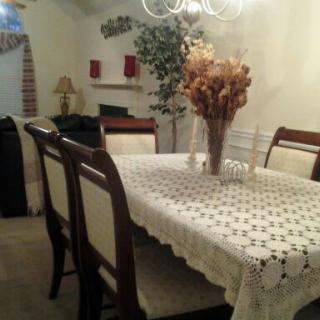
Rose's Premier Personal Care Home
$1,700 / month8.3 miles away -
from +$200 / mo
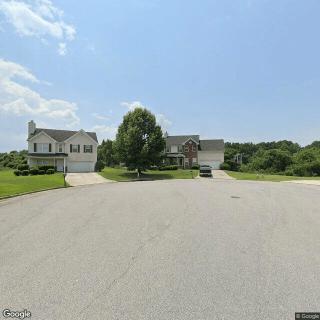
Around the Clock Personal Care Home, LLC
$1,700 to $2,200 / month11.0 miles away
Overall Review of Precious Touch Personal Care Home
Pros
 The facility's cleanliness and maintenance were fine.
- The resident had a roommate.
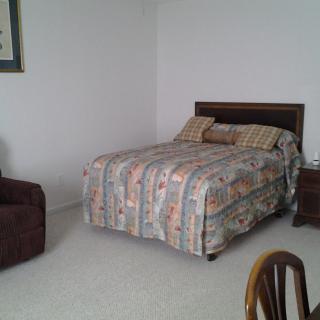
- Her bedroom was normal-sized and adequate for her needs.
Cons
 The staff provided no proactive intervention for anything.
- The staff didn’t even know how to test for a stroke.
- The reviewer wouldn’t recommend Precious Touch.
- Communication from the staff was poor; information was shared only a couple of times.
Review
Precious Touch Personal Care Home in Jonesboro is best suited for seniors who want straightforward assisted living delivered in a clean, orderly setting, with predictable daily routines and a modestly sized living space. The community appears to support residents who need help with daily tasks but do not require aggressive medical monitoring or proactive risk management. Cleanliness and maintenance are credible strengths that contribute to a sense of reliability in day-to-day life. The bedrooms are described as comfortable enough for a roommate arrangement, a practical consideration for couples or residents who prefer shared housing to manage costs. For families prioritizing a stable, low-stress environment with clear boundaries around care tasks, this setting can be a sensible fit.
That said, certain realities push some families toward alternatives. The most important caveat is the level of medical vigilance and proactive intervention. The reported gaps suggest a facility that sticks to basic assisted living routines but does not demonstrate robust fall prevention or rapid response in emergent situations. If a resident’s needs include timely identification of medical issues, quick transfer to higher levels of care, or on-site clinical judgment, this community may fall short. Similarly, those seeking strong handling of neurological concerns, such as stroke symptoms or sudden changes in condition, should look for places with documented medical oversight and staff training focused on acute risk management.
In terms of how the positives stack up against the downsides, the clean, well-maintained environment and the straightforward room accommodations do offer tangible value. A calm living space with dependable upkeep reduces stress and helps residents feel secure in their surroundings, which matters for ongoing well-being. However, these benefits do not fully compensate for the absence of proactive health management. When falls occur or health signs emerge, the impression is that interventions were not as timely or as informed as families would expect from a higher-care setting. In this calculus, cleanliness and routine support become meaningful, but they cannot fully offset the risk that medical-like responsiveness may be limited.
The facility’s structure, being strictly assisted living rather than offering skilled nursing or specialized medical oversight, is a double-edged sword. For residents who can maintain independence with modest assistance and whose families want a straightforward, predictable care plan, the arrangement can feel appropriate. Yet for those needing ongoing medical assessment, rehabilitation services, or swift, clinician-led decision-making after an incident, the limitation is acute. Prospective residents should recognize that the absence of on-site testing capabilities or rapid medical escalation can translate into delays in addressing urgent health changes, which is unacceptable for higher-acuity needs.
Practical next steps emerge clearly for families evaluating Precious Touch. Ask about staff qualifications and ratios to understand how often a resident is supervised during high-risk periods. Inquire about fall-prevention policies, incident reporting frequency, and how quickly medical staff, or an on-call clinician, can respond to concerns. Seek documentation or demonstrations of basic emergency procedures, stroke-recognition training, and transfer protocols to the nearest hospital. Clarify what daily care encompasses, including mobility assistance, medication management, and supervision levels. Compare with nearby communities that offer on-site nurses, rehabilitation services, or memory care options to determine if a more medically integrated setting is warranted.
Ultimately, Precious Touch Personal Care Home can serve a clearly defined segment: seniors who value a tidy, predictable, low-friction environment and who can thrive with routine assistance and limited clinical oversight. For families prioritizing strong medical risk management, rapid incident response, and proactive health monitoring, alternatives with greater clinical staffing or on-site healthcare services are advisable. The decision hinges on balancing the comfort of a clean, stable home-like atmosphere against the need for vigilant medical oversight and swift, informed responses to health changes.
 Board and Care Home
 Activities off-site
 Bath tubs
 Beautician on-site
 Devotional services off-site
 Indoor common areas
 Outdoor common areas
 Private
 Private bathrooms
 Respite or short term stays offered
 William B Hartsfield-Atlanta International (11 miles away)
 Ambulatory care
 Diabetic care
 Incontinence care
 Meals provided


 Senior Move Management: Understanding the Role, Value, and Associated Costs
 Weight Training for Seniors: Building Strength and Vitality
 Understanding the Sandwich Generation: Stress and Responsibilities for Multigenerational Caregivers