For more information about senior living options: (866) 208-4318
4.7 from 52 reviews
5 stars
45
4 stars
3
3 stars
2
2 stars
0
1 stars
2
Overall Review of Comforcare
common39 reviews mention this
Caregivers and office feel caring
Families and caregivers repeatedly describe the team as caring and professional.
Many reviews highlight thoughtful, respectful care delivered in clients’ homes, along with office support when families and caregivers need help. Several residents’ family members say they felt comfortable with specific caregivers and that the office staff was helpful and responsive. Reviews from caregivers also describe warm, organized interactions with management and coordinators, including orientation and day-to-day support.
common9 reviews mention this
In-home care includes 24-hour help
Residents’ families describe in-home care that can scale up to around-the-clock support.
A recurring theme is care provided in clients’ homes, with multiple reviewers describing situations where needs increased and services expanded accordingly. Some families mention requesting 24-hour care, and others describe being supported through later-stage needs at home. Caregivers also talk about taking special interest in clients and supporting families through changing circumstances.
common13 reviews mention this
Scheduling is flexible but shift-based
Reviews commonly mention flexibility with schedules and the ability to secure shifts.
Several reviews describe scheduling that can accommodate needs, including flexibility for caregivers and the ability to pick up more shifts when needed. Some reviewers note changes in care intensity over time, including increasing from weekly coverage to daily coverage. At the same time, one PRN-focused review says shift availability can be harder to secure under a first-come, first-served approach, which can affect consistency.
caveat3 reviews mention this
Communication can be inconsistent
A few reviewers say communication or professionalism was not consistent.
A small number of reviews call out communication problems, including unclear or inconsistent interactions with scheduling. One review also questions professionalism and accountability, contrasting expectations with what was experienced. Another review notes communication as an area for improvement, even while still describing the overall experience as largely positive.
How we summarize
Counts show how many written reviews mention each theme; a review can touch several themes, and only frequently mentioned themes are displayed.
Features
Transportation
William B Hartsfield-Atlanta International (14 miles away)
Nearby Places of Interest
This part of Fayetteville, Georgia offers a convenient location with various amenities nearby for senior living. Within a short distance, you will find several physicians' offices, including Psycare and Piedmont Physicians, ensuring easy access to healthcare services. Nearby restaurants like Franks At Old Mill and Chick-Fil-A provide dining options, while hospitals such as Children's Healthcare of Atlanta and Piedmont Fayette Hospital offer quality medical care. Additionally, cafes like Starbucks and Panera Bread are within reach for leisurely outings. Places of worship such as Whitewater Church and Woolsey Baptist Church cater to spiritual needs, while parks like McCurry Park and Blue Smoke Park provide opportunities for outdoor recreation. Overall, this area presents a mix of healthcare facilities, dining options, religious institutions, and recreational spaces that can contribute to a comfortable senior living experience.
Physicians
Psycare (0.2 miles)
Piedmont Physicians at Yorktown II (0.4 miles)
Clair, Alvin H MD,PC (0.4 miles)
Eye Consultants of Atlanta (0.6 miles)
Southern Behavioral Healthcare PC (1.2 miles)
Center for Allergy and Asthma of Georgia (1.4 miles)
Digestive Health Care Of Ga - W Michael Strain MD (1.4 miles)
Restaurants
Franks At Old Mill (0.6 miles)
Chick-Fil-A (1 miles)
City Cafe & Bakery (1.7 miles)
Broadway Diner (1.7 miles)
Checkers (1.9 miles)
McDonald's (1.9 miles)
Bojangles' Famous Chicken 'n Biscuits (1.9 miles)
Hospitals
Children's Healthcare of Atlanta (1.4 miles)
Piedmont Fayette Hospital (1.4 miles)
Cafes
Starbucks (2 miles)
Panera Bread (3.2 miles)
Starbucks (4.6 miles)
Starbucks (6 miles)
Starbucks (6.1 miles)
Pharmacies
Walgreens (2 miles)
Summit Point (2.1 miles)
CVS Pharmacy (4.7 miles)
Walgreens (5.6 miles)
Kroger Pharmacy (6 miles)
CVS Pharmacy (6.1 miles)
Target Pharmacy (6.1 miles)
Theaters
Cinemark Tinseltown 17 And Xd (3.1 miles)
Places of Worship
Whitewater Church (3.8 miles)
Church of Jesus Christ of Latter Day Saints (5.5 miles)
The guide outlines the eligibility criteria for home health care services, emphasizing clinical requirements, insurance options, and application processes. It distinguishes between Medicare's strict and Medicaid's flexible qualifications while addressing challenges families may face in securing necessary care at home.
Elder abuse affects many older adults worldwide and includes physical, emotional, neglectful, and financial harm, with about one in six individuals over 60 experiencing abuse annually. Prevention and intervention strategies focus on awareness, support for caregivers, and mandatory reporting, while recovery necessitates comprehensive support for both physical and emotional needs.
The guide details ten essential responsibilities of senior caregivers, including personal care, mobility assistance, medication management, and emotional support, while emphasizing the importance of safety, nutrition, and maintaining a safe living environment to enhance seniors' quality of life and independence.
Get PricingAsk A QuestionSchedule A TourContact Senior Advisor
By clicking submit, you agree to our Partner's Terms of Use. You
also consent to receive calls and texts, which may be autodialed, from our Partner. Your consent is not a condition to
using our Partner's service. Please visit our Partner's Privacy Policy for information about their privacy practices.

 William B Hartsfield-Atlanta International (14 miles away)
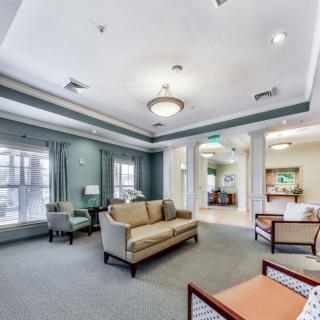
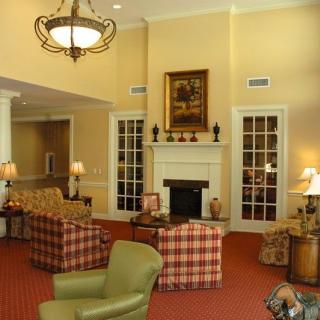
 Small, intimate assisted living with comprehensive care and on-site amenities.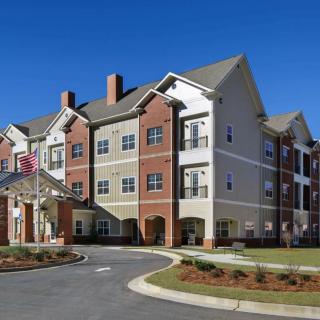




 Comprehensive Guide to Qualifying for Home Health Care Services
 Powerful Realities of Elder Abuse and the Most Effective Ways to Report It
 Ten Vital Duties of a Senior Caregiver: A Comprehensive Guide