At Gracemont Senior Living, the costs for various room types reflect a commitment to providing quality care and an enriching environment for residents. For a semi-private room, the monthly rate is $4,635, significantly higher than the averages of Forsyth County at $2,859 and Georgia as a whole at $2,529. This trend continues with private rooms priced at $5,562, exceeding both the county average of $4,055 and the state average of $2,864. For those interested in studio accommodations, the cost reaches $6,025 compared to Forsyth County's $3,962 and Georgia's $3,520. These figures suggest that while Gracemont Senior Living may be positioned at a premium price point relative to regional averages, this likely reflects enhanced amenities and personalized care options designed to cater to the needs of its residents.
Floor plans
Gracemont Senior Living
Forsyth County
Georgia
Semi-Private
$4,635
$2,859
$2,529
Private
$5,562
$4,055
$2,864
Studio
$6,025
$3,962
$3,520
Memory care communities with a similar price nearby
About the same
Arbor Terrace of South Forsyth
4.8 from 133 reviews
$4,500 to $6,315 / month
18.3 miles away
from +$665 / mo
The Mann House Assisted Living and Memory Care Cumming and Johns Creek
Residents and families repeatedly describe staff as warm, attentive, and genuinely invested.
A large number of reviews emphasize caring interactions and responsive help from employees, including warm greetings, support during activities, and frequent reassurance about safety and day-to-day care. Several reviewers also praise specific team members for being helpful and knowledgeable during visits or ongoing communication. At the same time, a smaller set of reviews describe problems with care follow-through or professionalism, including concerns about staffing levels and how needs were handled.
common
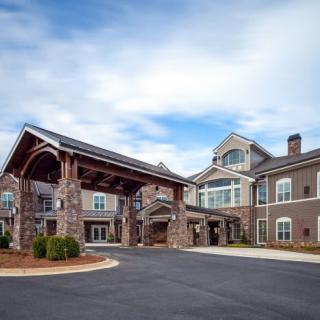
Facility cleanliness and upkeep stand out
Many reviewers highlight how clean, well-kept, and thoughtfully designed the building feels.
Multiple reviews call out the community’s cleanliness and maintenance, describing it as immaculate, beautiful, and well maintained. Visitors also note the facility is designed with seniors in mind and feels welcoming during tours. A couple of negative reviews mention inconsistent maintenance or reliability, which conflicts with the overall cleanliness praise.
common
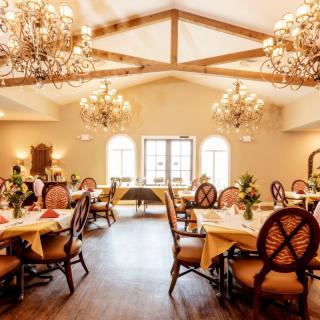
Dining is a frequent highlight
Dining quality comes up often, with residents and visitors describing it as enjoyable.
Several reviews explicitly praise food quality, citing a chef they like and calling out good dining experiences. Others reference meals served during community events, with reviewers saying the food was part of what made those gatherings memorable. The community also offers restaurant-style dining, which aligns with the consistent meal-related feedback.
common
Activities and outdoor space matter
Reviews frequently mention activities, events, and outdoor spaces that help residents stay engaged.
Many reviewers talk about game days, group activities, and community events that include both residents and visitors, sometimes through resident-run or special programming. Several also describe enjoying the lake, pool, and porches, connecting the setting with a home-like feel. A few comments contrast this by focusing more on care and communication issues than activities, but the day-to-day engagement theme still appears repeatedly.
caveat
Some families question staffing and follow-through
A recurring concern is that care needs may not always be met consistently.
While many reviews describe care as strong, several negative reviews raise concerns about follow-through and adequate support—particularly when more care is needed. Some reviewers mention missed needs, limited responsiveness, or confusion around medication handling, as well as staffing being too low at times. These critiques stand in contrast to the positive caregiving feedback, suggesting experiences vary by situation and time.
caveat
Pricing draws cost complaints
Some reviews object to rising costs relative to the level of service they received.
A minority of reviews mention concerns about rent increasing while care or service quality was described as declining. Other reviews focus mainly on overall value and care quality without discussing cost, so the cost criticism appears more limited than the general praise. Pricing figures provided for units are higher than county and state benchmarks across types, which may help explain why some families focus on expense.
How we summarize
We summarize when many written reviews mention each theme; a review can touch several themes, and only frequently mentioned themes are displayed.
At Gracemont Senior Living, the costs for various room types reflect a commitment to providing quality care and an enriching environment for residents. For a semi-private room, the monthly rate is $4,635, significantly higher than the averages of Forsyth County at $2,859 and Georgia as a whole at $2,529. This trend continues with private rooms priced at $5,562, exceeding both the county average of $4,055 and the state average of $2,864. For those interested in studio accommodations, the cost reaches $6,025 compared to Forsyth County's $3,962 and Georgia's $3,520. These figures suggest that while Gracemont Senior Living may be positioned at a premium price point relative to regional averages, this likely reflects enhanced amenities and personalized care options designed to cater to the needs of its residents.
Gracemont Senior Living's comprehensive features are tailored to address the unique needs of residents with dementia or Alzheimer's disease, enhancing their quality of life and fostering independence. Assistance with dressing and bathing helps maintain personal hygiene and dignity, while medication management ensures that residents adhere to their prescribed regimens, reducing health risks. Meal preparation and service cater to nutritional needs, often considering dietary restrictions associated with cognitive decline. Support with activities of daily living promotes routine and stability, which are crucial for individuals facing memory challenges. The assistance with transfers enhances mobility and safety, preventing falls and accidents. Continuous 24-hour supervision provides peace of mind for families, knowing their loved ones are safeguarded at all times. Additionally, specialized programs focused on mental wellness and mild cognitive impairment engage residents cognitively and socially, encouraging meaningful interactions that can mitigate feelings of isolation. Overall, the tailored programming fosters an environment conducive to both physical care and emotional support essential for those navigating the complexities of memory loss.
Nearby Communities
Gracemont
Cumming, GA
4.5 from 52 reviews
$7,000 / month
Extensive on-site amenities and services for independent living (dining, wellness, transportation, beauty salon, fitness, library).
Oaks at Gracemont
Cumming, GA
4.2 from 73 reviews
$3,200 to $3,500 / month
Friendly, professional staff; clean, attractive surroundings; good sense of community and compassionate care.
The Villas at Willow Lake
Cumming, GA
3.5 from 6 reviews
$3,150 / month
Affordable option with robust on-site amenities.
Oaks at Hampton
Cumming, GA
4.7 from 91 reviews
$3,565 to $6,115 / month
Caring staff with a warm, family-like atmosphere and engaging activities.
Bella's Cottage
Cumming, GA
1 from 2 reviews
$1,600 to $2,200 / month
Competitive pricing with memory-care focus and robust on-site/off-site activities.
Royal Living Personal Care Home
Dawsonville, GA
4.2 from 12 reviews
$3,000 to $4,000 / month
Dedicated memory care in a warm, home-like setting with personalized care and on-site amenities.
Chestnut Ridge Nursing & Rehab Center
Cumming, GA
4.4 from 119 reviews
Attentive nurses and effective rehab in a clean, spacious setting.
Dementia, including Alzheimer’s disease, is often mischaracterized in terms of lethality as it leads to complications that can be fatal rather than being a direct cause of death; it causes a progressive decline in cognitive and physical health, making patients vulnerable to infections and other health crises. Effective management of nutrition, hydration, and communication is crucial in patient care, with palliative care becoming vital in advanced stages to enhance comfort and quality of life while caregivers play a key role amidst the challenges posed by the disease.
Reminiscence therapy helps individuals with dementia recall past memories through structured discussions and meaningful objects, enhancing mood, relationships, and sense of identity while celebrating their lives. It can be practiced in formal settings or at home, requiring sensitivity to personal histories and cultural backgrounds.
Reminiscence therapy is a structured method for older adults, especially those with dementia, to share life stories using prompts and sensory cues, fostering emotional well-being, social engagement, and self-identity. It aims to improve quality of life by enhancing interpersonal connections and cognitive stimulation while requiring careful facilitation to avoid distressing memories.
Get PricingAsk A QuestionSchedule A TourContact Senior Advisor
By clicking submit, you agree to our Partner's Terms of Use. You
also consent to receive calls and texts, which may be autodialed, from our Partner. Your consent is not a condition to
using our Partner's service. Please visit our Partner's Privacy Policy for information about their privacy practices.

 102 resident community capacity
 Assisted Living
 Independent Living
 Memory Care
 Respite Care
 Air-conditioning
 Beauty salon
 Cable or satellite TV
 Computer center
 Dining room
 Fitness room
 Fully furnished
 Gaming room
 Garden
 Housekeeping services
 Kitchenette
 Move-in coordination
 Outdoor space
 Private bathrooms
 Restaurant-style dining
 Small library
 Telephone
 Wellness center
 Wi-Fi/high-speed internet available
 Community operated transportation
 12-16 hour nursing
 24-hour call system
 Activities of daily living assistance
 Assistance with bathing
 Assistance with dressing
 Assistance with transfers
 Diabetes diet
 Medication management
 Mental wellness program
 Special dietary restrictions
 Concierge services
 Planned day trips
 Extensive on-site amenities and services for independent living (dining, wellness, transportation, beauty salon, fitness, library).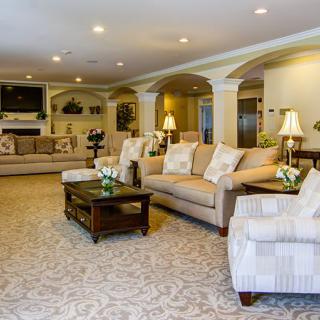


 Are Dementia and Alzheimer's Disease Lethal? A Comprehensive Exploration
 Exploring the Power of Reminiscence Therapy for Individuals With Dementia
 An In-Depth Look at Reminiscence Therapy in Dementia Care