Central Tampa Assisted Living Costs & Pricing
Central Tampa Assisted Living offers competitive pricing options compared to the broader market in both Hillsborough County and the state of Florida. For those considering semi-private accommodations, Central Tampa's monthly cost stands at $2,700, which is notably lower than the county average of $3,096 and the state average of $3,009. Similarly, for studio units, residents can expect to pay $3,100 per month - again more affordable than the county's average of $3,685 and the state's average of $3,823. This pricing structure not only positions Central Tampa Assisted Living as an attractive option for families seeking quality care but also reflects a commitment to making assisted living accessible without compromising on service or amenities.
| Floor plans | Central Tampa Assisted Living | Hillsborough County | Florida |
|---|
| Semi-Private | $2,700 | $3,096 | $3,009 |
| Studio | $3,100 | $3,685 | $3,823 |
Memory care communities with a similar price nearby
-
from -$500 / mo
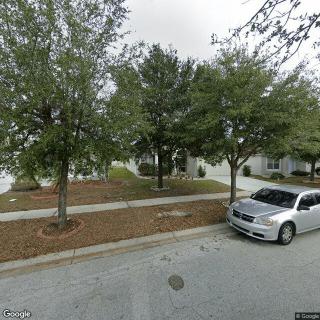
Dorothy Cares Assisted Living Facility
$2,200 to $3,300 / month
15.5 miles away
-
About the same
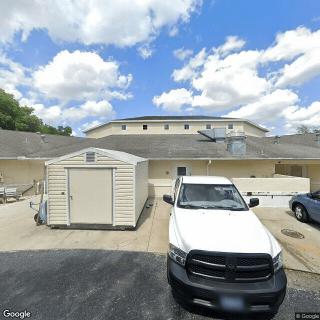
Alafia Village
$2,700 to $4,000 / month
10.4 miles away
-
from +$395 / mo
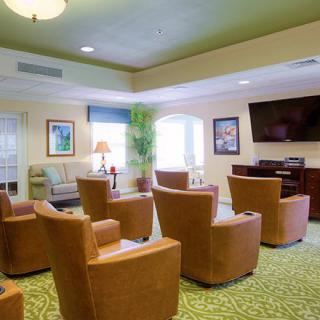
Homewood At Sun City Center
$3,095 to $6,500 / month
19.4 miles away
-
from -$500 / mo
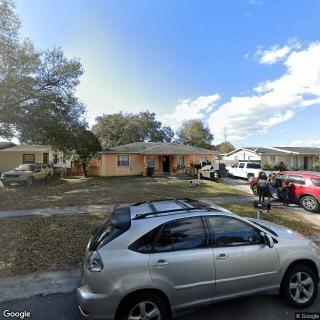
Mary Dunbar Assisted Living Facility
$2,200 to $2,800 / month
5.3 miles away
-
from -$200 / mo
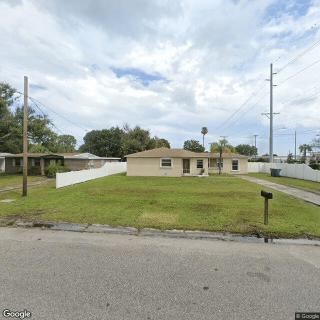
Consuelo's Assisted Living Facility
$2,500 to $4,500 / month
9.5 miles away
Overall Review of Central Tampa Assisted Living
common
13 reviews mention this
Staff support is a mixed picture
Many residents and families describe staff as caring and involved in day-to-day support.
A large share of reviewers say the staff and management were kind and attentive, and that they kept families informed. Several mention good hands-on care, including help with meals and daily needs. A smaller set of reviews take the opposite view, saying staffing and care oversight were inadequate.
caveat
12 reviews mention this
Cleanliness concerns come up repeatedly
Cleanliness is not consistent across reviews, with both praise and strong complaints.
Some reviewers describe the community as clean and maintained, and they also mention clean rooms and common areas. Others report issues like unpleasant odors, dirty linens, and rooms or laundry not being handled properly. Even among generally positive reviews, a few say the facility was not as clean as expected.
caveat
4 reviews mention this
Security and lockdown feel restrictive
Security measures are described as strong enough to feel restrictive to some families.
Several reviewers explicitly describe the facility as secured or locked down. While that can read as reassuring for some, one review frames it as comparable to being in jail, and others echo the sense of tight control. Another reviewer talks about staff monitoring residents closely, reinforcing how structured the environment can feel.
caveat
5 reviews mention this
Medication help is called out
Medication management receives both reassurance and serious criticism in reviews.
A few families describe medication being regulated or handled with follow-through, including improvements they noticed. Others report that meds were not provided on time, were missed, or that CNAs handled medication without adequate monitoring. These different experiences make medication routines a key point to clarify directly.
common
6 reviews mention this
Activities are available but can vary
Reviews mention frequent activities, though the fit depends on each resident.
Multiple reviewers say the community offers regular activities such as exercise, bingo, games, crafts, and holiday parties. Some also describe devotional options and staff taking residents out. Others say the activities level was too much for their needs, or that the resident couldn’t participate in most programs.
common
2 reviews mention this
Pricing reads as affordable for Tampa
Some reviewers frame the pricing as affordable, and the posted range is relatively low.
A couple of reviews describe the community as very affordable or good for the price. Pricing details provided for the listing show monthly rates spanning $2,700 to $3,100, with both studio and semi-private options priced below county and state benchmarks.
caveat
3 reviews mention this
Location is convenient but not ideal
Reviewers describe the location as convenient, but also note it isn’t in the best area.
Some reviewers highlight convenience and nearby practicality, while others say it isn’t in the best part of town. Nearby options named in the listing include pharmacy and everyday stops, which may support that convenience even if the neighborhood isn’t everyone’s preference.
How we summarize
Counts show how many written reviews mention each theme; a review can touch several themes, and only frequently mentioned themes are displayed.

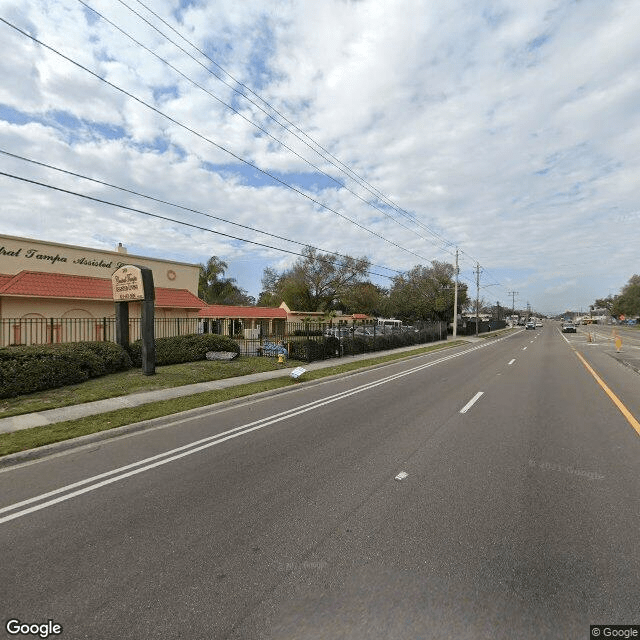
 100 resident community capacity
 Assisted Living
 Memory Care
 Activities on-site
 Air-conditioning
 Beautician on-site
 Cable or satellite TV
 Computer center
 Devotional services off-site
 Dining room
 Fitness room
 Fully furnished
 Gaming room
 Garden
 Housekeeping services
 Indoor common areas
 Kitchenette
 Move-in coordination
 Outdoor common areas
 Private bathrooms
 Restaurant-style dining
 Small library
 Telephone
 Wellness center
 Wheelchair accessible showers
 Wi-Fi/high-speed internet available
 Tampa International (7 miles away)
 Community operated transportation
 12-16 hour nursing
 24-hour call system
 Ambulatory care
 Assistance with bathing
 Assistance with dressing
 Assistance with transfers
 Diabetes diet
 Diabetic care
 Incontinence care
 Medication management
 Mental wellness program
 Special dietary restrictions
 Concierge services
 Planned day trips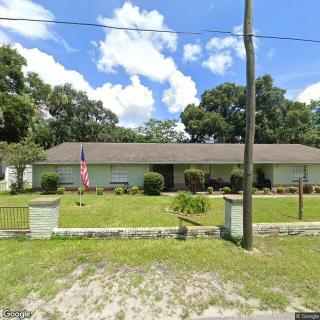
 Clean, welcoming environment with friendly staff and good value.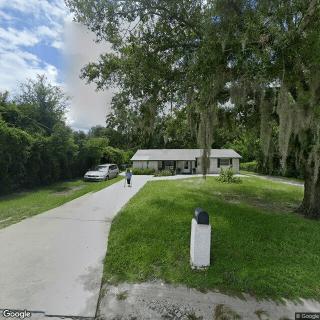

 22 Remarkable Caregiver Support Groups Available Online and In-Person
 Understanding Medicaid Coverage for Assisted Living: A Comprehensive Guide
 How and When Medicaid May Cover Assisted Living Costs