Many reviewers describe a clean, well-kept facility with notable updates.
Several residents and families mention cleanliness, including comments about the building being clean and smelling okay. Reviews also point to renovations, with one person describing remodeled rooms, halls, and floors. A few reviewers specifically contrasted the absence of strong urine odor with other facilities.
common5 reviews mention this
Food quality gets mixed marks
Food is discussed often, with both improvement and complaints in reviews.
Some reviewers say the food improved after changes, including a comment that a chef replacement led to better meals. Others mention favorites like breakfast and describe the food as tasting good. At the same time, at least one review calls out issues with meal quality and presentation, including dissatisfaction with a tray meal.
caveat6 reviews mention this
Communication and response can slip
A recurring complaint is delayed response and difficulty getting updates.
Some reviewers describe periods when care felt inconsistent or slow, including times they say staff did not respond quickly. Multiple reviews mention poor communication, such as not getting updates when families called or experiencing long waits for help. There are also accounts of phone difficulties when trying to reach the facility, and one review describes extended gaps in attention after admission.
caveat4 reviews mention this
Staffing levels come up repeatedly
Several reviews link care concerns to staffing shortages or coverage issues.
A mixed review notes that when there isn’t enough staff, response times can be slower even when families see good care at other times. Other reviews go further, describing short staffing and saying their loved ones were not getting the attention they needed. A separate review also includes concerns that supervision was not adequate, alongside an account of a fall.
common2 reviews mention this
Activities help residents stay engaged
Residents mention activities like special events and bingo.
At least a couple of reviews highlight in-house social activities, including bingo and a Valentine’s Dance. One resident described the dance as organized and another mentioned residents having fun at bingo, both pointing to an active community schedule.
How we summarize
Counts show how many written reviews mention each theme; a review can touch several themes, and only frequently mentioned themes are displayed.
Features
Housing
6 resident community capacity
Types of Care
Assisted Living
Amenities
Cable or satellite TV
Dining room
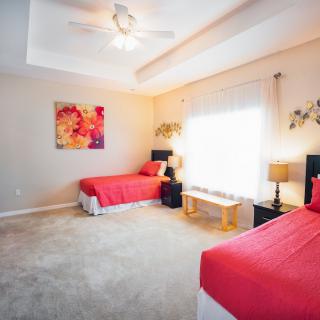
Fully furnished
Garden
Housekeeping services
Move-in coordination
Outdoor space
Telephone
Wi-Fi/high-speed internet available
Transportation
Gainesville Regional (19 miles away)
Care Services
24-hour supervision
Activities of daily living assistance
Assistance with bathing
Assistance with dressing
Assistance with transfers
Coordination with health care providers
Diabetes diet
Meal preparation and service
Medication management
Special dietary restrictions
Transportation arrangement (medical)
Transportation to doctors appointments
Dining
Diabetes diet
Special dietary restrictions
Activities
Community-sponsored activities
Scheduled daily activities
Nearby Places of Interest
Restaurants
IHOP (0 miles)
Cedar River Seafood (0.3 miles)
Taco Bell (0.3 miles)
Burger King (0.4 miles)
McDonald's (0.4 miles)
Arby's (0.7 miles)
Little Caesars Pizza (0.8 miles)
Physicians
Pediatrics Associates of Argyle (0.5 miles)
Physicians Care (0.8 miles)
Shands Starke Medical Group (0.8 miles)
Starke Family Medical Center (0.8 miles)
North Florida Physical Medicine (0.9 miles)
Ottey Bone & Joint Associates (0.9 miles)
U F Cardiology at Starke (1 miles)
Transportation
U-Haul Neighborhood Dealer (0.5 miles)
U-Haul Neighborhood Dealer (0.9 miles)
U-Haul Neighborhood Dealer (1.1 miles)
U-Haul Moving & Storage (3.1 miles)
U-Haul Neighborhood Dealer (3.8 miles)
Keystone Heights Airport (7.6 miles)
U-Haul (10.6 miles)
Parks
Starke City Recreation (0.5 miles)
Wainwright Park (1.1 miles)
Goldhead Branch State Park (10.9 miles)
Melrose Heritage Park (15.9 miles)
Cafes
Ellianos Coffee Co. (0.6 miles)
Sapp Station Coffee Shop (0.9 miles)
Classic Cafe (8.7 miles)
FirePower Coffee Roasters (10.2 miles)
Clydes Cozy Corner Cafe (11.4 miles)
Pharmacies
Winn-Dixie (0.8 miles)
CVS Pharmacy (0.8 miles)
Madison Street Pharmacy (0.8 miles)
Walgreens (0.9 miles)
CVS Pharmacy (11.2 miles)
Walgreens (11.3 miles)
The Medicine Shoppe Of Keystone Heights Keystone Heights (11.5 miles)
Places of Worship
Bible Baptist Church (0.9 miles)
Bradford Baptist Church (0.9 miles)
First Baptist Church (1 miles)
Trinity Lighthouse PLF (1.1 miles)
Southern Baptist Convention (1.3 miles)
Air Park Baptist Church (1.3 miles)
General Conference Of Seventh-Day Adventists (1.3 miles)
Vibrant Senior Living emphasizes active senior living communities that promote independence and engagement through diverse amenities and activities, fostering wellness and social interaction among older adults. These communities range from independent to assisted living, with a focus on personal growth, family involvement, financial planning, and leveraging technology to enhance residents' experiences.
Transitioning from assisted living to memory care is driven by an individual's cognitive decline and specific needs, requiring careful evaluation of indicators like increased confusion and wandering. The process involves consulting medical professionals, researching suitable communities, considering financial and legal aspects, and ensuring effective communication for personalized care plans.
Assisted living provides moderate support for seniors seeking independence, while memory care offers specialized support for individuals with dementia or cognitive impairments through structured routines and trained staff. Key differences include care approaches, environment security measures, staff training levels, activity types, and cost considerations.
Get PricingAsk A QuestionSchedule A TourContact Senior Advisor
By clicking submit, you agree to our Partner's Terms of Use. You
also consent to receive calls and texts, which may be autodialed, from our Partner. Your consent is not a condition to
using our Partner's service. Please visit our Partner's Privacy Policy for information about their privacy practices.

 6 resident community capacity
 Assisted Living
 Cable or satellite TV
 Dining room
 Fully furnished
 Garden
 Housekeeping services
 Move-in coordination
 Outdoor space
 Telephone
 Wi-Fi/high-speed internet available
 Gainesville Regional (19 miles away)
 24-hour supervision
 Activities of daily living assistance
 Assistance with bathing
 Assistance with dressing
 Assistance with transfers
 Diabetes diet
 Meal preparation and service
 Medication management
 Special dietary restrictions
 Transportation arrangement (medical)
 Transportation to doctors appointments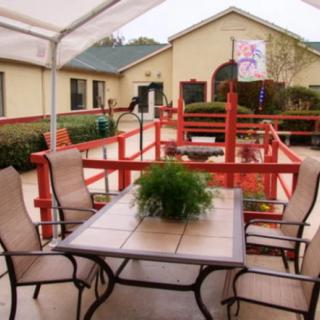
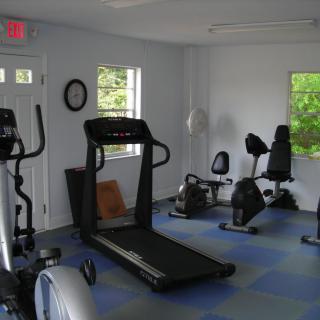
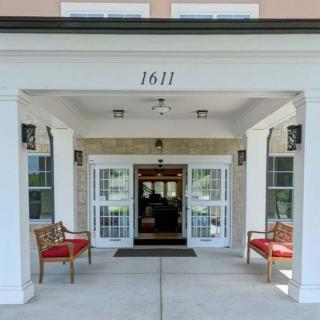
 Wide range of care and amenities with 24-hour supervision and engaging activities.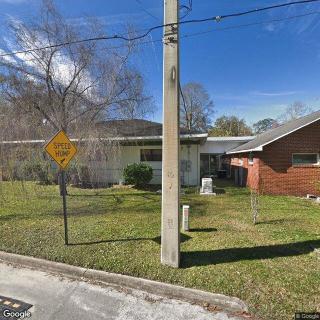


 Vibrant Senior Living: A Comprehensive Guide for Active Older Adults
 When to Transition from Assisted Living to Memory Care: Key Indicators, Steps, and Finding the Right Community
 Assisted Living and Memory Care: Understanding Their Core Differences