
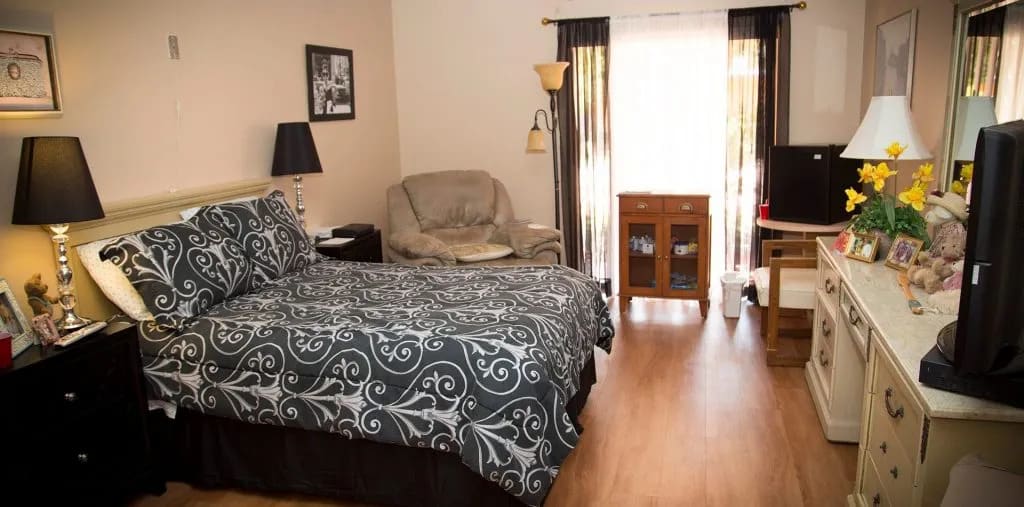
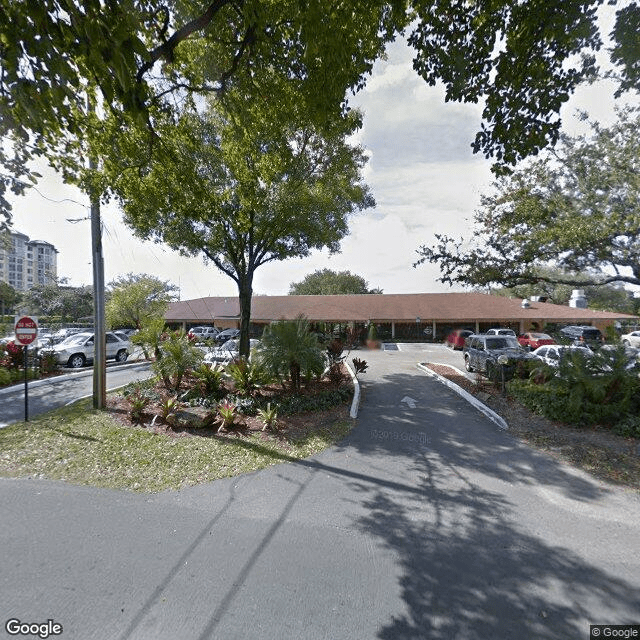
295 SW 4th Ave, Pompano Beach, FL 33060
To contact a resident: (954) 942-3388
For more information about senior living options: (866) 208-4318
The W at Pompano Beach Costs & Pricing
The W at Pompano Beach offers competitive monthly costs for its residents, particularly when compared to the broader Broward County and state of Florida. For a semi-private room, residents can expect a monthly fee of $2,300, which is significantly lower than the county's average of $2,902 and the state's average of $3,009. Studio apartments at The W are priced at $3,500, slightly below the county's average of $3,601 and more advantageous than the state's typical cost of $3,823. Meanwhile, for a one-bedroom unit, The W stands out with a rate of $4,000 in comparison to Broward County's average of $3,651 and Florida's general pricing of $3,864. Overall, The W at Pompano Beach presents an attractive value proposition for those seeking quality living arrangements in a desirable location.
| Floor plans | The W at Pompano Beach | Broward County | Florida |
|---|---|---|---|
| Semi-Private | $2,300 | $2,902 | $3,009 |
| Studio | $3,500 | $3,601 | $3,823 |
| 1 Bedroom | $4,000 | $3,651 | $3,864 |
Memory care communities with a similar price nearby
-
from +$100 / mo
Ana's Assisted Living Facility
$2,400 / month16.9 miles away -
from +$200 / mo
Anne Adult Family Care Home
$2,500 / month8.5 miles away -
from -$105 / mo
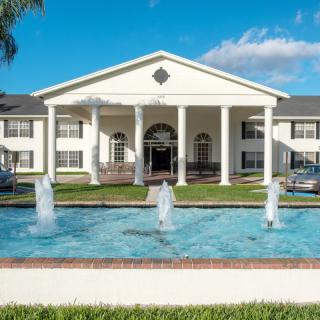
Grand Villa Of Delray East
$2,195 to $4,495 / month16.1 miles away -
from -$300 / mo
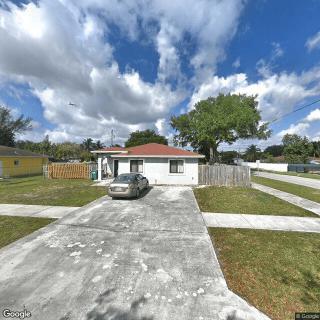
Sweet Angel's Home Assisted Living Facility Inc
$2,000 to $2,500 / month23.0 miles away -
from +$400 / mo
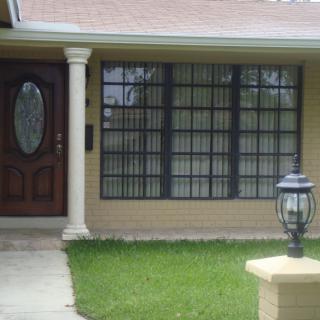
Flamingo Assisted Living
$2,700 to $4,500 / month8.9 miles away
Overall Review of The W at Pompano Beach
Pros
 The director clearly has a heartfelt commitment to the facility.
- She clearly wants to fix up and improve the place.
- The leadership is recognized as caring about the residents.
Cons
 The overall experience at The W at Pompano Beach is described as not good.
- Communication with the family is said to be non-existent.
- Medical updates are never available because staff are too busy or not around.
- The laundry is mishandled and residents wear clothes that aren’t theirs.
- The facility would not be recommended to others.
- The food is described as horrible, and the resident’s mother wouldn’t eat it.
- The care is not the greatest, with roaches reported in the rooms.
- A resident died at the facility, leaving funds in her account, and attempts to retrieve the money were ignored by the administrator; theft is alleged.
- The in-person tour left reviewers unimpressed, noting residents were scattered and spoke abruptly, making the environment feel overwhelming and scary.
Review
The W at Pompano Beach is best suited for families that can provide hands-on oversight and are willing to tolerate a work-in-progress atmosphere as the building undergoes renovations. This community does not appear ready to reliably meet families’ needs for timely medical updates, consistent daily routines, or transparent financial handling. If those assurances, especially regular care updates and clear billing practices, are nonnegotiable, alternatives should be seriously considered.
Across the three reviews, a clear pattern emerges: families feel left in the dark about their loved one’s condition, with administrative communication described as nonresponsive. Medical updates are reportedly hard to obtain because staff are too busy or unavailable. Laundry and personal belongings are mishandled, clothing is misplaced, and the sense of daily organization seems fragile. Food quality is repeatedly criticized as unacceptable, and pests are mentioned in a way that raises concerns about basic housekeeping. Money left in resident accounts and unreturned calls to administrators compound the impression of weak oversight and potential financial risk.
During the on-site tour, the director’s evident commitment stood out, and renovations underway suggested a trajectory toward improvement. Yet that optimism is countered by a scattered, overextended sense of care among residents, with people rushing to residents for conversation in a manner that felt abrupt and unstructured. The overall atmosphere came across as chaotic rather than cohesive, leaving visitors uneasy about whether residents receive consistent attention amidst ongoing construction and staffing strain. In practical terms, the positives feel aspirational rather than realized at this stage.
The core pros, genuine leadership intent and a visible plan for upgrades, do not sufficiently offset the central cons. A committed administrator is meaningful, but it cannot substitute for reliable daily care, dependable communication, and rigorous financial accountability. Until staffing stabilizes, procedures tighten, and resident care is consistently prioritized, the improvements promised by renovation are likely to be uneven in their impact. In short, the promising intent is not yet translating into dependable experiences for residents or peace of mind for families.
For families weighing options, the message is to consider alternatives when reliable updates, predictable routines, and transparent handling of personal finances are essential. If retirement-life expectations include prompt medical communication, clean environments, and meals that meet basic nutrition and taste standards, other communities are likely to offer more consistent performance. If choosing to stay for now, insist on concrete, written commitments: a regular medical update schedule, a documented care plan with measurable goals, a transparent billing policy with accessible ledgers, a pest-control and housekeeping schedule with receipts, and a clear escalation path to a regional or corporate contact if issues persist. A short probationary period with explicit milestones would be prudent.
In the end, The W at Pompano Beach may still become a solid option for families willing to invest ongoing oversight and push for rapid, measurable improvements. Right now, however, it functions more as a potential in progress than a proven solution. Those with tight standards for communication, care consistency, and financial transparency should proceed only with strict guardrails and a clear exit strategy if expectations are not met within a defined window. Practical decisions point toward evaluating other communities first, reserving this one as a possible fallback only after confirming sustained improvements and rock-solid oversight.
 Assisted Living
 Independent Living
 Memory Care
 Cats allowed
 Dogs allowed
 Activities off-site
 Air-conditioning
 Beautician on-site
 Devotional services on-site
 Indoor common areas
 Outdoor common areas
 Private bathrooms
 Wheelchair accessible showers
 Fort Lauderdale-Hollywood International (11 miles away)
 Ambulatory care
 Diabetic care
 Incontinence care
 Medication management
 Gluten-free
 Art classes
 Birthday parties
 Day trips and outings
 Educational speakers / life long learning
 Gardening club
 Karaoke
 Live musical performances
 Stretching classes
 Trivia games




 Comprehensive Insights on the Late Stages of Dementia: What to Expect and How to Provide Care
 Medications Associated with Dementia Risk: A Comprehensive Overview
 Guiding Your Journey: Understanding Power of Attorney for Elderly Parents