
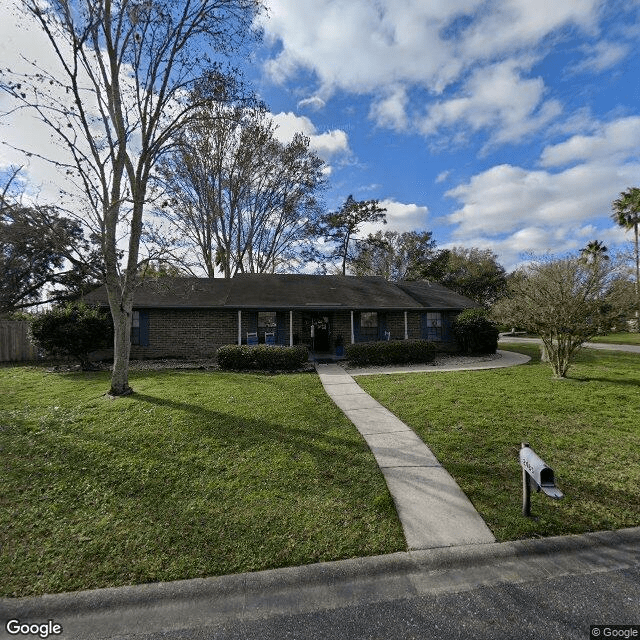
2485 Ridgecrest Ave, Orange Park, FL 32065
To contact a resident: (904) 327-5584
For more information about senior living options: (866) 208-4318
Acacia Grove Costs & Pricing
At Acacia Grove, the monthly costs for accommodations reflect the quality of care and services offered. For a semi-private room, residents can expect to pay $3,500, which is slightly above the average in Clay County at $3,261 and higher than the state average of $3,009. In contrast, a private room at Acacia Grove is priced at $4,000, again surpassing both local and state averages - Clay County's average is $3,948 while Florida's overall average stands at $3,699. These figures indicate that while Acacia Grove may be positioned as a premium option within the region, it also emphasizes an elevated standard of living and personalized care that many families find essential for their loved ones.
| Floor plans | Acacia Grove | Clay County | Florida |
|---|---|---|---|
| Semi-Private | $3,500 | $3,261 | $3,009 |
| Private | $4,000 | $3,948 | $3,699 |
Senior living communities with a similar price nearby
-
from -$515 / mo
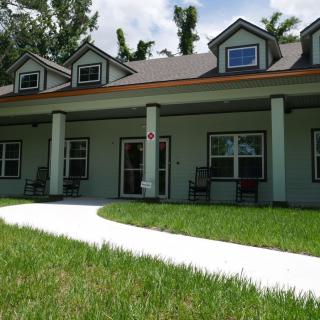
Silver Treasures at Lane
$2,985 to $5,175 / month9.9 miles away -
from +$600 / mo
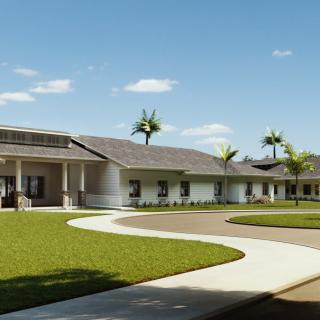
Senior Living at the Greens
$4,100 to $6,300 / month19.7 miles away -
About the same
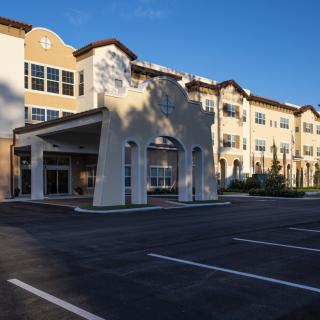
Palagio for Seniors at Orange Park
$3,450 to $6,000 / month2.3 miles away -
from +$140 / mo
Windsor Pointe
$3,640 to $4,745 / month20.7 miles away -
About the same

Better Days Senior Living
$3,500 to $4,500 / month13.1 miles away
Overall Review of Acacia Grove
Pros
 The facility is super clean.
- It is a small facility with personalized care for residents.
- Residents are checked on constantly.
- Acacia Grove has the appropriate amount of staff and expertise to meet the needs of bed-bound or wheelchair-bound residents.
- The presence of a family member there has been phenomenal.
- The reviewer would recommend Acacia Grove to others.
Cons
 The staff reportedly violated health regulations and failed to meet the standards for assisted living facilities.
- The staff were described as outrageous and verbally abusive toward residents and their visitors.
Review
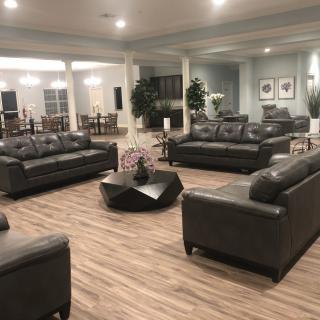
Acacia Grove in Orange Park, FL is best suited for families seeking intimate, high-touch care in a small, clean setting. It works for residents who require substantial daily attention, particularly bed-bound or wheelchair-dependent individuals, because the staff-to-resident dynamics are tight and personalized care plans can be maintained with visible consistency. The environment’s cleanliness and manageable size support predictable routines and a steady pace of monitoring, yielding a sense of safety through accessible, familiar staff presence. This is not a large, impersonal campus; it is a home-like option where caregivers can deliver frequent checks and steady supervision.
Those who might want alternatives are families who cannot tolerate concerns around safety and staff conduct. If regulatory compliance and a culture of respectful interaction are non-negotiable, Acacia Grove may not meet expectations. Allegations of health violations and verbal abuse toward residents and visitors raise serious red flags about safety, dignity, and the reliability of care. For families prioritizing formal oversight, transparent inspection records, and a consistently professional environment, larger facilities with clearer processes and stronger external accountability could be a better match.
The strong points, cleanliness, small size, personalized attention, and constant check-ins, do offer meaningful benefits for high-need residents. A tightly staffed, attentive team can manage complex mobility needs and ensure timely assistance, translating into fewer unmet needs and more opportunities for safe, engaging routines within a familiar, supportive setting. These advantages aren’t trivial; they create a baseline of daily reliability that a caregiver must have to avoid genuine safety gaps. For residents who value steady human contact and predictable, hands-on care, these factors carry real weight.
Yet the downsides are not minor. If the claims about health violations and abusive behavior hold true, they undermine every positive attribute and create a risk profile that can overwhelm potential gains. Dignity and emotional well-being are jeopardized when residents are subjected to verbal harassment or when regulatory standards appear compromised. In a setting where care needs are high, trust between families, residents, and staff is essential; once that trust frays, continuity of care becomes precarious and residents may endure avoidable distress.
For families considering Acacia Grove, a disciplined due-diligence process is essential. Demand the latest state inspection results and any corrective-action records; meet with the administrator and the direct-care leadership; request to observe a shift to witness actual interactions; verify staffing ratios on different shifts; inquire about training, incident reporting, and the consequences for staff who violate standards. If responses feel defensive or opaque, or if records show repeated compliance issues, those signals strongly favor looking elsewhere and continuing the search for a community with a stronger track record of safe, respectful care.
Bottom line: Acacia Grove can be a strong fit for residents who need constant, personalized attention in a small, clean setting, and for families willing to actively monitor tone, culture, and safety. For others, especially those who demand unwavering regulatory compliance, a consistently respectful environment, and a proven record of abuse-free care, alternative communities with clearer safeguards and broader oversight should be prioritized. The decision hinges on whether intimate, high-contact care in a compact home supersedes the potential risk of regulatory concerns and staff behavior that could erode safety and peace of mind.
 Board and Care Home
 Activities off-site
 Air-conditioning
 Cable or satellite TV
 Devotional services off-site
 Indoor common areas
 Outdoor common areas
 Private
 Respite or short term stays offered
 Wheelchair accessible showers
 Wi-Fi/high-speed internet available
 Jacksonville International (25 miles away)
 Ambulatory care
 Diabetic care
 High acuity care
 Incontinence care
 Medication management
 Anytime dining
 Art classes
 Day trips and outings
 Educational speakers / life long learning
 Forever fit
 Live musical performances
 Live well programs
 Visiting Rabbi
 Visiting chaplain or priest

 In-Home Care Costs in 2025: A Detailed State-by-State Exploration
 Understanding Home Health Care: A Comprehensive Guide
 Home Health Care Demystified: A Comprehensive Guide for Families and Caregivers