
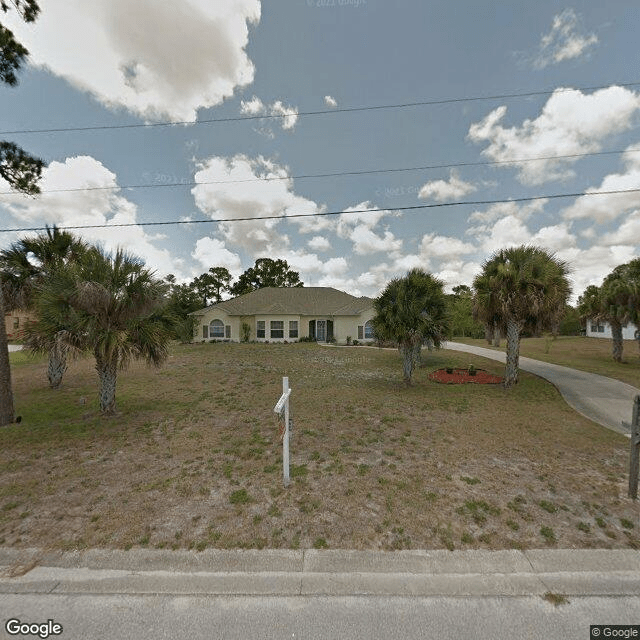
4665 Hidden Lakes Place, Melbourne, FL 32934
For more information about senior living options: (866) 208-4318
Velrose Assisted Living Facility 2 Costs & Pricing
Velrose Assisted Living Facility 2 offers semi-private rooms at a monthly rate of $4,000 and private rooms at $4,500. These costs are notably higher than the average rates in Brevard County, which are approximately $3,027 for semi-private and $3,663 for private accommodations. When compared to the state averages for Florida, Velrose's pricing remains above the typical figures of $3,009 for semi-private and $3,699 for private rooms. This indicates that while Velrose may provide specialized services or amenities that justify its rates, prospective residents should carefully consider their budget in relation to both county and state averages when making their decision.
| Floor plans | Velrose Assisted Living Facility 2 | Brevard County | Florida |
|---|---|---|---|
| Semi-Private | $4,000 | $3,035 | $3,009 |
| Private | $4,500 | $3,672 | $3,699 |
Assisted Living communities with a similar price nearby
-
from -$500 / mo

R and C Ultimate Care
$3,500 to $4,000 / month16.5 miles away -
from -$500 / mo

The Fountains of Melbourne
$3,500 to $3,750 / month9.0 miles away -
from +$215 / mo

Zon Beachside
$4,215 to $7,850 / month6.3 miles away -
About the same

Hibiscus Court
$3,995 to $6,495 / month7.4 miles away -
from +$550 / mo

The Blake at Viera
$4,550 to $6,850 / month4.9 miles away
Overall Review of Velrose Assisted Living Facility 2
Pros
 The staff are amazingly caring and patient in the face of daily challenges.
- Brookdale West Melbourne does everything they can to accommodate residents with dementia and memory issues.
- The reviewers feel they would be lost without the staff and are grateful to Brookdale West Melbourne.
- The staff at Brookdale West Melbourne are thanked for their dedication and compassion.
Review
Velrose Assisted Living Facility 2 in Melbourne, Florida is best suited for families facing a dementia journey who need constant, compassionate support for daily activities and safety. The standout message from the available feedback is that the staff demonstrates patience and genuine care even when dementia-related behaviors present daily challenges. For families prioritizing steady routines, respectful handling of cognitive changes, and a home-like atmosphere over clinical rigidity, this community offers a compelling fit.
People who may want to consider alternatives include those seeking heavy medical oversight or specialized, nurse-led memory-care programming. If the goal is aggressive treatment management, frequent skilled interventions, or a facility with a broad activity calendar and robust clinical services, look for options with more pronounced medical offerings. Budgetary constraints, room availability, and location logistics also matter; if proximity to family, transparent staffing metrics, and sustained capacity to adapt to sharp changes in behavior are critical, compare Velrose with two or three other providers before deciding.
From the record, the primary advantage is clear: staff who are “amazingly caring and patient,” even in the face of challenging memory-related situations. That level of empathy and composure directly mitigates common pain points in dementia care, anxiety, resistance to assistance, and behavioral episodes, by delivering a steady, reassuring presence. Such care can translate into safer daily living, better daily functioning, and a calmer home environment for both resident and family. In short, the emotional tone and consistency of caregiving appear to offset many of the typical stresses associated with progressive memory loss.
Beyond empathy, the narrative suggests caregivers tailor responses to the resident’s needs rather than applying a one-size-fits-all approach. They reportedly accommodate the resident’s disparaging condition, indicating flexibility in routines and a willingness to adapt to fluctuating cognitive states. That adaptability matters as dementia progresses, because predictable, respectful handling reduces agitation and helps preserve dignity. A warm, patient team also signals opportunities for meaningful interactions, which can sustain engagement and quality of life even when memories fade.
However, the single-positive review cannot fully establish a comprehensive picture. The absence of stated drawbacks means potential families must probe further to understand daily staffing levels, consistency over shifts, and the scope of memory-specific programming. Important questions include: how many staff are available during peak hours, what dementia-care training is required of front-line aides, and how care plans are updated and shared with families. A trial visit or shadow day can reveal whether the purported warmth translates into reliable, ongoing practice.
In decision terms, Velrose appears well-positioned for memory-care-focused families who prize compassionate, steady caregiving over a purely clinical impression. If that combination aligns with expectations and budget, a structured tour followed by a careful review of staffing, care planning, and safety protocols is advisable. For those needing deeper medical oversight, more extensive therapeutic programming, or a broader, more active calendar of services, it is wise to benchmark Velrose against comparable communities to ensure the chosen option delivers both the emotional support and the necessary medical safeguards for a loved one navigating dementia.
 5 resident community capacity
 Assisted Living
 Board and Care Home
 Activities off-site
 Bath tubs
 Cable or satellite TV
 Dining room
 Fully furnished
 Garden
 Housekeeping services
 Indoor common areas
 Move-in coordination
 Outdoor common areas
 Private
 Respite or short term stays offered
 Telephone
 Wheelchair accessible showers
 Wi-Fi/high-speed internet available
 Melbourne International (5 miles away)
 24-hour supervision
 Ambulatory care
 Assistance with bathing
 Assistance with dressing
 Assistance with transfers
 Diabetes diet
 Diabetic care
 Incontinence care
 Meal preparation and service
 Medication management
 Special dietary restrictions
 Transportation arrangement (medical)
 Transportation to doctors appointments





 Senior Transition Services: Understanding Their Role, Cost, and Importance
 Exploring the Path to Senior Living: A Comprehensive Look at Independent Living and Assisted Living
 Is Assisted Living Deductible on Your Taxes? Understanding the Complexities of Assisted Living Expenses and Deductions