
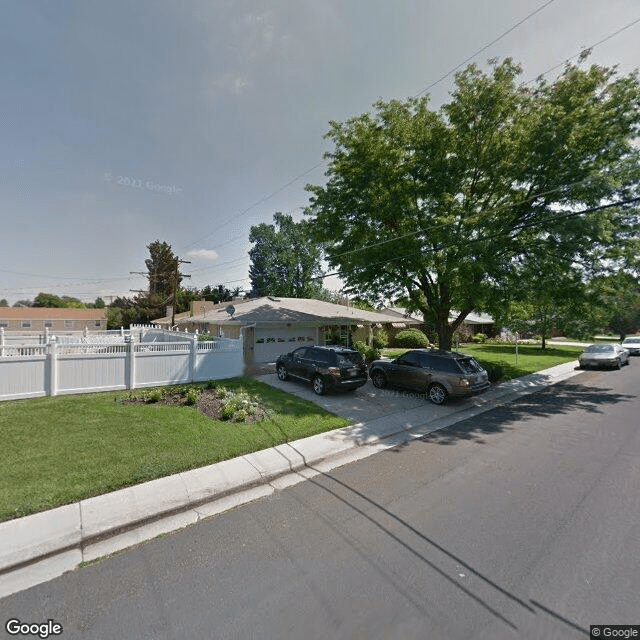
2408 South Kearney, Denver, CO 80222
To contact a resident: (303) 758-4977
For more information about senior living options: (866) 208-4318
Tendercare At University Hills LLC Costs & Pricing
Tendercare At University Hills LLC offers competitive pricing for its services compared to both Denver County and the broader state of Colorado. For semi-private rooms, the facility charges $2,600 per month, significantly lower than the county's average of $3,950 and the state average of $4,009. When it comes to private rooms, Tendercare's monthly rate is $3,800, which still remains more affordable than the county's rate of $4,178 and closely aligns with the state average of $4,142. This pricing structure underscores Tendercare's commitment to providing quality care at a more accessible cost for residents in the area.
| Floor plans | Tendercare At University Hills LLC | Denver County | Colorado |
|---|---|---|---|
| Semi-Private | $2,600 | $3,950 | $4,008 |
| Private | $3,800 | $4,178 | $4,142 |
Senior living communities with a similar price nearby
-
from +$400 / mo

A Loving Hand Assisted Living
$3,000 / month0.8 miles away -
from +$400 / mo
Lighthouse Assisted Living Inc - Newland
$3,000 to $3,500 / month9.8 miles away -
from +$300 / mo
Rose Of Sharon Weaver Assisted Living
$2,900 to $4,000 / month8.8 miles away -
from -$350 / mo
Assisted Living At The Woodlands
$2,250 to $2,500 / month20.5 miles away -
from -$115 / mo
Spring Cove Care Home
$2,485 to $3,685 / month7.1 miles away
Overall Review of Tendercare At University Hills LLC
Pros
 Joe truly runs this facility with tender care and professional experience.
- TenderCare is the perfect name to describe the service Joe Bradshaw and his staff provide.
- They have provided compassionate and professional support before, during, and after respite stays.
- Joe and his house manager, Mary, are wonderful counselors for families navigating insurance, medicine, and long-term care.
- TenderCare is described as an answer to prayer.
- The residents experience a homelike setting and a true sense of family at TenderCare.
- The philosophy at Tender Care emphasizes interaction and community, not isolation.
- The attention to medical issues is exemplary.
Cons
 The GM failed to show up for the appointment, and the owner and GM reportedly ghosted the reviewer.
- The reviewer alleges racial bias, claiming their skin tone was deemed too dark.
- The reviewer says the staff’s offensive conduct would be reported to the Department of Labor.
- A home health therapist witnessed verbal abuse toward an 80-year-old dementia patient, with no supervision and residents left alone.
- The owner is described as not taking action when residents complain.
- The caregivers reportedly work 24-hour shifts for four days in a row and are clearly overworked.
- The reviewer would not send their worst enemy there.
- Police were called after witnessing abuse and neglect.
Review
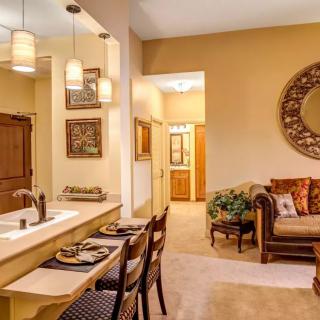
TenderCare At University Hills is best suited for families seeking a small, homelike assisted living environment where residents aren’t shuffled into a large campus but can be known by name and familiar routines. It works well for seniors who prize social connection, regular activities, and a caregiver community that treats daily living as a shared, family-like experience. The setting, with about 10 residents, home-style meals at a dining room table, a big communal space, a yard, and opportunities to pursue individual interests, creates a sense of belonging that can ease isolation and support ongoing engagement after medical events or hospital stays. It is particularly appealing for those who want attentive, personally guided care and are comfortable with a facility that emphasizes interpersonal warmth, hands-on supervision, and a neighborhood feel over clinical polish or institutional efficiency.
Nevertheless, attention should go to who may want to consider alternatives. Residents with significant or unstable medical needs, complex dementia care, or behaviors requiring constant, highly monitored supervision may be better served elsewhere. Families that require rigorous, transparent leadership and consistent, well-documented oversight should look for providers with stronger nurse-led staffing models and more formal incident reporting. Those who cannot tolerate even occasional lapses in communication or scheduling, especially around tours, admissions, and care planning, may find the governance and responsiveness at TenderCare insufficient. In short, this community rewards hands-on family involvement and trust in a small-team structure; it is less suited for families seeking highly standardized processes and steady, 24/7 clinical backup.
The strongest pros here are the evident warmth, the philosophy of interaction, and the practical benefits of a tight-knit setting. Residents are encouraged to socialize, participate in activities, and maintain personal expression, with staff and leadership deeply invested in making daily life meaningful. The care team’s demonstrated willingness to address medical issues, coordinate with families, and provide guidance on insurance and long-term care matters adds real value when the relationship is working. The small scale fosters accountability and familiarity, staff learn residents’ preferences quickly, and meals, crafts, and exercise are framed around real human connections. When the environment lands well, these elements can translate into better mood, steadier routines, and a sense of security during recovery from surgeries or hospital stays.
Yet the main cons cannot be ignored, and they demand due diligence. Several reviews raise red flags about staffing patterns, supervision, and leadership responsiveness, claims of overworked caregivers on extended shifts and, in at least one case, verbal abuse and neglect concerns. A perception of leadership disengagement or inconsistent communication can undermine trust during critical moments of care planning or crisis. For families, these signals should translate into concrete questions at a tour: what is the on-site nurse presence, what protections exist to prevent overwork, how are incidents documented and responded to, and who is accountable for day-to-day supervision? A transparent staffing plan, a clear chain of command, and a published policy on complaint resolution are nonnegotiables when considering TenderCare.
From a decision-making standpoint, the path to clarity involves a structured due diligence. Prospective families should request a current care plan and schedule, an up-to-date licensing and inspection history, and copies of any recent incident reports. Speaking with multiple families or residents’ representatives can reveal how consistently leadership follows through on commitments. It is wise to observe a mealtime and activity period to gauge the level of supervision, engagement, and individual attention. Finally, establish a trial period or a staged admission where care expectations are aligned with documented milestones. In parallel, compare TenderCare’s offerings to nearby, larger assisted living facilities or memory-care communities that provide higher staffing ratios, more formal oversight, and demonstrable incident-management records.
The bottom line is nuanced: TenderCare At University Hills delivers a powerful, if high-touch, living experience for seniors who value companionship, home-like routines, and a caregiver-driven culture. When the relationship with Joe Bradshaw and the team is strong, residents thrive on interaction, personalized attention, and a feeling of belonging that can be hard to sustain in bigger settings. That same strength, intimacy and immediacy of care, becomes a liability if staffing is stretched, supervision wanes, or leadership signals become inconsistent. For families, the practical choice hinges on alignment of needs and tolerance for risk: if a resident’s medical complexity is modest and the priority is social fulfillment within a tight-knit community, TenderCare can be remarkably rewarding. If higher clinical oversight, rigorous governance, and unwavering accountability are nonnegotiable, it is prudent to explore alternate options while still considering TenderCare as a potential fit, with clear expectations and formal safeguards in place.
 Board and Care Home
 Activities off-site
 Indoor common areas
 Outdoor common areas
 Private
 Denver International (19 miles away)
 Ambulatory care
 Diabetic care
 Incontinence care
 Meals provided


 Navigating Medicare Coverage for In-Home Care Services
 In-Home Care Costs in 2025: A Detailed State-by-State Exploration
 Understanding Home Health Care: A Comprehensive Guide