Families describe consistently kind, attentive staff who respond promptly.
Across many reviews, residents and families describe staff who are caring, kind, and attentive to day-to-day needs. Multiple people mention feeling reassured because questions are answered promptly and concerns are handled quickly. Several reviews also specifically call out staff members providing supportive, individualized care and keeping families up to date.
differentiator
Enrichment activities keep residents engaged
Music-led enrichment is a signature part of life here for residents and families.
A recurring theme is the strong focus on activities, especially music and movement. Reviews repeatedly describe residents participating in singalongs, dancing, crafts, and outings, with one activities director mentioned frequently for creating an engaged atmosphere. Even in memory care, multiple reviewers say activities help residents feel involved and supported.
common
Dining and food quality are praised
Residents and families often highlight the dining experience and food quality.
Food comes up often, with several reviews describing it as tasty and enjoyed by residents. Some families mention dining room service that feels more restaurant-like, along with staff who are patient with residents. A smaller number of reviews raise concerns about food declining over time or not being consistently good, so experiences may vary.
differentiator
Memory care support helps transitions
Families describe memory care as supportive, with smoother transitions than expected.
Several reviews focus on memory care experiences, including how families felt during the move into the Memory Care side. Residents with Alzheimer’s or dementia are described as being guided with gentle help while still maintaining dignity and comfort. Some reviews also mention coordination around health needs as part of the support families received.
caveat
Care quality is not always consistent
Some reviews report breakdowns in staffing, communication, and day-to-day follow-through.
While many reviews are strongly positive, others describe inconsistency in care and concerns with staffing or responsiveness. A few reviewers mention problems after management changes, delays in addressing issues, or that communication and systems did not meet expectations. These negative experiences are also paired with concerns about meals and overall quality of care.
How we summarize
We summarize when many written reviews mention each theme; a review can touch several themes, and only frequently mentioned themes are displayed.
Features
Housing
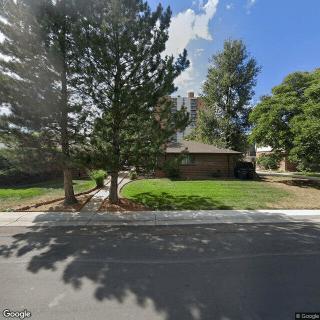
8 resident community capacity
Types of Care
Assisted Living
Board and Care Home
Amenities
Cable or satellite TV
Dining room
Fully furnished
Garden
Housekeeping services
Move-in coordination
Outdoor space
Telephone
Wi-Fi/high-speed internet available
Transportation
Denver International (16 miles away)
Care Services
24-hour supervision
Activities of daily living assistance
Assistance with bathing
Assistance with dressing
Assistance with transfers
Coordination with health care providers
Diabetes diet
Meal preparation and service
Medication management
Special dietary restrictions
Transportation arrangement (medical)
Transportation to doctors appointments
Dining
Diabetes diet
Special dietary restrictions
Activities
Community-sponsored activities
Scheduled daily activities
Nearby Places of Interest
Physicians
Orthopedic Associates (1 miles)
Rose Medical Center Medical Libr (1 miles)
Center For Hearing, Speech, & Language (1.2 miles)
Colorado Kids Pediatrics (2 miles)
Cherry Creek Pediatrics (2.4 miles)
Children's Medical Center (3.3 miles)
Denver Health: Gipson Eastside Family Health Center (3.6 miles)
Theaters
Amc 9+Co 1 (1.4 miles)
Regal UA Denver Pavilions 4DX & RPX (4.1 miles)
Restaurants
Snooze, an A.M. Eatery (1.4 miles)
Cerebral Brewing (1.7 miles)
Flower Child (2.2 miles)
Bull & Bush (2.3 miles)
NoRth (2.4 miles)
Stanley Beer Hall (2.4 miles)
Cherry Cricket (2.4 miles)
Hospitals
National Jewish Health (1.5 miles)
Cherry Creek Eye Center (2.4 miles)
University of Colorado Hospital (3.9 miles)
Webb Center for Primary Care (4.1 miles)
Village Pavilion (4.2 miles)
Children's Hospital Colorado Anschutz Medical Campus (4.3 miles)
Rocky Mountain Regional VA Medical Center (4.5 miles)
Assisted living provides moderate support for seniors seeking independence, while memory care offers specialized support for individuals with dementia or cognitive impairments through structured routines and trained staff. Key differences include care approaches, environment security measures, staff training levels, activity types, and cost considerations.
Assisted living communities offer diverse activities beyond traditional games to enhance seniors' physical health, cognitive well-being, emotional enrichment, and social connections, including fitness classes, creative expression, and intergenerational interactions. These enriching programs foster community bonds and support residents' independence and happiness.
The article differentiates between assisted living and memory care, explaining that assisted living supports seniors with daily activities while promoting independence, whereas memory care provides specialized services for individuals with dementia, focusing on secure environments and cognitive support. It also addresses staff training, safety considerations, costs, family involvement, and transition strategies for families navigating these care options.
Get PricingAsk A QuestionSchedule A TourContact Senior Advisor
By clicking submit, you agree to our Partner's Terms of Use. You
also consent to receive calls and texts, which may be autodialed, from our Partner. Your consent is not a condition to
using our Partner's service. Please visit our Partner's Privacy Policy for information about their privacy practices.



 8 resident community capacity
 Assisted Living
 Board and Care Home
 Cable or satellite TV
 Dining room
 Fully furnished
 Garden
 Housekeeping services
 Move-in coordination
 Outdoor space
 Telephone
 Wi-Fi/high-speed internet available
 Denver International (16 miles away)
 24-hour supervision
 Activities of daily living assistance
 Assistance with bathing
 Assistance with dressing
 Assistance with transfers
 Diabetes diet
 Meal preparation and service
 Medication management
 Special dietary restrictions
 Transportation arrangement (medical)
 Transportation to doctors appointments
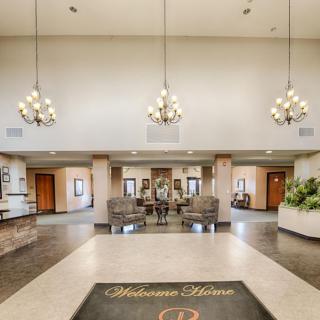
 Newer, clean facility with a variety of activities and a pleasant atmosphere.

 Assisted Living and Memory Care: Understanding Their Core Differences
 Beyond the Bingo Hall: 50+ Enriching Activities for Seniors in Assisted Living
 Understanding the Distinctions: Assisted Living and Memory Care Explained