
1647 Roberta Drive, San Mateo, CA 94403
For more information about senior living options: (866) 208-4318
Overall Review of Roberta Care Home
Pros
 Their professional teams provide excellent care to seniors and comprehensive assessments, especially for memory loss and dementia.
- They provide case management to needy clients and their families, coordinating care and referrals to resources.
- Their doctors are experts in geriatric care and memory loss.
- They typically respond quickly to calls and emails, and urgent matters are followed up directly with patients or families.
- They are a well-regarded, long-standing geriatric clinic serving San Mateo County, with continued excellent services.
Cons
 The providers and staff are very incompetent.
- They do not care about their patients and are irresponsible.
- They fail to send in patients' medications on time, constantly lose records, require long waits (at least 20 minutes) for each phone call, and have long delays at the office.
- They keep callers on hold for extended periods; when they answer, they put the receiver down and ignore the caller, with background chatter indicating terrible customer service.
- Nobody answers the phone, and callers must wait for a very long time.
Review
This community is best suited for families that can act as active care partners, prepared to supervise daily operations and push for timely, accurate service. The resident who thrives here would be someone whose medical needs are stable enough to tolerate hands-on oversight from relatives, rather than someone who relies on consistently reliable medication delivery, meticulous documentation, or rapid administrative responses. The reviews make the boundary clear: when health situations demand prompt intervention or precise record-keeping, the home falls short. In short, it serves as a fit only for families willing to take a proactive role in coordinating care, and not for those seeking a hands-off, dependable daily routine.
Those weighing alternatives should focus on communities with proven medication management, responsive front-d desk service, and transparent record-keeping. Look for facilities that demonstrate strong staff stability and a clear policy framework for medication administration, including timely MAR updates, bedside passes, and proactive communication with families. Memory-care or higher-acuity options deserve particular scrutiny, as they require dedicated staff trained to handle dementia-related needs and emergencies without relying on family troubleshooting. If a smooth, predictable daily rhythm and minimal family intervention are priorities, other options are likely to outperform this one.
The potential upside in this setting is hard to monetize because it hinges on external supports rather than the home’s internal operations. A nearby geriatric clinic’s reputation for comprehensive assessments and case management can, in theory, complement a live-in team, offering robust medical oversight when the home itself falters. However, that external advantage does not compensate for ongoing day-to-day dysfunction reported in the residence. Quick responses from clinicians are praised in isolation, but they do not erase persistent problems with care coordination, telephone accessibility, or the timely delivery of medications and records. The net effect is a disconnect between medical oversight and daily living.
The core cons are cumulative and material: staff incompetence and apathy, chronic delays in getting medications to residents, frequent misplacement or loss of records, and long waits on the phone with little accountability. Residents risk missed doses or interruptions in treatment, while families contend with unreliable communication and uncertain accountability. These issues undermine safety, continuity of care, and trust, fundamental elements for anyone evaluating senior living. When the facility cannot guarantee basic administrative reliability, even well-intentioned care teams can’t compensate for the gaps in daily operations.
For families moving forward, a disciplined due-diligence plan is essential. Seek a written, facility-wide medication-management policy, a documented process for record-keeping, and a clear escalation path with a designated point person. Request a live demonstration of day-to-day routines, including medication passes, nursing oversight, and how emergencies are handled. Probe staffing levels, turnover rates, staff training, and the availability of an on-site administrator during peak hours. If memory impairment or complex medical conditions are present, demand assurances that memory-care protocols and geriatric-specialist access are integrated into the daily routine, not outsourced only in theory.
Bottom line: based on the weight of feedback, Roberta Care Home presents significant reliability and safety concerns that outweigh any partial benefits. It is not the preferred choice for families seeking predictable daily care, dependable medication management, and responsive administrative support. Alternatives that offer stronger staffing stability, clearer care processes, and verifiable communication pathways should be prioritized. If choosing this community anyway, approach it as a temporary arrangement with rigorous oversight, explicit service expectations, and a concrete plan for transitioning to a more reliable option should gaps persist.
 4 resident community capacity
 Assisted Living
 Cable or satellite TV
 Dining room
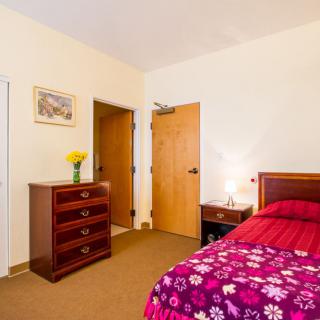
 Fully furnished
 Garden
 Housekeeping services
 Move-in coordination
 Outdoor space
 Telephone
 Wi-Fi/high-speed internet available
 San Francisco International (6 miles away)
 24-hour supervision
 Activities of daily living assistance
 Assistance with bathing
 Assistance with dressing
 Assistance with transfers
 Diabetes diet
 Meal preparation and service
 Medication management
 Special dietary restrictions
 Transportation arrangement (medical)
 Transportation to doctors appointments

 Comprehensive Insights into Activities of Daily Living (ADLs) and Their Assessment
 Guiding Elderly Parents Who Refuse Assisted Living: 6 Practical Steps
 Your Comprehensive Guide to Luxury Assisted Living: Elevated Facilities, Amenities, and Costs