

13510 Aurora Drive, San Leandro, CA 94577
For more information about senior living options: (866) 208-4318
Mulford Garden Care Home Costs & Pricing
At Mulford Garden Care Home, the monthly costs for accommodation are notably competitive when compared to both Alameda County and the broader state of California. For semi-private rooms, residents pay $2,500, which is significantly lower than the county's average of $3,273 and the state's average of $3,333. Similarly, private rooms at Mulford are priced at $3,000, comfortably below Alameda's average of $3,748 and California's statewide figure of $3,939. Studio accommodations also reflect this trend; at $3,000 per month, they stand in stark contrast to the higher costs found in Alameda County ($4,532) and California as a whole ($4,145). These pricing advantages underscore Mulford Garden Care Home's commitment to providing affordable care while maintaining quality living options for its residents.
| Floor plans | Mulford Garden Care Home | Alameda County | California |
|---|---|---|---|
| Semi-Private | $2,500 | $3,273 | $3,333 |
| Private | $3,000 | $3,748 | $3,939 |
| Studio | $3,000 | $4,532 | $4,145 |
Memory care communities with a similar price nearby
-
About the same

San Carlos Elms
$2,500 to $5,880 / month14.2 miles away -
About the same
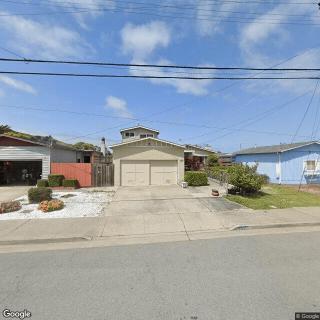
Oceanside Board and Care II
$2,500 to $3,000 / month17.4 miles away -
from +$300 / mo
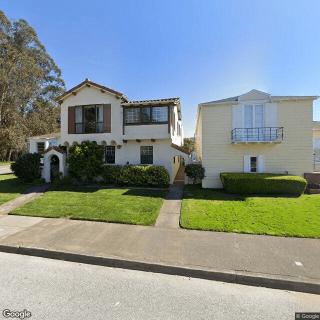
Nobis Care Homes
$2,800 to $3,200 / month16.6 miles away -
from +$300 / mo

Peninsula Reflections
$2,800 to $9,040 / month15.1 miles away -
About the same
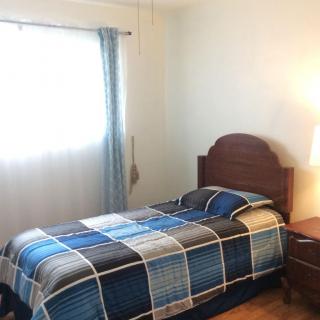
Isherwood Care III
$2,500 to $3,500 / month14.5 miles away
Overall Review of Mulford Garden Care Home
Pros
 The staff are very nice and take good care of residents.
- The facility is a great place.
- The facility is very clean.
- The staff are very accommodating.
- The value is excellent.
- It has been a great experience.
- The place was beautiful, warm, and cozy.
- The director is very knowledgeable and helpful in getting started.
Cons
 Some of the other places were nicer.
Review
Mulford Garden Care Home in San Leandro is best suited for families seeking a small, home-like assisted living option where everyday care, cleanliness, and personal attention take precedence over resort-style amenities. The environment feels warm and intimate, with staff who are accommodating and a director who guides families clearly through the transition. Residents benefit from a neat, well-maintained setting and a sense that caregivers know their routines and preferences. In short, this is the kind of place where a loved one can settle into a predictable day-to-day rhythm with dependable oversight and approachable staff, at a value that stretches dollars further than many peers.
Those who want a high-energy activity calendar or a chic, upscale atmosphere should consider alternatives. The programmatic side of Mulford Garden Care Home appears modest, and reviewers note that activities are either minimal or not rated at all. For families prioritizing a broad social calendar, structured programming, or specialized programming for memory care, other communities are more likely to deliver. Some observers also suggest that, relative to some competitors, there are properties with more polish or larger campuses. If lively engagement and a wide array of amenities are non-negotiable, Mulford Garden Care Home may feel lean by comparison.
The strongest positives revolve around cleanliness, personal touch, and value, and these elements efficiently offset the limited programming for many residents. A clean, home-like setting reduces stress and supports a calm daily routine, while staff responsiveness and flexibility make day-to-day care predictable and reassuring. The director’s knowledge and hands-on approach in getting families started help ease the transition, removing friction during what is often a stressful move. The combination of attentive caregivers, accessible leadership, and an inviting atmosphere contributes substantially to overall satisfaction, especially for families seeking straightforward, reliable care without a premium price tag.
Where downsides appear, they are mainly in the activity/amenities column. The implied constraint is that the community trades off a bustling program for intimate, manageable care. For a resident who thrives on scheduled outings, daily clubs, or frequent on-site events, the experience may feel barebones. That trade-off matters less for those who value easy access to staff, a consistent routine, and the comfort of a small, cohesive environment. In this sense, the value proposition becomes a practical shield: care quality is clear, and the cost remains favorable when matched against more expansive options.
Visiting Mulford Garden Care Home with a set of precise questions will reveal how well it fits particular needs. Prospective families should inquire about staff-to-resident ratios during shifts, how meals are planned and served, and whether privacy and personal space are respected amid caregiving routines. Clarify what activities are offered, how often they occur, and whether tailored programming can be created for individual interests. Ask about transportation, medication management, and the process for escalating care when health needs change. The right answers will reinforce the impression of a dependable, low-stress environment that respects autonomy while delivering steady support.
Overall, Mulford Garden Care Home emerges as a solid, practical choice for families prioritizing a warm, clean, home-like setting with genuine personal attention and clear leadership. It excels for residents who value daily reliability, straightforward care, and a friendly, approachable staff over expansive programming or high-end amenities. Those building a plan for someone who thrives in small communities with tight-knit routines will find the fit reassuring and cost-effective. Conversely, households chasing a livelier social schedule or more luxurious surroundings should keep alternatives in view and compare how the extras weigh against the core strengths Mulford Garden Care Home offers.
 6 resident community capacity
 Assisted Living
 Board and Care Home
 Memory Care
 Respite Care
 Cats allowed
 Dogs allowed
 Cable or satellite TV
 Dining room
 Fully furnished
 Garden
 Housekeeping services
 Move-in coordination
 Outdoor space
 Private
 Private bathrooms
 Telephone
 Wi-Fi/high-speed internet available
 Metropolitan Oakland International (3 miles away)
 24-hour supervision
 Activities of daily living assistance
 Assistance with bathing
 Assistance with dressing
 Assistance with transfers
 Diabetes diet
 Diabetic care
 High acuity care
 Meal preparation and service
 Medication management
 Special dietary restrictions
 Transportation arrangement (medical)
 Transportation to doctors appointments
 Christian services


 How to Communicate with a Loved One Living with Dementia: 10 Supportive Strategies
 Comprehensive Guide to VA Nursing Homes: A Crucial Long-Term Care Resource for Veterans
 Estimating the Expenses of At-Home Dementia Care: A Detailed Exploration