Holy Rosary Residence offers competitive pricing for its residential care services, with semi-private rooms available at $3,500 per month and private rooms at $4,000. When compared to the broader context of San Diego County, where semi-private accommodations average slightly higher at $3,518 and private rooms also present a higher rate of $3,939, Holy Rosary Residence positions itself as an attractive option for those seeking quality care without exceeding budgetary expectations. Furthermore, in relation to the overall state average for California's assisted living facilities - where semi-private rates stand at $3,333 and private options align with those in San Diego County - the pricing at Holy Rosary remains competitively favorable. This combination of quality care and reasonable costs underscores the value that Holy Rosary Residence provides to its residents.
Floor plans
Holy Rosary Residence
San Diego County
California
Semi-Private
$3,500
$3,518
$3,333
Private
$4,000
$3,939
$3,939
Assisted Living communities with a similar price nearby
Some families say the care level wasn’t equipped for dementia needs.
Two reviews describe a stressful admission and early-stay experience tied to dementia-related assistance. In both accounts, staff support was not accepted quickly enough for basic needs, and the residence asked for the resident to leave shortly after arrival. Residents’ families also question whether the facility had adequately reviewed the resident’s care requirements beforehand.
common2 reviews mention this
Staff feel genuinely warm
Multiple reviewers describe the staff as kind and supportive.
One review says the residence felt like a home, with staff who are kind, knowledgeable, and helpful, and a care team that accommodates ongoing needs. Another review—though overall negative—still refers to the caretakers there as “wonderful,” highlighting relationships that families formed. Across these accounts, the staff experience is a key point residents and families bring up.
common2 reviews mention this
Home-like setting stands out
Reviewers repeatedly describe a more home-like feel than a facility.
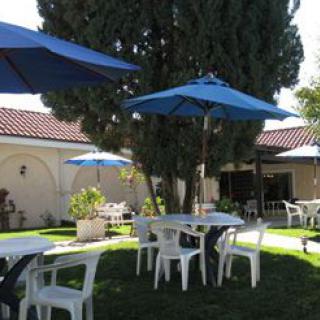
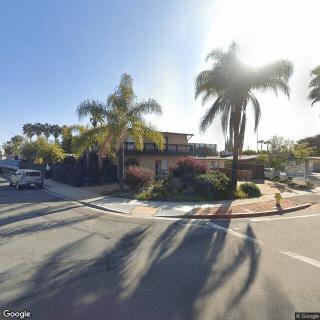
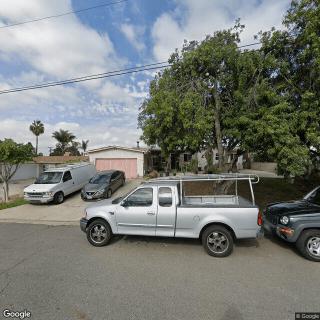
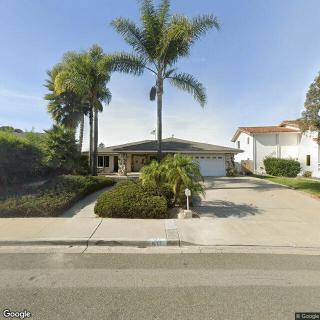
A positive review characterizes Holy Rosary as more home than facility, noting a quiet, accessible neighborhood and a room set up with familiar personal items. Another review also mentions the residence as immaculate and welcoming for the transition period. Together, these comments suggest the setting and move-in feel are part of what people notice most.
How we summarize
Counts show how many written reviews mention each theme; a review can touch several themes, and only frequently mentioned themes are displayed.
Features
Housing
6 resident community capacity
Types of Care
Assisted Living
Board and Care Home
Respite Care
Amenities
Cable or satellite TV
Devotional services off-site
Devotional services on-site
Dining room
Fully furnished
Garden
Housekeeping services
Indoor common areas
Move-in coordination
Outdoor common areas
Outdoor space
Private
Respite or short term stays offered
Swimming pool / hot tub
Telephone
Wheelchair accessible showers
Wi-Fi/high-speed internet available
Transportation
San Diego International-Lindbergh (7 miles away)
Care Services
24-hour supervision
Activities of daily living assistance
Ambulatory care
Assistance with bathing
Assistance with dressing
Assistance with transfers
Coordination with health care providers
Diabetes diet
Diabetic care
High acuity care
Incontinence care
Meal preparation and service
Medication management
Special dietary restrictions
Transportation arrangement (medical)
Transportation to doctors appointments
Dining
Diabetes diet
Kosher
Meals provided
Special dietary restrictions
Vegetarian
Activities
Community-sponsored activities
Devotional activities offsite
Devotional activities on-site
Scheduled daily activities
Nearby Places of Interest
This part of San Diego, California offers a wide range of amenities and services that would cater to the needs of seniors looking to settle down in the area. With multiple pharmacies, hospitals, and physicians offices within close proximity, residents would have convenient access to healthcare facilities. Additionally, there are various cafes, restaurants, and transportation options nearby for seniors to enjoy dining out and exploring the city. The presence of theaters and parks also provides opportunities for leisure activities and entertainment. Overall, this neighborhood offers a well-rounded environment with essential services and recreational options for seniors seeking a vibrant community in San Diego.
Pharmacies
CVS Pharmacy (0.6 miles)
Kaiser Zion Pharmacy (2.1 miles)
Rite Aid (2.2 miles)
CVS Pharmacy (2.3 miles)
CVS Pharmacy (2.3 miles)
Rite Aid (2.3 miles)
Rite Aid (2.4 miles)
Cafes
Starbucks (1.1 miles)
The Simple Coffee House (3 miles)
Communal Coffee (4.1 miles)
The Coffee Bean and Tea Leaf (5.4 miles)
Copa Vida (6.3 miles)
Kung Fu Tea (6.3 miles)
Ghirardelli Ice Cream And Chocolate Shop (6.3 miles)
Restaurants
Sombrero Mexican Food (2 miles)
In-N-Out Burger (2.2 miles)
In-N-Out Burger (2.4 miles)
McDonald's (2.8 miles)
Rally's (3.6 miles)
Jack In The Box (3.7 miles)
BJ's Restaurant & Brewhouse (3.8 miles)
Physicians
Kaiser Permanente Vandever Medical Offices (2.1 miles)
Kaiser Permanente Viewridge Medical Offices 2 (5.1 miles)
Sharp Rees-Stealy San Diego Radiology (5.2 miles)
Internal Medicine Associates (5.5 miles)
Hospitals
Kaiser Permanente San Diego Medical Center/Kaiser Foundation Hospital (2.1 miles)
Sharp Grossmont Hospital Brier Patch (4.2 miles)
Sharp Soc (4.4 miles)
Rady Children's Hospital (5 miles)
Naval Medical Center San Diego (5.1 miles)
Rady's Children's Hospital San Diego Large Waiting Room, Frost Street, Entrance 8 (5.1 miles)
Sharp Memorial Hospital (5.2 miles)
Transportation
Grossmont Transit Center (3.7 miles)
Montgomery Field Airport (MYF) (5 miles)
Fashion Valley Trolley Station and Transit Center (5.6 miles)
Holy Rosary Residence offers competitive pricing for its residential care services, with semi-private rooms available at $3,500 per month and private rooms at $4,000. When compared to the broader context of San Diego County, where semi-private accommodations average slightly higher at $3,518 and private rooms also present a higher rate of $3,939, Holy Rosary Residence positions itself as an attractive option for those seeking quality care without exceeding budgetary expectations. Furthermore, in relation to the overall state average for California's assisted living facilities - where semi-private rates stand at $3,333 and private options align with those in San Diego County - the pricing at Holy Rosary remains competitively favorable. This combination of quality care and reasonable costs underscores the value that Holy Rosary Residence provides to its residents.
Transitioning from assisted living to memory care is driven by an individual's cognitive decline and specific needs, requiring careful evaluation of indicators like increased confusion and wandering. The process involves consulting medical professionals, researching suitable communities, considering financial and legal aspects, and ensuring effective communication for personalized care plans.
Assisted living provides moderate support for seniors seeking independence, while memory care offers specialized support for individuals with dementia or cognitive impairments through structured routines and trained staff. Key differences include care approaches, environment security measures, staff training levels, activity types, and cost considerations.
Assisted living communities offer diverse activities beyond traditional games to enhance seniors' physical health, cognitive well-being, emotional enrichment, and social connections, including fitness classes, creative expression, and intergenerational interactions. These enriching programs foster community bonds and support residents' independence and happiness.
Get PricingAsk A QuestionSchedule A TourContact Senior Advisor
By clicking submit, you agree to our Partner's Terms of Use. You
also consent to receive calls and texts, which may be autodialed, from our Partner. Your consent is not a condition to
using our Partner's service. Please visit our Partner's Privacy Policy for information about their privacy practices.

 6 resident community capacity
 Assisted Living
 Board and Care Home
 Respite Care
 Cable or satellite TV
 Devotional services off-site
 Dining room
 Fully furnished
 Garden
 Housekeeping services
 Indoor common areas
 Move-in coordination
 Outdoor common areas
 Private
 Swimming pool / hot tub
 Telephone
 Wheelchair accessible showers
 Wi-Fi/high-speed internet available
 San Diego International-Lindbergh (7 miles away)
 24-hour supervision
 Activities of daily living assistance
 Ambulatory care
 Assistance with bathing
 Assistance with dressing
 Assistance with transfers
 Diabetes diet
 Diabetic care
 High acuity care
 Incontinence care
 Meal preparation and service
 Medication management
 Special dietary restrictions
 Transportation arrangement (medical)
 Transportation to doctors appointments
 Lower pricing than county/state averages with convenient nearby amenities.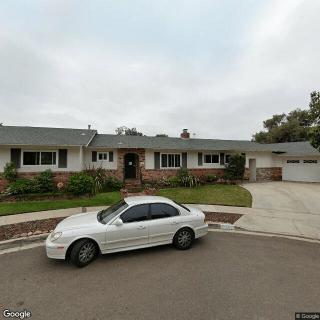

 When to Transition from Assisted Living to Memory Care: Key Indicators, Steps, and Finding the Right Community
 Assisted Living and Memory Care: Understanding Their Core Differences
 Beyond the Bingo Hall: 50+ Enriching Activities for Seniors in Assisted Living