

7434 Black Oak Rd, San Diego, CA 92114
To contact a resident: (619) 262-7783
For more information about senior living options: (866) 208-4318
Overall Review of Guiding Light Residential Care
Pros
 They have so many services available for people with special needs.
- Their staff are always kind.
- Home of Guiding Hands provides housing and a multitude of related services to over 1600 developmentally disabled individuals in the San Diego and Imperial Counties.
- It is one of the most professionally managed and well run nonprofits in Southern California.
- Home of Guiding Hands helps families find support for their loved ones who are needing help at home or in the community.
- Home of Guiding Hands has amazing staff who provide a high quality of care.
- The staff have so much knowledge about special needs and the services available to this community.
- They provide so many activities and opportunities.
- HGH is a wonderful source of support and is incredibly helpful.
- The people who work here are all really loving and supportive.
Cons
 The front desk staff member Jenna was unhelpful, repeatedly answering the phone and then leaving it off the hook, which is really stupid.
- The place is a joke; they hung up on callers and now nobody answers the phone.
- The management has gone downhill and they played favorites.
- Clients were treated like they were stupid.
- Rating them with a star is a joke.
- The management is seriously flawed.
Review
Guiding Light Residential Care is best suited for families seeking a disability-focused, service-rich environment where warmth from staff and a mission-driven nonprofit culture translate into tangible daily supports. This community works well for residents who benefit from an integrated mix of housing options, structured activities, respite services, and community-based supports, all delivered in a setting that emphasizes engagement and continuity. Families aiming to empower independence with steady assistance will find a strong alignment here, as programs are designed to maintain routine, social connection, and purposeful activity without sacrificing safety or stability.
That said, there are clear reasons some might want to look at alternatives. Administrative reliability and communication consistency are legitimate concerns for a portion of the feedback. Several reviews recount difficulties with front-desk responsiveness and phone access, and a few accounts touch on management shortcomings or past issues with favoritism. For families where a flawless, predictably responsive operation is non-negotiable, or where a smaller, more tightly managed setting is preferred, it’s prudent to compare options. In short, the core strengths are compelling, but operational reliability should be verified through direct conversation and up-close observation.
On balance, the strongest positives cluster around breadth of service and the human touch. The facility stands out for offering a wide array of supports for people with special needs, paired with consistently described kindness from staff and a genuinely supportive environment. Residents benefit from robust programming and events that foster socialization, skill-building, and a sense of belonging, factors that translate into meaningful improvements in quality of life when combined with careful care planning. For families who value a community that treats independence as an achievable goal and provides real opportunities to grow, these elements collectively outweigh the less predictable administrative feedback.
Personalized care emerges as a notable strength in several accounts. One family describes a staff member spending hours at home to understand a child’s needs, illustrating a level of individualized attention that is rare in larger operations. The broader impact, serving thousands and being described as professionally managed by some, suggests there are established protocols, solid staffing resources, and accountability structures behind the care. The combination of housing stability and related supports means families can access multiple levers of support without relocating, delivering continuity that is often crucial for special-needs planning and long-term outcomes.
Yet the caveats deserve serious attention. The most convincing detractor notes revolve around communication lapses and inconsistent responsiveness, which can sow real doubt during times of urgency. Management criticisms, ranging from perceived disease of structure to concerns about favoritism, signal that leadership quality may vary by program or time. The practical remedy is to demand concrete assurances: designate a single point of contact, secure defined response times, request a written care plan, and establish clear escalation processes. Prospective families should visit multiple times, speak directly with the program director, and corroborate experiences with current residents or families to gauge whether the present leadership aligns with expectations.
Decision-making guidance is clear. For families prioritizing a comprehensive, disability-centered program with warm staff and abundant activity, Guiding Light Residential Care represents a solid option worthy of serious consideration. Prepare for conversations about administration, set explicit expectations for responsiveness, and verify that the level of medical and daily support matches the resident’s needs. If reliability of communication and predictable governance are non-negotiables, compare this community with alternatives using the same due diligence. When the numbers stack up, depth of services, personal attention, and a proven, mission-driven framework, the choice supports continued independence, engagement, and dignity for a loved one navigating life with a disability.
 Board and Care Home
 San Diego International-Lindbergh (9 miles away)




 Exploring Nonmedical Home Care: Understanding Services, Costs, and Financial Approaches
 Engaging Brain Games and Innovative Apps to Keep Senior Minds Active
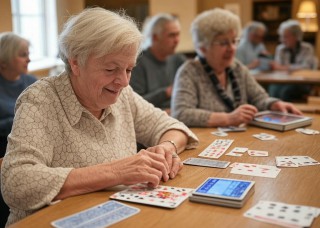 Effective Strategies for Keeping Seniors' Minds Active: A Deep Dive into Brain Games and Apps