

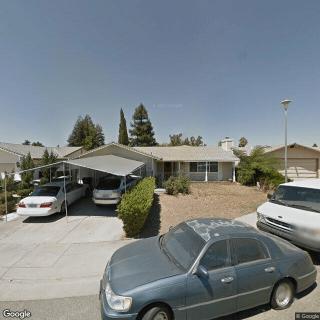
8006 Bucks Harbor Way, Sacramento, CA 95828
To contact a resident: (916) 689-5491
For more information about senior living options: (866) 208-4318
Camelot Care Home Costs & Pricing
Camelot Care Home offers competitive pricing for its resident accommodations, particularly in comparison to Sacramento County and the broader California market. For a semi-private room, Camelot charges $2,900 per month, which is notably lower than the county average of $3,106 and significantly more affordable than the state average of $3,333. Similarly, their private rooms are priced at $3,200 - again undercutting both Sacramento County's average of $3,686 and California's state average of $3,939. This strategic pricing not only makes Camelot Care Home an attractive option for potential residents but also highlights their commitment to providing quality care at a reasonable cost.
| Floor plans | Camelot Care Home | Sacramento County | California |
|---|---|---|---|
| Semi-Private | $2,900 | $3,106 | $3,333 |
| Private | $3,200 | $3,686 | $3,939 |
Senior living communities with a similar price nearby
-
from -$400 / mo
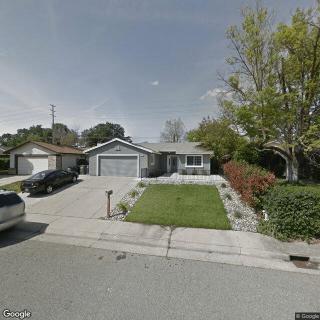
Sunrise Senior Care
$2,500 to $3,500 / month16.5 miles away -
from +$100 / mo
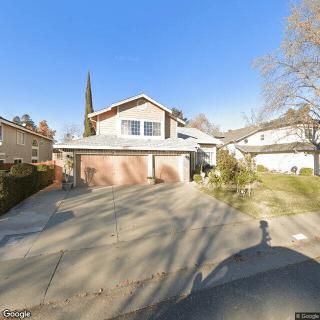
Afable Care Home
$3,000 to $3,500 / month17.9 miles away -
from -$400 / mo

Gina's Home Care
$2,500 / month12.3 miles away -
from -$400 / mo
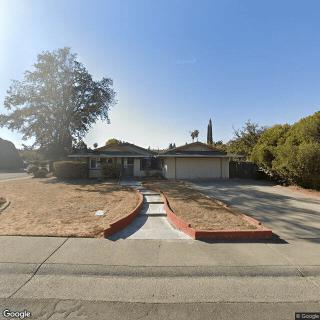
Lucian Home
$2,500 / month18.7 miles away -
from -$248 / mo

All Care Home Health Svc
$2,652 / month11.2 miles away
Overall Review of Camelot Care Home
Pros
 He offers helpful programs to assist his mom when she arrives.
- He proactively helps get his mom on Medi-Cal.
- He provides accessible resources to support her.
- He demonstrates care by seeking programs that can help her.
Cons
 They see the $3,000 monthly cost after mom arrives as prohibitive.
- They are frustrated by the need to enroll mom in Medi-Cal and find programs to assist her.
- They feel overwhelmed by having to call multiple programs to help her.
- They worry that this arrangement may not provide sufficient or reliable support.
Review
Camelot Care Home in Sacramento is best suited for families seeking an affordable, practical assisted-living option that prioritizes everyday support in a homelike setting. The standout feature for this community is the potential to keep costs around a manageable level, roughly in the low three-thousands per month, with the possibility of Medi-Cal assistance guided by the operator. For seniors who do not require intensive medical intervention, yet need reliable help with daily activities, the setting can feel approachable and personal. The emphasis appears to be on steady daily care and accessible financial pathways, rather than on luxury amenities or elaborate programming.
Those evaluating options for highly specialized care should consider alternatives. If memory care, 24/7 on-site medical oversight, robust clinical staffing, or a wide array of structured activities matter deeply, Camelot may fall short. Families relying on transparent, widely verified quality metrics or on a large, centrally managed campus with extensive ancillary services may find the landscape at this small home insufficient. Additionally, if a resident requires advanced equipment, frequent physician rounds, or highly regulated clinical protocols, a larger facility with documented staff ratios and certifications could be a wiser match.
The most compelling pro is financial feasibility. At about $3,000 per month, the cost barrier is significantly lower than many local options, which can ease long-term planning and stress around monthly bills. The operator hints at Medi-Cal pathways and related programs, which can materially relief the financial burden for eligible families. In a small, intimate setting, there is the potential for closer, more responsive attention from staff, with fewer residents competing for attention. If the family values straightforward access to resources that help manage care costs, this combination can tilt the decision in Camelot’s favor.
However, the cons merit serious consideration. The few available reviews yield a limited picture, making trust-building with this community a more deliberate process. A 3.7 average from three reviews signals mixed experiences but insufficient breadth to confirm consistency in care quality, staffing reliability, or responsiveness. Critical gaps in publicly shared information, such as exact staff-to-resident ratios, clinical oversight, meal quality, and daily activity programming, leave questions about day-to-day life unanswered. For families prioritizing transparency and measurable benchmarks, these gaps are nontrivial.
The way the positives pair with the drawbacks matters most in real-world decisions. The affordability and Medi-Cal-adjacent options can offset some risk, especially where budget constraints are a primary concern. A smaller home environment can foster more intimate relationships with caregivers, potentially translating into calmer routines and better familiarity with a resident’s preferences. Yet such benefits hinge on dependable staffing and consistent care practices, which are not fully documented. Without robust, verifiable indicators of quality, the financial upside cannot fully compensate for concerns about care stability and long-term suitability.
Actionable next steps shape the practical path forward. Begin with a candid planning conversation focused on a detailed care plan: the resident’s medical needs, daily routines, and expected level of supervision. Request a tour that includes introductions to the caregiving staff, a review of the daily schedule, and written information on staffing patterns, emergency procedures, and meal services. Confirm Medi-Cal eligibility, available programs, and the exact processes for accessing them through the operator. Compare Camelot against 1–2 other nearby options that offer clearer staffing data and more expansive programming, then weigh both cost and care quality over a 12-month horizon. Camelot can be a solid match for families prioritizing affordability and accessible assistance, but the choice should rest on concrete, verifiable assurances about care consistency and resident well-being.
 Board and Care Home
 Activities off-site
 Indoor common areas
 Outdoor common areas
 Private
 Sacramento International (19 miles away)
 Diabetic care
 High acuity care
 Incontinence care
 Medication management
 Meals provided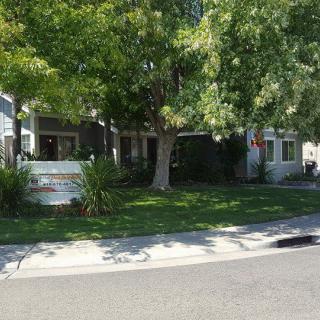



 Comprehensive Insights into Palliative Home Care: What It Is and What to Expect
 Skilled Nursing Facilities vs. Nursing Homes: Making Sense of the Differences
 A Detailed Examination of Nursing Home Costs Across the U.S.