
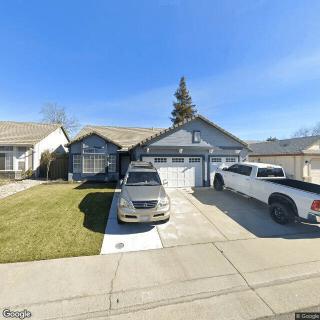
9565 Pinehurst Drive, Roseville, CA 95747
For more information about senior living options: (866) 208-4318
Morgan Creek Villa Costs & Pricing
Morgan Creek Villa offers a competitive pricing structure for its accommodations, with a monthly cost of $5,000 for both one-bedroom and private room options. This rate is slightly above the average costs in Placer County, which sits at approximately $4,777 for similar one-bedroom arrangements and $4,026 for private rooms. When compared to the broader California market, Morgan Creek Villa remains on the higher end, where one-bedroom units average around $4,340 and private rooms about $3,939. While these rates may be higher than local and state averages, they reflect the quality of care and services provided at Morgan Creek Villa, positioning it as a premium choice in the area.
| Floor plans | Morgan Creek Villa | Placer County | California |
|---|---|---|---|
| 1 Bedroom | $5,000 | $4,777 | $4,340 |
| Private | $5,000 | $4,026 | $3,939 |
Memory care communities with a similar price nearby
-
from -$500 / mo
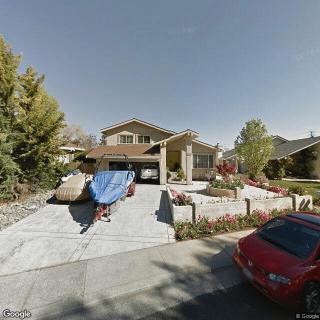
Sunriver Senior Care
$4,500 / month8.6 miles away -
from -$850 / mo
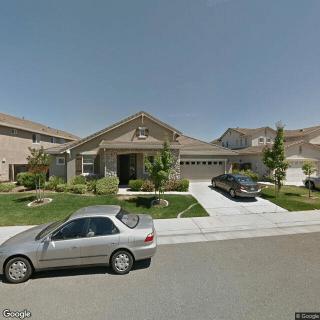
Ferrari
$4,150 to $5,500 / month8.9 miles away -
from -$200 / mo
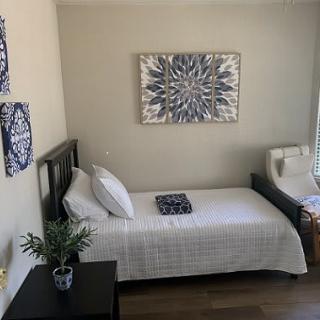
Mountain View Senior Care
$4,800 / month8.0 miles away -
About the same

Placer Starcare
$4,999 to $6,000 / month7.7 miles away -
from +$160 / mo
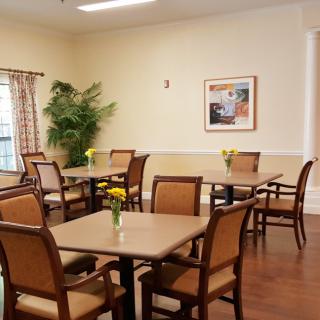
Revere Court Memory Care
$5,160 to $6,150 / month19.7 miles away
Overall Review of Morgan Creek Villa
Pros
 Morgan Creek Villa has cared for the resident for five years with great care.
- The resident has her own private room with 24/7 care, home-cooked meals, and lots of love.
- Marie, Del, and the caregiver team are wonderful and very attentive to her needs.
- They are communicative and responsive to all matters concerning her health and wellbeing.
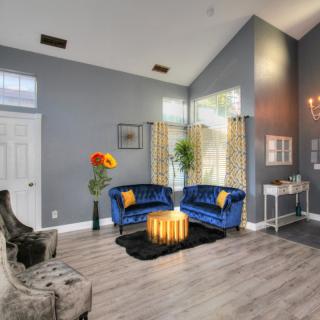
- The residents have access to the common living room and outdoors if desired.
- The reviewer highly recommends this care home.
Review
Morgan Creek Villa is best suited for families seeking an intimate, home-like care setting for a very elderly loved one who requires round-the-clock supervision but benefits from private space, daily routine stability, and deeply personal attention. The standout is a private room paired with 24/7 care delivered by a small, devoted team. This is not a large campus; it is a caregiver-led environment where warmth, steady communication, and a nurturing atmosphere are the core offerings. For a family prioritizing continuity of care and a sense of “home,” Morgan Creek Villa delivers with a clear focus on consistent, compassionate support.
The strongest advantages lie in the human touch and the everyday logistics that matter most to an aging resident. A caregiver team led by named staff members provides attentive care aligned with health and wellbeing, and the staff’s communicative approach keeps family members in the loop about changes and needs. A private room preserves dignity and privacy while still benefiting from 24/7 supervision, which translates into quick responses to health concerns and ongoing reassurance. The presence of home-cooked meals reinforces comfort and nutrition, while access to a common living room and outdoor space enables socialization on demand without forcing participation in a busy, impersonal schedule. In short, the care model prioritizes stability, responsiveness, and a family-like rhythm that can ease daily planning for worried relatives.
Families should consider alternatives if the situation calls for different strengths. Those who need highly specialized medical services, memory-care programming, or formal rehab amenities on-site may find larger or more specialized facilities better aligned with those needs. Similarly, if a broader network of activities, scheduled outings, or a more bustling social calendar is a priority, a bigger community could deliver that breadth more readily. Morgan Creek Villa excels at intimate, steady caregiving; alternatives may offer more extensive clinical resources or a wider array of structured programs.
Because the available review centers on a single, intensely positive experience, the main potential drawback is the absence of counterpoints to balance the strengths. The intimate size and singular caregiving team can feel limiting if staff turnover occurs or if medical complexity increases beyond what a home setting is designed to handle. While the current impression highlights exceptional attentiveness and continuity, any family evaluating Morgan Creek Villa should confirm the scope of on-site medical oversight, the ability to coordinate with external providers, and the facility’s capacity to accommodate evolving needs without moving to another setting. The positives, private room, 24/7 care, home meals, and a responsive team, do substantially offset these considerations for families prioritizing a stable, home-forward routine.
To make a well-informed decision, prospective residents’ families should verify several practical points during a visit. Inquire about staffing ratios by shift, the presence of licensed clinical staff on-site, and how medical changes are communicated and managed. Confirm what is included in the private-room package, what constitutes “home-cooked” meals, and how dietary needs are accommodated. Ask about activity options, outdoor accessibility, and opportunities for meaningful engagement that respect the resident’s preferences and energy level. Finally, probe pricing transparency, any additional fees, and how family involvement is structured, whether there is flexibility in visitation schedules and how families can participate in daily care planning.
The bottom line is clear: Morgan Creek Villa serves best those families seeking a warm, unwavering, 24/7 care environment in a small-scale setting where a private room, home-style meals, and a devoted caregiver team translate into dependable daily life for an elderly loved one. It is a compelling match for someone who thrives on steady routines, strong caregiver relationships, and a peaceful, home-like atmosphere. If the priority leans toward memory-care specialization, advanced clinical services, or a broader social ecosystem, it is prudent to evaluate alternatives that offer those capabilities. A visit, conversations with the caregiving team, and a clear understanding of service scope will seal the decision one way or another.
 6 resident community capacity
 Assisted Living
 Board and Care Home
 Memory Care
 Cats allowed
 Dogs allowed
 Activities off-site
 Beautician on-site
 Cable or satellite TV
 Devotional services off-site
 Dining room
 Fully furnished
 Garden
 Housekeeping services
 Indoor common areas
 Move-in coordination
 Outdoor common areas
 Private
 Private bathrooms
 Respite or short term stays offered
 Telephone
 Wheelchair accessible showers
 Wi-Fi/high-speed internet available
 Sacramento International (13 miles away)
 24-hour supervision
 Assistance with bathing
 Assistance with dressing
 Assistance with transfers
 Diabetes diet
 Incontinence care
 Meal preparation and service
 Medication management
 Special dietary restrictions
 Transportation arrangement (medical)
 Transportation to doctors appointments

 Delirium and Dementia: Unraveling the Key Differences
 Are Dementia and Alzheimer's Disease Lethal? A Comprehensive Exploration
 Exploring the Power of Reminiscence Therapy for Individuals With Dementia