Residents and families mention fast response and around-the-clock care.
Several reviews describe care coverage that runs continuously and a staff response time that feels quick once someone calls for help. One reviewer highlighted being able to get assistance to the door in under five minutes. The community also lists 24-hour supervision and medication management among its care services, which aligns with those day-to-day experiences described in the reviews.
common31 reviews mention this
Staff feel family-like and attentive
The staff is described as kind, attentive, and consistently professional.
Across many reviews, families describe the staff as caring and professional, often treating their loved one with dignity and respect. Multiple reviewers also mention how staff supported not only the resident but their family members as well. The community offers assistance with daily living tasks and coordinates with health care providers, and that matches the kinds of hands-on support residents and families describe.
differentiator13 reviews mention this
Rehab helps people regain mobility
Physical and occupational therapy are repeatedly tied to real progress.
Many reviews connect therapy to measurable improvements, including getting out of bed, walking with less support, and recovering strength after setbacks. Reviewers also mention in-house PT/OT and describe therapists as part of a structured recovery routine. The community lists assistance with transfers plus meal preparation and service and medication management, supporting that rehabilitation-focused care plan families describe.
caveat7 reviews mention this
Food quality feels hit-or-miss
Dining gets mixed feedback, with some calling it delicious.
Some reviewers say the food tastes good, including comments about delicious meals and meals being prepared in ways that residents enjoy. Others call dining subpar in at least one review. The community provides diabetes diet and supports special dietary restrictions in its dining and care services, which likely explains why experiences can vary between residents and needs.
common7 reviews mention this
Activities add social structure
Residents describe scheduled activities and group options.
Several reviews mention enjoying scheduled daily activities and social events, with examples like karaoke, dominoes, arts, bingo, and movie time. A few also describe staff encouraging residents to participate and socialize in an activity room. The community lists community-sponsored activities and scheduled daily activities, aligning with how residents and families describe day-to-day engagement.
common5 reviews mention this
Smaller setting supports personalization
Multiple reviews describe a smaller facility feel.
Some families highlight the community as a smaller care setting where residents receive more individualized attention. A couple of reviews also mention staff recognizing family or residents by name, reinforcing the personalized feel they noticed. This matches the community’s mix of assisted living and board-and-care offerings alongside hands-on help with activities of daily living.
common2 reviews mention this
Nearby errands are within a few miles
Families mention everyday access nearby.
The surrounding area includes common stops for errands and services, which can make visits and coordination easier for families. The community is also served by nearby pharmacy and dining options, based on the listed nearby places. This aligns with the practical, support-focused way many reviewers discuss aftercare and ongoing needs.
How we summarize
Counts show how many written reviews mention each theme; a review can touch several themes, and only frequently mentioned themes are displayed.
Features
Housing
6 resident community capacity
Types of Care
Assisted Living
Board and Care Home
Amenities
Cable or satellite TV
Dining room
Fully furnished
Garden
Housekeeping services
Move-in coordination
Outdoor space
Telephone
Wi-Fi/high-speed internet available
Transportation
Metropolitan Oakland International (10 miles away)
San Francisco International (18 miles away)
San Jose International (22 miles away)
Care Services
24-hour supervision
Activities of daily living assistance
Assistance with bathing
Assistance with dressing
Assistance with transfers
Coordination with health care providers
Diabetes diet
Meal preparation and service
Medication management
Special dietary restrictions
Transportation arrangement (medical)
Transportation to doctors appointments
Dining
Diabetes diet
Special dietary restrictions
Activities
Community-sponsored activities
Scheduled daily activities
Nearby Places of Interest
Physicians
Dr Mark Mandel M.D. - Optima Medical Assoc (1.2 miles)
Kaiser Medical Offices (3.1 miles)
Kaiser Permanente Pediatrics (3.1 miles)
Reproductive Science Center (8.2 miles)
Golden State Dermatology (8.4 miles)
Foothill Optometric Group (8.4 miles)
Luxor Dental Prosthodontics & Implant Surgery (8.7 miles)
Restaurants
McDonald's (1.2 miles)
Chipotle Mexican Grill (2.2 miles)
McDonald's (2.4 miles)
McDonald's (2.5 miles)
Sonic Drive-In (3.6 miles)
In-N-Out Burger (4.2 miles)
McDonald's (5.7 miles)
Pharmacies
CVS Pharmacy (1.2 miles)
CVS Pharmacy (1.3 miles)
Walgreens (1.9 miles)
Rite Aid (1.9 miles)
CVS Pharmacy (2 miles)
CVS Pharmacy (2 miles)
Walgreens (2.1 miles)
Cafes
Starbucks (1.6 miles)
Starbucks (2.2 miles)
Starbucks (4.7 miles)
Boba Bliss (7.5 miles)
Panera Bread (7.6 miles)
Philz Coffee (8.6 miles)
Joe & The Juice (8.6 miles)
Transportation
Castro Valley BART Station (1.9 miles)
South Hayward BART Station (2.3 miles)
Union City BART Station (5.8 miles)
West Dublin/Pleasanton BART Station (7.5 miles)
U-Haul Moving & Storage of Dublin (8.8 miles)
Fremont BART Station (8.8 miles)
Terminal 2 (8.9 miles)
Parks
Bay Trees Park (2.5 miles)
Castro Valley Park and Community Center (3.3 miles)
Parsons Park (3.8 miles)
Lake Chabot Regional Park (4 miles)
Eden Landing Ecological Reserve (4.5 miles)
Beard Staging Area, Alameda Creek Regional Trail (5.6 miles)
Chabot Park (6 miles)
Hospitals
Eden Medical Center (2.7 miles)
Kaiser Permanente Post-Acute Care Center (3.1 miles)
Kaiser Permanente San Leandro Labor & Delivery (6.3 miles)
Washington Hospital Heliport (8.8 miles)
Places of Worship
First Baptist Church Of Castro Valley (3 miles)
Bethel Presbyterian Church Of San Leandro (5.3 miles)
Assisted living provides moderate support for seniors seeking independence, while memory care offers specialized support for individuals with dementia or cognitive impairments through structured routines and trained staff. Key differences include care approaches, environment security measures, staff training levels, activity types, and cost considerations.
Assisted living communities offer diverse activities beyond traditional games to enhance seniors' physical health, cognitive well-being, emotional enrichment, and social connections, including fitness classes, creative expression, and intergenerational interactions. These enriching programs foster community bonds and support residents' independence and happiness.
The article differentiates between assisted living and memory care, explaining that assisted living supports seniors with daily activities while promoting independence, whereas memory care provides specialized services for individuals with dementia, focusing on secure environments and cognitive support. It also addresses staff training, safety considerations, costs, family involvement, and transition strategies for families navigating these care options.
Get PricingAsk A QuestionSchedule A TourContact Senior Advisor
By clicking submit, you agree to our Partner's Terms of Use. You
also consent to receive calls and texts, which may be autodialed, from our Partner. Your consent is not a condition to
using our Partner's service. Please visit our Partner's Privacy Policy for information about their privacy practices.

 6 resident community capacity
 Assisted Living
 Board and Care Home
 Cable or satellite TV
 Dining room
 Fully furnished
 Garden
 Housekeeping services
 Move-in coordination
 Outdoor space
 Telephone
 Wi-Fi/high-speed internet available
 Metropolitan Oakland International (10 miles away)
 24-hour supervision
 Activities of daily living assistance
 Assistance with bathing
 Assistance with dressing
 Assistance with transfers
 Diabetes diet
 Meal preparation and service
 Medication management
 Special dietary restrictions
 Transportation arrangement (medical)
 Transportation to doctors appointments
 Small, personalized 8-bed setting with 24-hour supervision and comprehensive daily living support.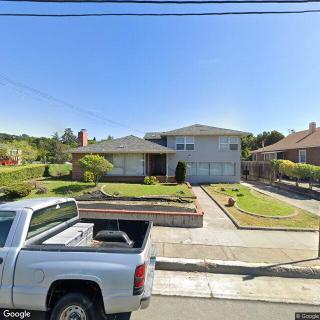

 Assisted Living and Memory Care: Understanding Their Core Differences
 Beyond the Bingo Hall: 50+ Enriching Activities for Seniors in Assisted Living
 Understanding the Distinctions: Assisted Living and Memory Care Explained