
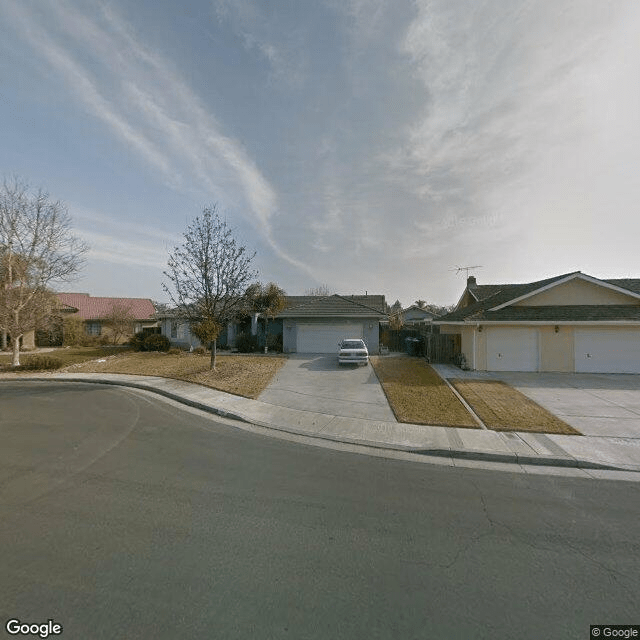
2427 Cherrywood Ct., Hanford, CA 93230
For more information about senior living options: (866) 208-4318
Hanna's Home Care Costs & Pricing
Hanna's Home Care offers competitive rates for its services compared to both Tulare County and the broader California market. For a semi-private room, residents can expect to pay $2,500 per month, significantly lower than the county average of $3,076 and the state average of $3,333. Similarly, for private accommodations, Hanna's rate of $3,000 not only undercuts Tulare County's average of $3,980 but also aligns closely with California's overall average of $3,939. These cost structures position Hanna's Home Care as an attractive option for families seeking quality care without compromising on affordability.
| Floor plans | Hanna's Home Care | Tulare County | California |
|---|---|---|---|
| Semi-Private | $2,500 | $3,076 | $3,333 |
| Private | $3,000 | $3,980 | $3,939 |
Assisted Living communities with a similar price nearby
-
from +$175 / mo

Valley Christian Home
$2,675 / month1.3 miles away -
from -$175 / mo
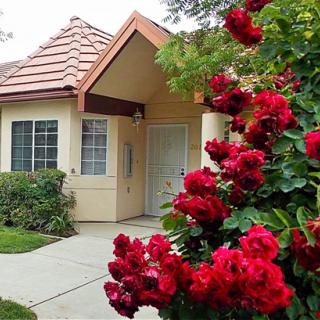
Bethel Lutheran Home
$2,325 to $2,405 / month14.6 miles away -
from +$80 / mo

Diamond Terraces
$2,580 to $3,650 / month1.7 miles away -
About the same
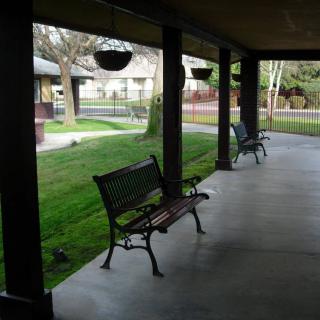
Evergreen Residence
$2,500 to $3,000 / month17.6 miles away -
from -$150 / mo

Sierra Village Assisted Living
$2,350 to $3,800 / month15.5 miles away
Overall Review of Hanna's Home Care
Pros
 are no positive statements present in the provided reviews.
Cons
 The reviewer notes that the facility is inattentive to residents, with clients sleeping most of the time.
- Staff are seen watching TV instead of attending to residents.
- A friend's father reportedly broke his leg there and was not noticed for two days.
- The reviewer could not locate the facility's license and suggests others should check it out themselves.
- The review assigns a one-star rating to the facility.
Review
This community is best suited for families that need to balance care costs with the reality of limited day-to-day oversight. It is a fit for residents who can tolerate variable attentiveness and who are prepared to supplement care with active family involvement or external caregivers. For seniors requiring constant supervision, rapid response to falls, or consistent on-site nursing, Hanna’s Home Care does not present a dependable option based on the documented concerns.
Alternatives should be strongly considered by anyone prioritizing reliable supervision and transparent oversight. If a license status cannot be easily verified, if staff responsiveness is a recurring question, or if incident handling is a primary concern, shopping other facilities makes sense. Look for places with verifiable licensing, predictable staffing patterns, and clear incident reporting. Facilities with on-site nursing support or 24/7 administrator presence tend to deliver the peace of mind that this setting currently lacks.
The pros and cons are starkly uneven. The handful of positive indicators available in the limited feedback do not clearly translate into meaningful, sustainable advantages. The most compelling question remains whether any potential benefits can offset the persistent red flags: inattentive care, prolonged periods when residents go unmonitored, and ambiguous licensing, issues that materially affect safety and daily quality of life. In practical terms, the risk weight of these concerns is high enough to demand caution before committing.
Safety is the deciding factor here. The reported two-day lapse before noticing a resident injury is a fundamental failure of supervision and response protocols. That kind of delay elevates risk, undermines trust, and invites serious consequences. The difficulty locating or confirming a valid license raises further questions about regulatory compliance and ongoing accountability. Until those gaps are clearly addressed with verifiable documentation and a transparent track record, the safety profile remains unacceptable for anyone who cannot perform near-constant oversight.
Staffing patterns and response readiness should be scrutinized during a visit. Prospective families should press for the exact staff-to-resident ratios, shifts, and the cadence of checks on nonverbal cues, mobility, and pain signals. Ask to see the care plans, incident logs, and the administrator’s escalation procedures. Speak with frontline caregivers to gauge attentiveness and training. If the answers feel uncertain or inconsistent, that should be a decisive signal to pivot toward other options, regardless of any other perceived conveniences. A trial period or a temporary placement with close supervision could reveal whether the level of care stabilizes, but only if explicit performance metrics and accountability are established from day one. In the end, Hanna’s Home Care is a facility to approach with a clear plan for ongoing oversight; without it, the risk of regret grows quickly.
 6 resident community capacity
 Assisted Living
 Board and Care Home
 Activities off-site
 Cable or satellite TV
 Dining room
 Fully furnished
 Garden
 Housekeeping services
 Indoor common areas
 Move-in coordination
 Outdoor common areas
 Private
 Telephone
 Wheelchair accessible showers
 Wi-Fi/high-speed internet available
 24-hour supervision
 Assistance with bathing
 Assistance with dressing
 Assistance with transfers
 Diabetes diet
 High acuity care
 Meal preparation and service
 Medication management
 Special dietary restrictions
 Transportation arrangement (medical)
 Transportation to doctors appointments




 An Extensive Exploration of the VA Aid and Attendance Benefit
 Senior Transition Services: Understanding Their Role, Cost, and Importance
 Exploring the Path to Senior Living: A Comprehensive Look at Independent Living and Assisted Living