
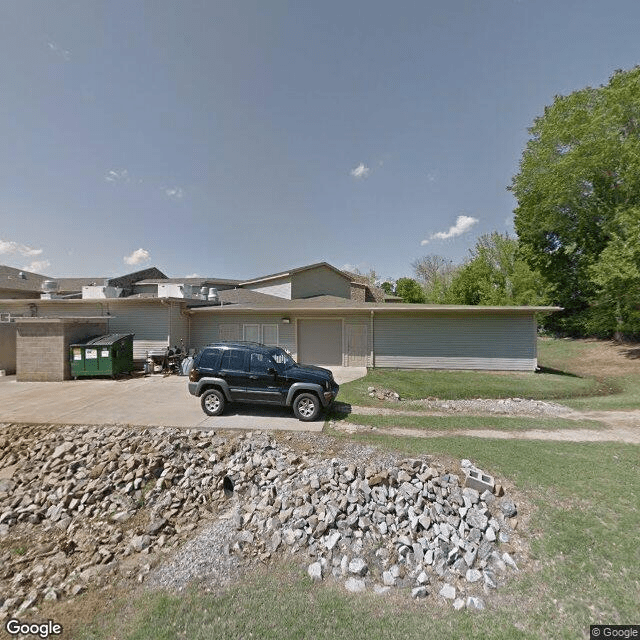
2502 Fayetteville Rd, Van Buren, AR 72956
To contact a resident: (479) 471-1900
For more information about senior living options: (866) 208-4318
Overall Review of Hope's Creek, Inc.
Pros
 Hope's Creek is described as a great place where residents absolutely love it.
- The staff and administrator are incredibly patient and kind, going above and beyond to assist residents.
- They genuinely care about the residents and provide the best quality of care.
- The facility is clean, neat, modern, and homey, with a variety of daily activities.
- The staff, including housekeepers, caregivers, kitchen staff, the activity director, the nursing director, and the administrator, are consistently kind and dedicated.
- The food is very good, with a variety of choices and attentive service.
Cons
 They described it as the worst place to send loved ones.
- The workers and the boss are beyond ridiculous, and residents are talked to and treated in a heart-breaking way.
- Many employees talk down on one another, making it harder for new staff to stay.
- No one works there, and it is not recommended to anyone.
- They do not care about the residents.
- Residents may go days without meals being brought to them.
- They would never let their grandmother stay in this facility.
- There is no dietitian on staff to assist residents.
- Management is awful, with drama, rumors, favoritism, and unfair treatment of employees.
Review
Hope’s Creek in Van Buren is best suited for families seeking a warm, home-like assisted-living experience where residents are treated as members of a small, caring community. The environment emphasizes personal attention, daily engagement, and a family atmosphere, appealing to seniors who want regular social activity, approachable staff, and convenient family access. For residents who are semi-independent and can navigate a light caregiving load while still benefiting from meals, outings, and safety oversight, Hope’s Creek offers a transitional space that can delay a move to more medicalized settings. It’s the kind of place where “we’re family” feels genuine and not merely marketing rhetoric.
However, explicit caution is warranted for families weighing alternatives. If the priority is rigorous clinical oversight, uniform professional culture, or strong governance, other options may serve better. Reviewers raise concerns about management dynamics and staff morale, suggesting that consistency in care can waver, especially during busy shifts. Some accounts point to meals being delayed or uneven in execution and a perceived lack of formal dietary oversight. The absence of a dedicated dietitian emerges as a notable gap for residents with dietary restrictions or complex nutrition needs. These factors aren’t mandates to leave, but they are meaningful considerations for those who rely on steady, protocol-driven care.
The upside remains substantial. Families repeatedly praise staff for kindness, patience, and genuine engagement with residents, and describe leadership as approachable and involved. Residents are reportedly well cared for, valued, and kept active through a mix of meals, games, outings, and daily interaction with staff. Cleanliness, a homey feel, and a dining experience that residents enjoy surface in multiple visits and reviews. The activity calendar, regular human-to-human contact, and the sense that staff “knows” residents personally can substantially lift daily quality of life and provide reassurance to anxious relatives.
That said, the same strengths can be undermined by the flip side: management friction and staff turnover can undermine consistency. When morale dips or supervisory structures feel unstable, caregiving can become episodic rather than continuous, with follow-through on meals, routines, and care plans at risk. The tension between a genuinely caring frontline and a troubled administrative backbone is a real dynamic in play here. For residents with higher medical or behavioral needs, operational gaps, such as inconsistent meal timing or variable staff coverage, can translate into real day-to-day risk unless families remain vigilant and closely involved.
This is not a blanket verdict but a practical triage. For residents requiring continuous, hospital-style medical oversight, a setting with on-site physicians, more robust nursing coverage, and a dietitian on staff will typically be a safer bet. If the family wants a facility that minimizes drama and emphasizes transparent governance, nearby options with clearly defined leadership and steadier staffing may offer more predictable experiences. Prospective residents should schedule multiple tours, request conversations with current residents and family members, and probe specifics around meal service timing, dietary accommodations, and staff training. The goal is to observe not just hospitality, but how consistently care is delivered day in and day out.
Ultimately, Hope’s Creek delivers a practical, meaningful lifestyle for many seniors who prioritize warmth, accessibility, and an engaging daily routine. It succeeds where personal connection, a homelike atmosphere, and regular social activity matter most, and it does so in a setting that can feel like a true second home. Yet it requires a clear-eyed assessment of governance, staffing stability, and medical oversight to ensure that the positive daily experience isn’t compromised by longer-term care gaps. For families prepared to partner actively with staff, verify standards, and advocate for consistent service, Hope’s Creek can be a solid fit. For those seeking unwavering clinical rigor and rock-solid governance, it’s reasonable to consider alternatives and compare them directly.
 Assisted Living
 Independent Living
 Activities on-site
 Devotional services off-site
 Indoor common areas
 Fort Smith Regional (9 miles away)
 Ambulatory care
 Diabetic care
 Meals provided







 Understanding the Distinctions: Assisted Living and Memory Care Explained
 Guiding Elderly Parents Who Refuse Assisted Living: 6 Practical Steps
 Your Comprehensive Guide to Luxury Assisted Living: Elevated Facilities, Amenities, and Costs