Sherwood Village Assisted Living & Memory Care Costs & Pricing
Sherwood Village Assisted Living & Memory Care offers a competitive pricing structure compared to the broader market in Pima County and the state of Arizona. For instance, their semi-private rooms are available for $1,750 per month, significantly lower than the county average of $2,805 and statewide at $2,820. Similarly, the cost for a studio is set at $2,100, which again stands in stark contrast to Pima County's average of $3,786 and Arizona's figure of $3,829. Even their one-bedroom units are priced attractively at $2,450 compared to Pima County's average of $3,660 and Arizona's overall rate of $3,532. This notable disparity suggests that Sherwood Village not only prioritizes affordability but also provides quality care within a budget-conscious framework.
Floor plans
Sherwood Village Assisted Living & Memory Care
Pima County
Arizona
Semi-Private
$1,750
$2,805
$2,820
Studio
$2,100
$3,786
$3,829
1 Bedroom
$2,450
$3,660
$3,532
Memory care communities with a similar price nearby
Overall Review of Sherwood Village Assisted Living & Memory Care
common5 reviews mention this
Dining gets consistent praise
Dining quality is something residents and families bring up often.
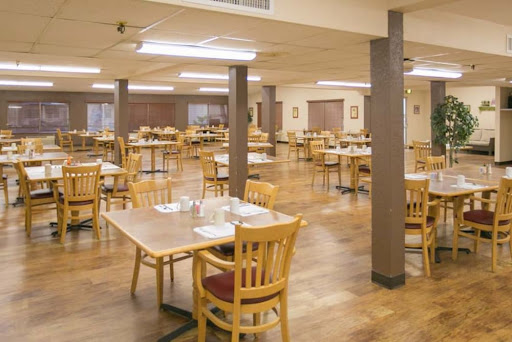
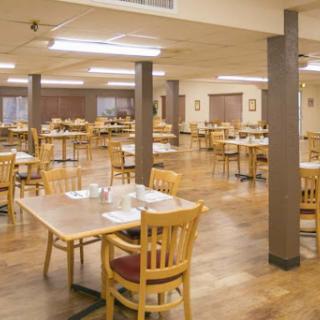
Multiple families describe the meals positively, including that residents get three meals a day plus snacks. One reviewer also notes the dining room setup, while another says the food is good but not always consistent. Even among reviews that focus on other aspects, food is still mentioned alongside cleanliness and overall experience.
common5 reviews mention this
Facilities and rooms feel clean
Residents’ families frequently mention a clean, well-kept facility.
Several reviews explicitly praise cleanliness and cleanliness-related upkeep. Families also describe the overall facility condition as maintained and cared for, and one reviewer ties cleanliness to how they rate the overall experience. A different set of reviews expresses strong dissatisfaction with smell and upkeep, but the cleanliness theme still shows up repeatedly in positive accounts.
common4 reviews mention this
Activities and entertainment keep busy
The community keeps residents engaged with activities and unit entertainment.
Families mention planned activities and many interests being supported. Another review highlights live entertainment on the unit in memory care, including performances and animal-assisted moments. A reviewer who teaches exercise classes also describes regular interaction with residents and time spent walking together.
differentiator4 reviews mention this
Pricing looks notably lower
Pricing is repeatedly described as reasonable compared with other options.
Reviewers mention value, with comments about rates being reasonable or price being exceptional when weighed against other places. This matches the listing’s broad pricing picture, which shows the community positioned well below county and state benchmarks across unit types. Some residents also mention costs where they feel surprised or upset, so budgeting details may still be worth confirming directly.
caveat3 reviews mention this
Mixed reports on care consistency
Some residents’ families report concerns about care adequacy and consistency.
A few reviews describe care as barely adequate or report that direct resident care declined after changes in staffing. One reviewer raises a concern about insufficient skilled caregiver coverage, especially during evenings or overnight. These accounts stand alongside many positive caregiving reviews, so it’s a theme to investigate during questions and visits.
How we summarize
Counts show how many written reviews mention each theme; a review can touch several themes, and only frequently mentioned themes are displayed.
Features
Housing
140 resident community capacity
Types of Care
Assisted Living
Memory Care
Amenities
Activities off-site
Activities on-site
Air-conditioning
Beautician on-site
Beauty salon
Cable or satellite TV
Computer center
Devotional services on-site
Dining room
Fitness room
Fully furnished
Gaming room
Garden
Housekeeping services
Indoor common areas
Kitchenette
Move-in coordination
Outdoor common areas
Outdoor patio
Outdoor space
Private bathrooms
Restaurant-style dining
Small library
Telephone
Wellness center
Wheelchair accessible showers
Wi-Fi/high-speed internet available
Transportation
Tucson International (10 miles away)
Community operated transportation
Transportation arrangement
Transportation arrangement (non-medical)
Care Services
12-16 hour nursing
24-hour call system
24-hour supervision
Activities of daily living assistance
Ambulatory care
Assistance with bathing
Assistance with dressing
Assistance with transfers
Coordination with health care providers
Dementia waiver
Diabetes diet
Diabetic care
Hospice waiver
Incontinence care
Meal preparation and service
Medication management
Mental wellness program
Mild cognitive impairment
Special dietary restrictions
Specialized memory care programming
Transportation arrangement (medical)
Transportation to doctors appointments
Dining
Diabetes diet
Meals provided
Special dietary restrictions
Vegetarian
Activities
Activities off-site
Activities on-site
Art classes
Community-sponsored activities
Concierge services
Day trips and outings
Devotional activities on-site
Fitness programs
Planned day trips
Resident-run activities
Scheduled daily activities
Stretching classes
Wii bowling
Nearby Places of Interest
This area of Tucson, Arizona offers a variety of amenities within close proximity, making it a convenient and bustling neighborhood for seniors looking to settle down. With numerous dining options such as Culver's, In-N-Out Burger, and MOD Pizza, as well as pharmacies like Walgreens and CVS nearby, residents have easy access to essentials. In terms of healthcare, there are reputable physicians and hospitals including St Joseph's Hospital and Kindred Hospital - Tucson in the vicinity. Additionally, there are parks for recreational activities like Palo Verde Park, places of worship for spiritual support, cafes for social gatherings such as Dutch Bros Coffee and Panera Bread, and theaters like Century Park Place 20 And XD for entertainment. Overall, this part of Tucson provides a balanced mix of services that cater to the needs of senior residents.
Restaurants
Culver's (0.6 miles)
Hooters (0.9 miles)
In-N-Out Burger (1.1 miles)
McDonald's (1.5 miles)
MOD Pizza (2 miles)
Raising Cane's Chicken Fingers (2 miles)
El Molinito (2.1 miles)
Pharmacies
Walgreens (0.9 miles)
Walgreens (1.2 miles)
Walmart Pharmacy (1.4 miles)
CVS Pharmacy (1.5 miles)
Walgreens (1.5 miles)
CVS Pharmacy (1.9 miles)
Fry's Pharmacy (1.9 miles)
Physicians
Sheldon Dr - Marks Sheldon Marks MD (1.4 miles)
Tmj Disorders Orofacial Pain Center PC (1.4 miles)
Sherwood Village Assisted Living & Memory Care offers a competitive pricing structure compared to the broader market in Pima County and the state of Arizona. For instance, their semi-private rooms are available for $1,750 per month, significantly lower than the county average of $2,805 and statewide at $2,820. Similarly, the cost for a studio is set at $2,100, which again stands in stark contrast to Pima County's average of $3,786 and Arizona's figure of $3,829. Even their one-bedroom units are priced attractively at $2,450 compared to Pima County's average of $3,660 and Arizona's overall rate of $3,532. This notable disparity suggests that Sherwood Village not only prioritizes affordability but also provides quality care within a budget-conscious framework.
The features offered by Sherwood Village Assisted Living & Memory Care play a crucial role in enhancing the quality of life for residents with dementia or Alzheimer's disease. With 24-hour supervision, residents receive constant support to ensure their safety and well-being, allowing family members peace of mind. Assistance with activities of daily living, including bathing and dressing, promotes dignity while providing necessary help tailored to individual needs. Coordination with healthcare providers ensures that medical care is seamless and responsive to changing health conditions, complemented by medication management that helps maintain stability in treatment regimens. The specialized memory care programming addresses cognitive challenges through engaging activities designed to stimulate mental wellness and accommodate mild cognitive impairment. Additionally, meal preparation and service cater to nutritional needs while incontinence care offers comfort and support throughout the day. Transportation arrangements for medical appointments provide residents access to essential health services without added stress, all of which collectively foster an environment of support and security essential for those navigating the complexities of dementia or Alzheimer's disease.
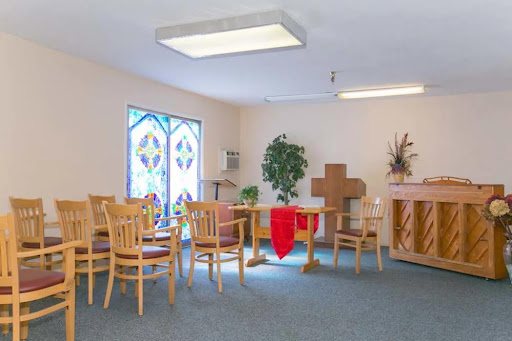
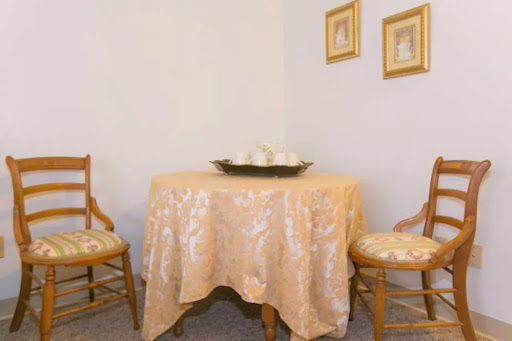
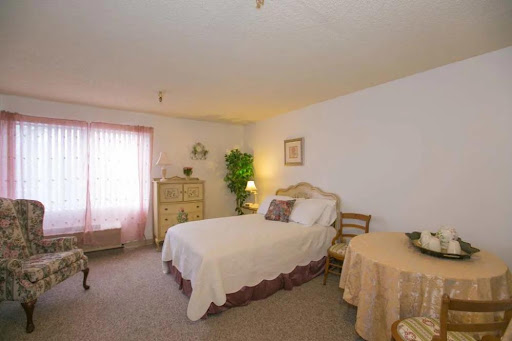
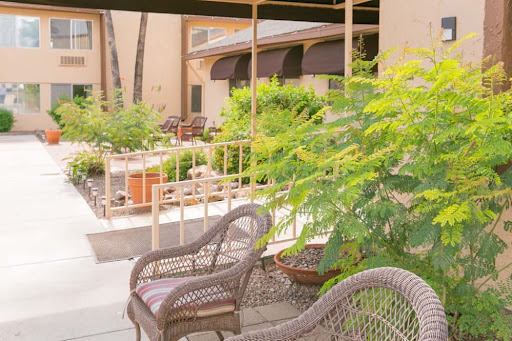
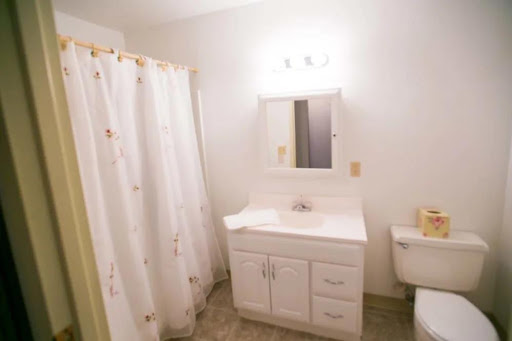
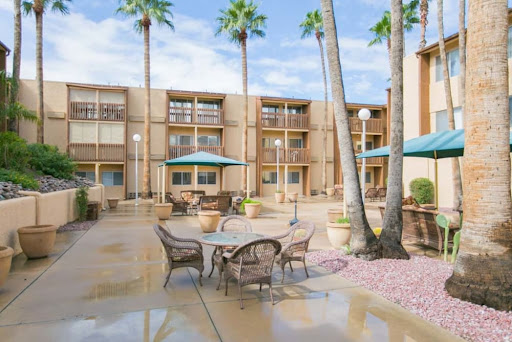
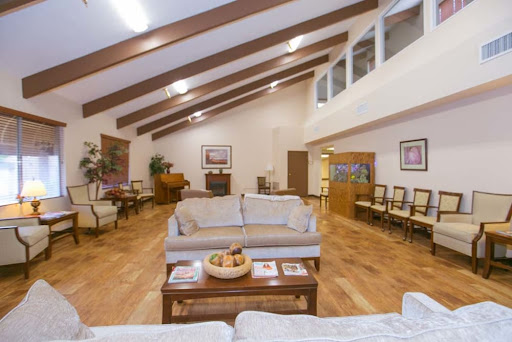
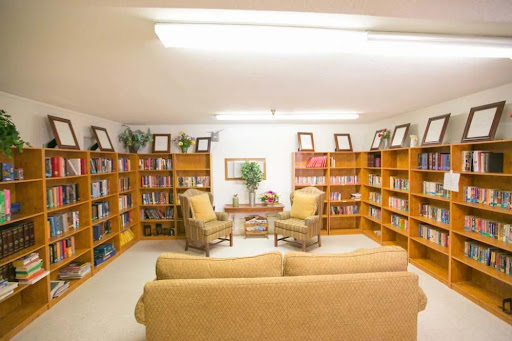
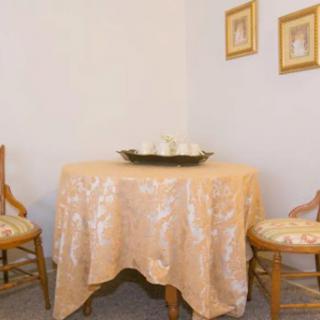
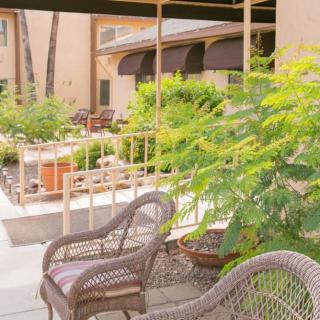
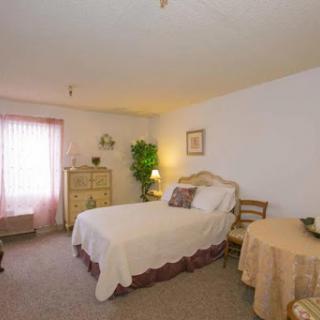
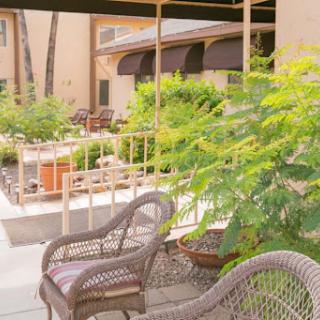
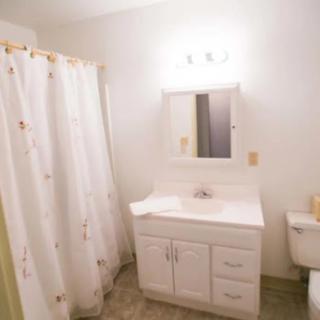
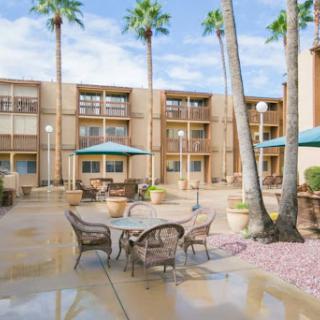
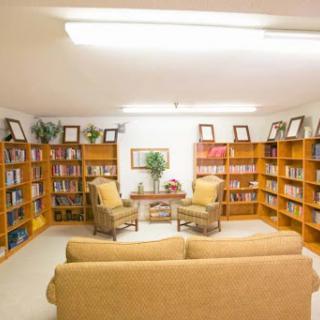
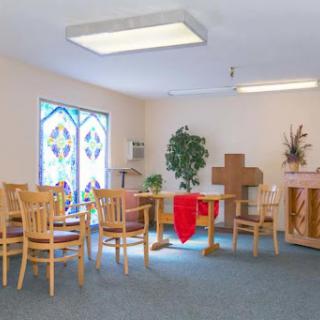
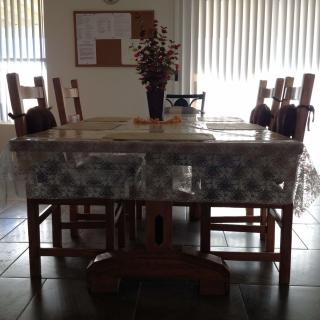
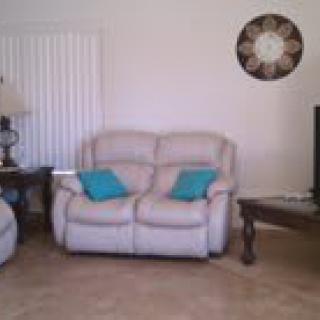
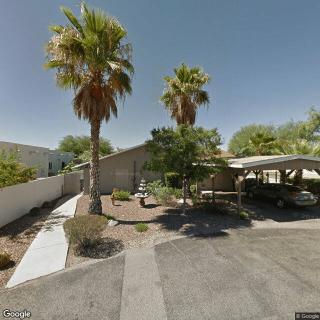
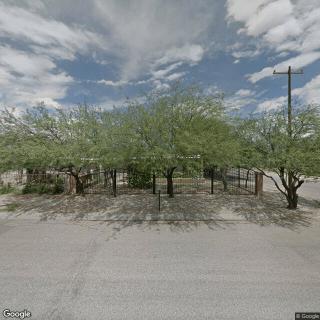
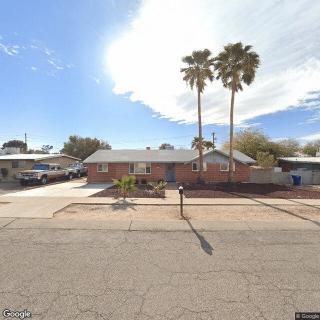
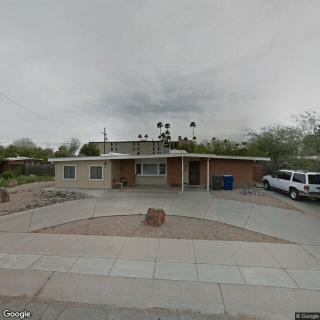
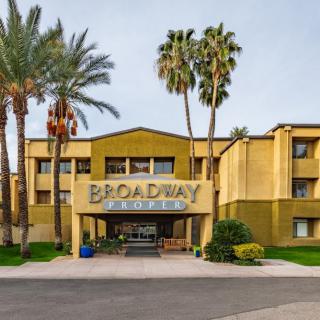
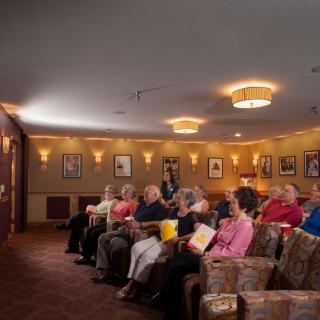
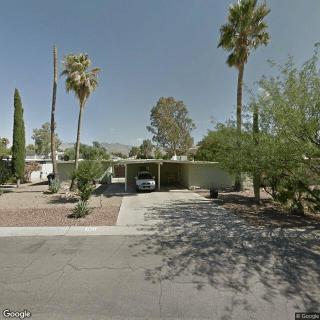
Sherwood Village Assisted Living & Memory Care on seniors.fyi includes 12 photos including images showing interior, outdoor, bathroom, dining, patio, lighting, seating, garden, and more.
Nearby Communities
Fellowship Square at Tucson
Tucson, AZ
4.3 from 89 reviews
$1,645 to $2,235 / month
Welcoming atmosphere with friendly staff and strong value.
Fellowship Square
Tucson, AZ
4.1 from 50 reviews
$3,723 to $4,839 / month
Extensive amenities and comprehensive care options (assisted and independent living).
Affirmative Care Home
Tucson, AZ
3.3 from 4 reviews
$2,750 to $4,500 / month
Personalized care with 24-hour supervision and memory care in a homelike setting.
Oasis At Fellowship Square Tucson
Tucson, AZ
2 from 2 reviews
Potential for improved care with staff training and responsive management.
Gentlemen's Inn I
Tucson, AZ
4.8 from 15 reviews
$2,200 / month
Active, community-focused environment with organized activities and family involvement.
Casa De Dios Inc
Tucson, AZ
5 from 1 review
Extensive nearby healthcare, dining, and amenity access.
Broadway Proper Senior Living
Tucson, AZ
4.6 from 133 reviews
$2,275 to $3,075 / month
Friendly staff, an active community with varied dining and on-site activities, and well-maintained grounds with security.
Cascades of Tucson
Tucson, AZ
4.5 from 142 reviews
$3,335 to $5,350 / month
Friendly, attentive staff with engaging activities in a clean, well-maintained environment and attractive apartments.
Comfort Gardens
Tucson, AZ
$2,400 to $2,800 / month
Cozy, private rooms with convenient access to healthcare and nearby amenities.
The article examines the link between certain medications and increased dementia risk, particularly in older adults, emphasizing that long-term or high-dose use of anticholinergics, benzodiazepines, and other drug classes can exacerbate cognitive impairment. It calls for careful medication evaluation and shared decision-making to mitigate these risks while managing treatment efficacy.
The article emphasizes the significance of establishing a power of attorney for elderly parents to enable an agent to make decisions on their behalf regarding health and finances, especially during cognitive or physical decline. It outlines various types of power of attorney, the importance of consulting legal professionals, and the responsibilities and challenges faced by agents, while also discussing alternatives and common misconceptions.
Caregiver support groups are crucial for providing emotional and practical assistance to those caring for loved ones, offering resources, coping strategies, and a sense of community through various organizations and platforms. These groups help alleviate isolation and burnout while addressing the unique challenges faced by caregivers of individuals with specific conditions.
Sherwood Village Assisted Living & Memory Care photos
×
Interior
Decor
Building
Bedroom
Dining
Landscaping
Lighting
Seating Area
Outdoor Seating
Bookshelves
Chapel
Interior
Decor and Dining Table
Bedroom, Windows, and Plant
Dining
Living Room, High Ceiling, and Decorative Plants
Landscaping
Building
Bathroom
Lighting
Garden, Patio, and Seating
Seating Area
Outdoor
Outdoor Seating
Bookshelves, Library, and Reading Area
Palm Trees
Courtyard and Apartment Complex
Chapel
Get PricingAsk A QuestionSchedule A TourContact Senior Advisor
By clicking submit, you agree to our Partner's Terms of Use. You
also consent to receive calls and texts, which may be autodialed, from our Partner. Your consent is not a condition to
using our Partner's service. Please visit our Partner's Privacy Policy for information about their privacy practices.

 140 resident community capacity
 Assisted Living
 Memory Care
 Activities off-site
 Air-conditioning
 Beautician on-site
 Cable or satellite TV
 Computer center
 Devotional services on-site
 Dining room
 Fitness room
 Fully furnished
 Gaming room
 Garden
 Housekeeping services
 Indoor common areas
 Kitchenette
 Move-in coordination
 Outdoor common areas
 Outdoor patio
 Private bathrooms
 Restaurant-style dining
 Small library
 Telephone
 Wellness center
 Wheelchair accessible showers
 Wi-Fi/high-speed internet available
 Tucson International (10 miles away)
 Community operated transportation
 12-16 hour nursing
 24-hour call system
 Ambulatory care
 Assistance with bathing
 Assistance with dressing
 Assistance with transfers
 Diabetes diet
 Diabetic care
 Hospice waiver
 Incontinence care
 Medication management
 Mental wellness program
 Special dietary restrictions
 Transportation arrangement (medical)
 Art classes
 Concierge services
 Day trips and outings
 Wii bowling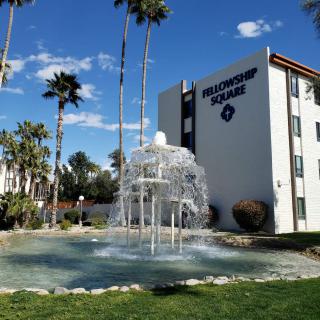
 Welcoming atmosphere with friendly staff and strong value.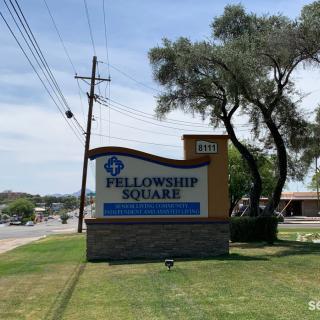

 Medications Associated with Dementia Risk: A Comprehensive Overview
 Guiding Your Journey: Understanding Power of Attorney for Elderly Parents
 22 Remarkable Caregiver Support Groups Available Online and In-Person