
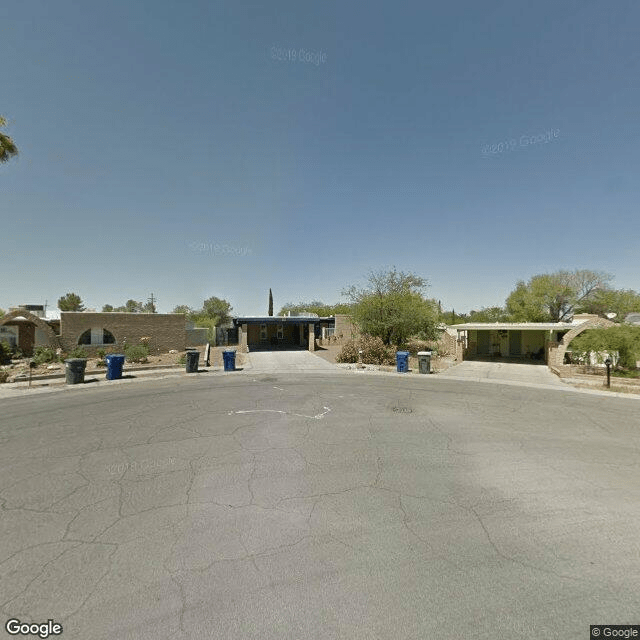
3340 South Watson Drive, Tucson, AZ 85730
For more information about senior living options: (866) 208-4318
Gloria's Assisted Living Costs & Pricing
At Gloria's Assisted Living, the monthly costs reflect a commitment to quality care and comfortable living. For a semi-private room, residents can expect to pay $3,000, which is slightly higher than the county average of $2,805 and the state average of $2,820. The cost for a private room is set at $3,500, positioning it competitively above Pima County's average of $3,332 and Arizona's average of $3,345. Similarly, studio accommodations are priced at $3,500 as well - moderately lower than Pima County's rate of $3,786 and Arizona's overall average of $3,829. These rates reflect Gloria's focus on providing high-quality services in a nurturing environment that prioritizes residents' well-being amidst an increasingly challenging housing market.
| Floor plans | Gloria's Assisted Living | Pima County | Arizona |
|---|---|---|---|
| Semi-Private | $3,000 | $2,805 | $2,820 |
| Private | $3,500 | $3,332 | $3,345 |
| Studio | $3,500 | $3,786 | $3,829 |
Memory care communities with a similar price nearby
-
About the same
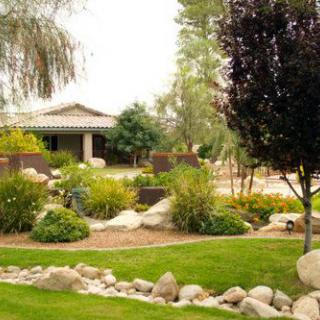
Crossroads Adult Care Homes
$3,000 to $3,600 / month13.4 miles away -
from -$300 / mo

Casa De Los Abuelos Dos
$2,700 to $3,200 / month16.5 miles away -
from -$500 / mo
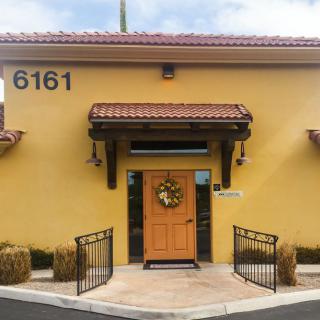
Fairmount Assisted Living
$2,500 to $3,500 / month5.6 miles away -
from +$145 / mo

The Watermark at Oro Valley
$3,145 to $4,995 / month16.5 miles away -
from +$335 / mo
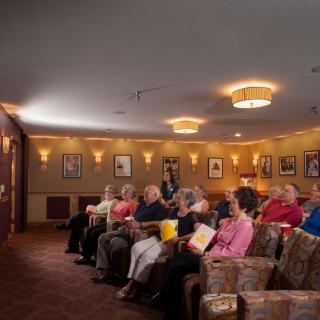
Cascades of Tucson
$3,335 to $5,350 / month4.3 miles away
Overall Review of Gloria's Assisted Living
Pros
 The staff showed deep kindness to her during the last weeks of life.
- The care provided was thorough and compassionate to the end.
- Gloria's Assisted Living is immaculate and immediately feels warm and welcoming.
- The facility offers the highest level of care, and the food is very good.
- The reviewers would recommend Gloria's Assisted Living to low-income or high-needs families needing around-the-clock care.
- The reviewers believe the sister would not have lived as long elsewhere, thanks to the quality of care.
Review
Gloria's Assisted Living in Tucson is best suited for families facing advanced care needs where around-the-clock attention and true warmth matter most. The feedback centers on end-of-life care and post-stroke recovery, showing a team that delivers compassionate, patient-focused support even in the toughest moments. For households with limited resources or high-needs loved ones who require steady supervision, Gloria's emerges as a practical, dignity-preserving option that can align with tight budgets while maintaining high emotional and physical safety.
Those weighing alternatives should consider whether a larger campus with broader amenities or a setting offering more intensive medical oversight fits better. If independence, robust activity programming, or a wide array of on-site therapies are priorities, Gloria's may fall short. Likewise, families seeking crystal-clear pricing, comprehensive contracts, and predictable monthly costs should verify those details directly, since the reviews provide strong qualitative signals but sparse financial specifics.
The strongest positives are unmistakable: the facility is described as immaculate, with an atmosphere of immediate friendliness and warmth upon entry. Staff are portrayed as kind and professional, delivering what is framed as a very high level of care. Food quality is highlighted as notably good for an assisted-living setting, and the overall environment appears to support dignity, comfort, and relaxed conversations between residents and caregivers. These factors collectively translate into real, observable quality that can stabilize a difficult transition for families.
A meaningful caveat exists in the absence of explicit data on cost, contract terms, and the full scope of services. The two reviews do not detail staffing ratios, exact medical capabilities, or the range of therapies available on-site. Capacity concerns, while not stated, could influence timing and availability for new admissions or sudden changes in care needs. Potential residents might also want clarity on transportation, activity schedules, and whether accommodations address diverse dietary or cultural preferences.
Despite these gaps, the core advantages work powerfully in Gloria's favor for its niche. The combination of kindness, professionalism, cleanliness, and nourishing meals creates a trustworthy baseline for anyone facing complex care decisions. For families navigating end-of-life planning or post-acute rehabilitation after a stroke, the described environment offers not just safety but emotional support that can ease the burden on relatives and improve the resident’s daily experience.
Bottom line: Gloria's Assisted Living is a strong match for seniors who require sustained, compassionate round-the-clock care, particularly in end-of-life or high-needs post-acute scenarios, and for households where budget sensitivity matters without sacrificing dignity. Those weighing options should weigh whether a facility with more medical breadth, larger-scale programming, or different cost structures would better align with long-term goals. The identified strengths, personalized attention, a clean and welcoming setting, and solid nutritional care, make Gloria's a compelling choice when the priority is hands-on, neighborly care that keeps the resident at the center.
 10 resident community capacity
 Assisted Living
 Board and Care Home
 Memory Care
 Cable or satellite TV
 Dining room
 Fully furnished
 Garden
 Housekeeping services
 Move-in coordination
 Outdoor space
 Private
 Telephone
 Wi-Fi/high-speed internet available
 Tucson International (10 miles away)
 24-hour supervision
 Activities of daily living assistance
 Assistance with bathing
 Assistance with dressing
 Assistance with transfers
 Diabetes diet
 Meal preparation and service
 Medication management
 Special dietary restrictions
 Transportation arrangement (medical)
 Transportation to doctors appointments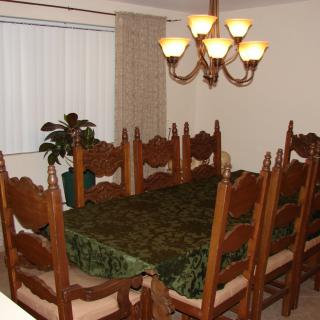





 5 Early Indicators of Dementia and What You Can Do
 8 Important Indicators That Memory Care May Be Necessary
 Delving into the Inner World of Dementia: Insights into Thoughts and Awareness