
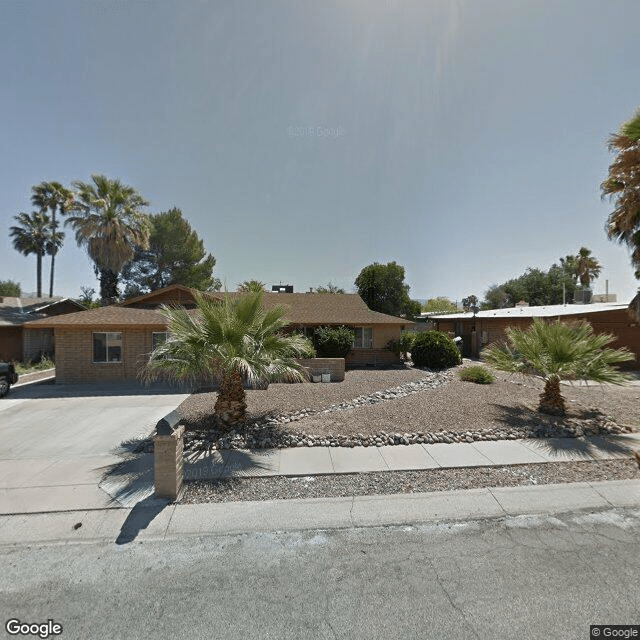
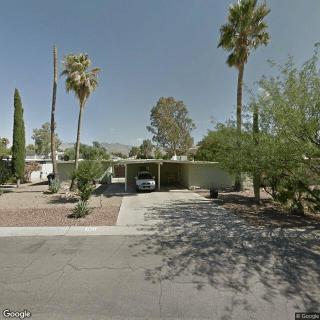
7475 East Rio Vista Circle, Tucson, AZ 85715
For more information about senior living options: (866) 208-4318
Angel's Kiss Costs & Pricing
Angel's Kiss offers competitive pricing for its accommodations compared to both Pima County and the broader Arizona state averages. For a semi-private room, residents can expect to pay $3,500 per month, which is notably higher than the county's average of $2,805 and the state average of $2,820. In contrast, private rooms are priced at $4,500, exceeding both local and state benchmarks of approximately $3,332 and $3,345 respectively. Similarly, the cost for a one-bedroom suite mirrors this trend at $4,500 while also surpassing county and statewide averages of $3,660 and $3,532. These figures suggest that while Angel's Kiss may have a higher price point in all categories when compared to Pima County and Arizona overall, the premium may reflect enhanced services or amenities that cater to residents' needs.
| Floor plans | Angel's Kiss | Pima County | Arizona |
|---|---|---|---|
| Semi-Private | $3,500 | $2,805 | $2,820 |
| Private | $4,500 | $3,332 | $3,345 |
| 1 Bedroom | $4,500 | $3,660 | $3,532 |
Memory care communities with a similar price nearby
-
About the same
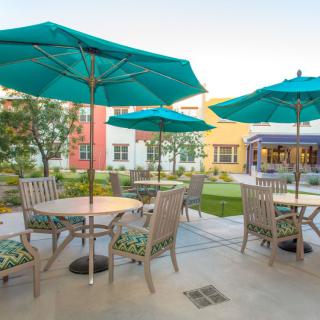
The Ranch Estates of Tucson
$3,600 to $4,840 / month11.6 miles away -
from -$500 / mo
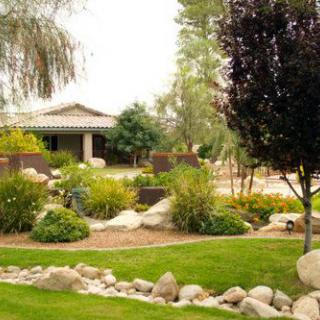
Crossroads Adult Care Homes
$3,000 to $3,600 / month8.8 miles away -
from -$355 / mo
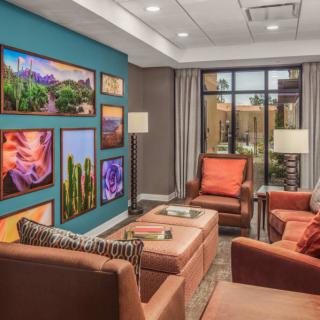
The Watermark at Oro Valley
$3,145 to $4,995 / month11.0 miles away -
from -$165 / mo
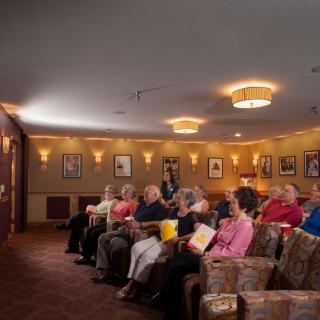
Cascades of Tucson
$3,335 to $5,350 / month2.6 miles away -
from -$550 / mo
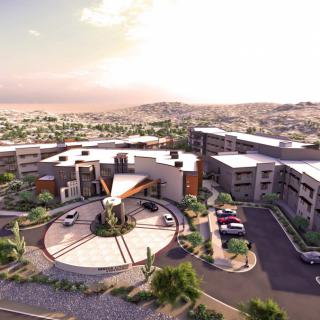
La Sonora at Dove Mountain
$2,950 to $5,270 / month18.4 miles away
Overall Review of Angel's Kiss
Pros
 The staff at Angel’s Kiss were kind and welcoming during decision making.
- The mother felt like a welcome addition immediately.
- She was very happy there.
- The residence is friendly and social, with experienced, helpful caregivers.
- The home is clean, tidy, and in a quiet, nice neighborhood.
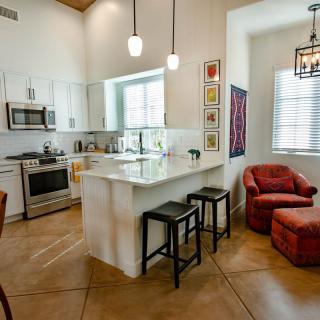
- It looked like a model home—neat and clean.
Cons
 It looked like a model home, giving the impression that no one lived there.
- It is small, with perhaps only five residents fitting there.
- At 2:30, it was total silence and everyone was in their own room.
- The price quoted was around $2,500 and might go up as her needs increase.
Review
Angel's Kiss in Tucson is best suited for families seeking a genuinely home-like assisted living experience where residents are treated as people first, not as numbers. The community’s strongest asset is its intimate size, roughly five residents, paired with a staff described as experienced, compassionate, and consistently welcoming. This combination creates a setting in which a new resident quickly becomes part of a social, caring loop: caregivers remember preferences, families are greeted during visits at different times of the day, and residents form meaningful bonds with both staff and neighbors. In practice, the place works best for seniors who prize warmth, personal attention, and a calm, tidy neighborhood vibe over the bustle of a larger campus.
Those who may want alternatives are those seeking a broader social calendar, more on-site medical services, or a higher level of ongoing security and oversight. The small home can feel too quiet or limited for active seniors who crave steady, varied programming and frequent opportunities for peer interaction. If memory-care expertise, structured daily activities, or a clear plan for escalating care are priorities, a larger or more specialized community may be a better fit. Families budgeting tightly should also weigh the potential for care-cost increases as needs evolve.
On the plus side, the strongest draws are the obvious warmth of caregivers, described as friendly, experienced, and genuinely helpful, and the sense that residents become known and valued by name. Cleanliness and a tidy, model-home aesthetic reinforce comfort and pride in the living space. The quiet, residential neighborhood contributes to a sense of safety and reduced stress. Taken together, these pros translate into reliable daily routines, personalized attention, and emotional reassurance for families, effectively offsetting some limitations imposed by the small scale.
However, the small footprint carries tangible drawbacks. With only a handful of residents, opportunities for spontaneous group activities may be modest, and daytime quiet can feel absolute if residents occupy their own rooms for long stretches. Price adds another variable: a quoted figure around $2,500 with the possibility of increases as care needs intensify. For families monitoring ongoing affordability, this means a careful, forward-looking cost assessment is essential, especially in scenarios where care needs are likely to escalate. In those moments, the high quality of caregiver engagement and the home-like atmosphere can still tilt the balance, so long as finances and activity preferences align.
Practical steps to evaluate fit include visiting at different times to observe how staff interactions translate into daily care, asking about caregiver-to-resident ratios, and seeking clarity about what happens when needs rise. Inquire about meal options, daily routines, and whether there are organized activities that align with the resident’s interests; verify how privacy is balanced with supervision. If memory challenges or medical needs are a factor, request explicit contingency plans and any potential referrals to higher levels of care. A candid comparison with nearby communities will illuminate whether Angel's Kiss’s intimate charm outweighs its fewer social opportunities.
Bottom line: Angel's Kiss is a strong match for families prioritizing warmth, attentiveness, and a clean, quiet, home-like environment. It excels at delivering personal relationships between residents and caregivers and fostering happiness and contentment for those who fit into a small, close-knit setting. Yet alternatives should be considered for families seeking a more active social calendar, broader services, or tighter budget controls, or for those planning for higher care needs. The right choice hinges on balancing the value of personalized attention against the desire for scale, activity variety, and long-term affordability.
 8 resident community capacity
 Assisted Living
 Board and Care Home
 Memory Care
 Activities off-site
 Bath tubs
 Cable or satellite TV
 Devotional services off-site
 Dining room
 Fully furnished
 Garden
 Housekeeping services
 Indoor common areas
 Move-in coordination
 Outdoor common areas
 Private
 Respite or short term stays offered
 Telephone
 Wheelchair accessible showers
 Wi-Fi/high-speed internet available
 Tucson International (12 miles away)
 24-hour supervision
 Assistance with bathing
 Assistance with dressing
 Assistance with transfers
 Diabetes diet
 Diabetic care
 High acuity care
 Incontinence care
 Meal preparation and service
 Medication management
 Special dietary restrictions
 Transportation arrangement (medical)
 Transportation to doctors appointments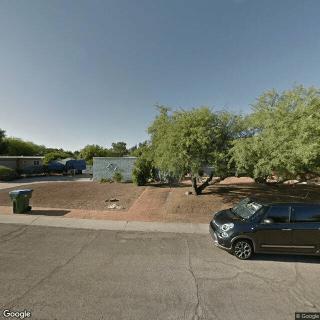


 Vibrant Senior Living: A Comprehensive Guide for Active Older Adults
 Assisted Living and Memory Care: Understanding Their Core Differences
 Choosing the Right Senior Care: A Detailed Exploration of Assisted Living and Nursing Homes