

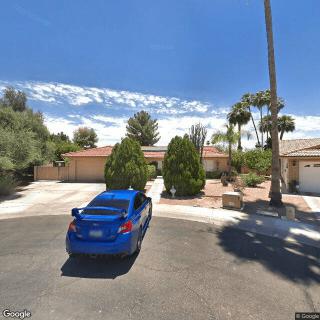
6619 N. Scottsdale Road, Ste 30D, Scottsdale, AZ 85250
To contact a resident: (833) 630-3703
For more information about senior living options: (866) 208-4318
Overall Review of Essential Care Arizona
Pros
 Ricky was sweet and professional.
 - Nikki was kind and patient.
- They are highly recommended for in-home care.
- Janice and Annie provided love and constant attention, never leaving her side.
- They are well-versed in end-of-life issues and provide common-sense answers.
- Memories were made every day, with laughter and tears.
- Ricky, Janice, and Annie were appreciated for their care.
- Ricky with Acti-Kare has been amazing.
- Nicole and Paula provided updates and ensured mom was well cared for.
Review
Essential Care Arizona in Scottsdale is best suited for families seeking high-touch, in-home elder care with the flexibility to adapt quickly to shifting medical and daily living needs. The model reflected in the feedback centers on keeping seniors at home whenever possible, supported by around-the-clock oversight, hospice-friendly assistance, and dementia care delivered by a hand-picked care team rather than a fixed facility schedule. For families navigating end-of-life decisions, or caring for a loved one with Alzheimer’s or other cognitive impairment, Essential Care Arizona demonstrates the ability to mobilize consistent, compassionate caregivers who stay with the patient, provide for daily comfort, and respond with practical solutions to complex worries. The service emphasizes presence, not just routine, and relies on real-time communication so families feel connected during trying moments. In Scottsdale, this translates into a practical, home-centered option for preserving familiarity, dignity, and meaningful connection when the goal is to remain in the home environment.
That said, this approach isn’t a universal fit. Families seeking the structure of a traditional assisted living or memory-care community, on-site nursing staff, built-in programming, and a formally regulated environment, should consider alternatives. Essential Care Arizona functions as an extension of in-home care, often through partner agencies, rather than a stand-alone campus with uniform staffing. Costs can be less predictable than fixed facility fees, and care quality hinges on the consistency of the assigned caregivers and the availability of the preferred schedule. For seniors whose health requires constant immediate medical intervention, or whose risk profile benefits from centralized oversight, a more conventional setting may deliver greater peace of mind and a clearer care blueprint.
Where the model shines, the strengths are hard to overlook. The most compelling asset is responsiveness: the ability to place a caregiver quickly, including weekends and odd hours, and to adjust coverage as needs change. Families consistently report attentive, loving caregivers who stay with the patient, offering not just basic assistance but companionship and reassurance during stressful moments. Caregivers with end-of-life experience and dementia know-how provide practical guidance, turning uncertain days into moments of calm and connection. The owner’s hands-on involvement, arranging replacements, coordinating updates, and stepping in when needed, resonates with families who want assurance that someone is always at the helm. The testimonials describe trust-building relationships: caregivers who fit into the home’s rhythm, and a management style that makes families feel supported rather than stranded.
Nevertheless, the in-home approach does carry inherent trade-offs. There is less institutional redundancy than a large campus: caregiver turnover, variability in daily staffing, and the need for ongoing scheduling coordination can create gaps if not managed with vigilance. The strongest counterbalance comes from leadership and the care network’s demonstrated ability to fill gaps quickly, someone can be mobilized on short notice, shifts can be covered, and families are kept abreast of every development. Reviews emphasize not only the quality of direct care but the communication infrastructure: timely updates, transparent decision-making, and a willingness to tailor solutions to the family’s evolving expectations. When a respite facility reportedly faltered, the in-home team’s flexibility and dedication stood out, underscoring the advantage of a nimble, family-centered model.
Decision-makers should weigh several factors before choosing Essential Care Arizona as the primary arrangement. If independence at home, preserving familiar routines, sensory comfort, and personal autonomy, matters most, and if a trusted caregiver network can be assembled and sustained, this option becomes compelling. The ability to obtain 24/7 support and hospice-friendly care at home is a meaningful differentiator for families dealing with advanced age, dementia, or post-hospital recovery where staying home is preferred. However, if the senior’s condition demands constant on-site medical management, or if the family desires a fixed monthly price with formal facility governance, alternatives may deliver greater predictability and medical depth. The practical choice rests on balancing the comfort of home with the certainty of medical oversight and the family’s capacity to supervise and coordinate the care plan.
Overall, Essential Care Arizona emerges as a standout option for Scottsdale families prioritizing immediate, compassionate in-home support and a caregiver-first approach. The strongest draw is the dependable, empathetic care teams and the owner’s responsive leadership, which translate into reliable coverage during critical moments and meaningful, daily connection for the elder at home. This is not a one-size-fits-all solution, but for seniors who want to remain at home with 24/7 assistance and dementia- or hospice-related expertise, it represents a practical, confident path forward. Alternatives should be on the table for those who require the security of a planned facility environment or more uniform medical oversight, but the decision should hinge on goals: preserve independence and familiar surroundings, ensure safety with hands-on caregiving, and maintain steady lines of communication with a trusted caregiver network. Start with a needs assessment, align schedules with caregiver availability, and verify that the chosen plan can sustain consistent, compassionate care over the long haul.
 Phoenix Sky Harbor International (8 miles away)




 Exploring Palliative Care in the Home: A Comprehensive Overview
 Comprehensive Insights into Palliative Home Care: What It Is and What to Expect
 Skilled Nursing Facilities vs. Nursing Homes: Making Sense of the Differences