

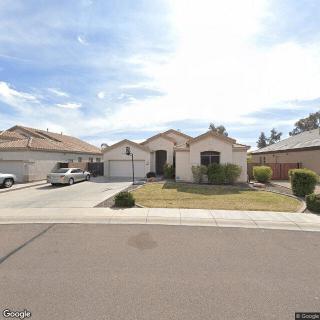
20493 North 91St Drive, Peoria, AZ 85382
For more information about senior living options: (866) 208-4318
Integrity Adult Care Home Costs & Pricing
Integrity Adult Care Home offers competitive pricing for its services, with monthly costs significantly lower than both Maricopa County and the broader Arizona state averages. For a semi-private room, residents can expect to pay $2,000, which is over $800 less than the county average of $2,801 and nearly $820 lower than the state average of $2,820. Similarly, private room accommodations are priced at $2,500 at Integrity, presenting a significant savings compared to the county's average of $3,318 and the state's average of $3,345. This positioning not only highlights Integrity Adult Care Home's dedication to affordability but also underscores its commitment to providing quality care in a supportive environment.
| Floor plans | Integrity Adult Care Home | Maricopa County | Arizona |
|---|---|---|---|
| Semi-Private | $2,000 | $2,801 | $2,820 |
| Private | $2,500 | $3,318 | $3,345 |
Assisted Living communities with a similar price nearby
-
About the same
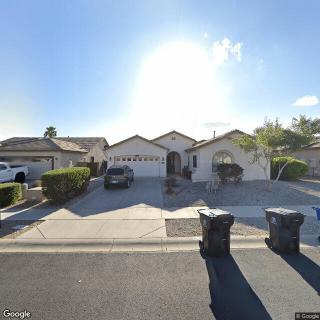
All Stars Assisted Living
$2,000 to $2,500 / month10.8 miles away -
from -$125 / mo
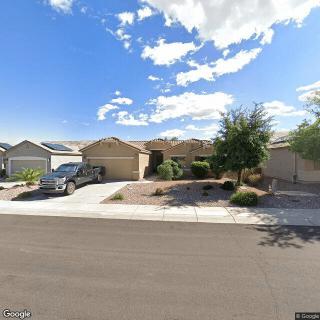
Marybela's Loyal Care
$1,875 to $3,010 / month11.1 miles away -
from +$255 / mo

Windsor Luxury Assisted Living, LLC
$2,255 to $5,950 / month19.4 miles away -
from +$225 / mo

Harts Home - Exceptional Elder Care
$2,225 to $5,500 / month21.5 miles away -
About the same
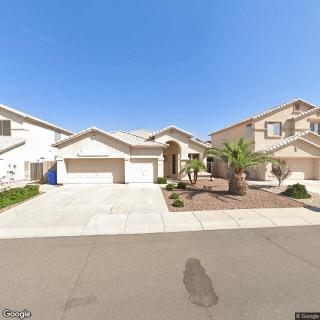
Desert Breeze Care Home
$2,000 / month7.2 miles away
Overall Review of Integrity Adult Care Home
Pros
 Her mother is very happy here.
- The staff is wonderful with the residents.
- Lucia is very helpful and caring.
Review
Integrity Adult Care Home in Peoria, AZ is best suited for families seeking a small, intimate home-like setting where caregiving feels personal and relationships with staff are central. The strongest signal from current impressions is that residents can be genuinely content when attention is direct and consistent. The comment that “My mother is very happy here” points to a culture where residents are valued as individuals and where the everyday experience centers on warm interactions. When staff excellence is described as “wonderful with the residents,” and a specific caregiver, Lucia, is highlighted as helpful and caring, it becomes clear that the community cultivates meaningful, steady support that can make a meaningful difference for seniors who prefer a close-knit environment over a larger, busier campus.
Those who should consider alternatives are families evaluating broader coverage and consistency across a larger population. The rating mix, two five-star experiences and one one-star experience across only a handful of reviews, suggests results may vary and that the facility’s strengths are not universally experienced. For a senior who needs more structured programming, more extensive medical oversight, or access to a wider range of therapies and activities on a daily basis, a bigger assisted living or a facility with more robust on-site services could be a better match. Prospective residents who require specialized memory care, rehab-oriented services, or comprehensive clinical management may find the footprint of a small home insufficient to meet those demands.
The core pros, attentive, resident-centered staff and the palpable warmth of caregiving, provide a meaningful offset to potential drawbacks. In a small setting, the ability of staff to know residents personally translates into quicker responses, tailored routines, and a sense of safety that larger communities sometimes struggle to reproduce. The presence of Lucia as a clearly valued staff member signals that the home can deliver a dependable point of contact who understands routines, preferences, and medical nuances. For families prioritizing emotionally supportive care and rapport-building, these strengths can outweigh limitations in activity breadth, scheduling variety, or formal programming that comes with larger facilities.
Nonetheless, the limited breadth of reviews and the low one-star rating cannot be dismissed. The inconsistent consensus may reflect variability in day-to-day experience, an issue that can arise in any intimate home where staff changes, shift patterns, or resource constraints affect coverage. Families should inquire about typical caregiver-to-resident ratios, overnight staffing levels, and how care plans are updated as needs evolve. It is prudent to question what happens when a preferred caregiver is unavailable, how quickly changes in health status are escalated, and what the facility can provide regarding transportation, social activities, and enrichment options. Transparency on these points will reveal whether the pros are reliably sustainable.
Practical steps to evaluate fit are essential. Prospective residents should schedule one-on-one time with the caregiving team, ideally meeting the nurse or administrator who coordinates daily care, and meet Lucia or another standout staff member to gauge compatibility. Request to review a sample care plan, medication management protocol, and how medical oversight is coordinated with external physicians. Ask to see safety features, emergency response times, meal service standards, and the daily activity calendar. Verify licensing status, inspection records, and any recent corrective actions. Gather candid feedback from current residents and families about communication quality, responsiveness, and the perceived consistency of care.
In the end, Integrity Adult Care Home offers a compelling value for families who prize a genuine sense of home and close staff relationships. It is a practical and sensible option for seniors who thrive on personal attention, predictable routines, and a caregiver network that feels like an extended family. For those whose priorities include robust clinical services, a wider activity slate, or a more expansive setting, it is wise to compare with alternatives that can deliver those capabilities with similar warmth. The decision should hinge on alignment between the resident’s care needs, the family’s expectations for programming and oversight, and the confidence that daily life will feel both safe and emotionally supported.
 8 resident community capacity
 Assisted Living
 Board and Care Home
 Respite Care
 Cable or satellite TV
 Dining room
 Fully furnished
 Garden
 Housekeeping services
 Move-in coordination
 Outdoor space
 Private
 Telephone
 Wi-Fi/high-speed internet available
 Phoenix Sky Harbor International (22 miles away)
 24-hour supervision
 Activities of daily living assistance
 Assistance with bathing
 Assistance with dressing
 Assistance with transfers
 Diabetes diet
 Meal preparation and service
 Medication management
 Special dietary restrictions
 Transportation arrangement (medical)
 Transportation to doctors appointments




 Exploring the Contrasts Between Assisted Living and Skilled Nursing
 8 Key Indicators That Suggest It May Be Time to Transition from Assisted Living to Skilled Nursing Care
 Vibrant Senior Living: A Comprehensive Guide for Active Older Adults