

3060 S Wesley, Mesa, AZ 85212
To contact a resident: (480) 292-9605
For more information about senior living options: (866) 208-4318
Wesley Home Care Costs & Pricing
Wesley Home Care offers competitive pricing for its services, providing both semi-private and private room options that are notably more affordable than the average costs in Pinal County and across Arizona. At $2,000 per month for a semi-private room and $2,800 for a private room, Wesley Home Care stands out as an attractive choice for families seeking quality care without the financial strain. In comparison, the average monthly rates in Pinal County are approximately $2,798 for a semi-private room and $3,209 for a private room, while statewide averages climb to $2,820 and $3,345 respectively. This makes Wesley Home Care not only a cost-effective option but also aligns with our commitment to providing accessible care tailored to the needs of our residents.
| Floor plans | Wesley Home Care | Pinal County | Arizona |
|---|---|---|---|
| Semi-Private | $2,000 | $2,798 | $2,820 |
| Private | $2,800 | $3,209 | $3,345 |
Senior living communities with a similar price nearby
-
About the same

Home Instead - Fountain Hills, AZ
$1,945 to $3,525 / month18.5 miles away -
from -$139 / mo

Endeavor Senior In-Home - Mesa
$1,861 / month10.4 miles away -
About the same

Garcia's Assisted Living Home LLC
$2,000 / month23.8 miles away -
About the same

Santo Nino Villas 2
$2,000 to $2,300 / month11.4 miles away -
About the same
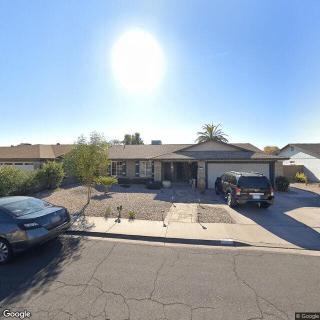
Martha Bonilla Care Loving Home
$2,000 to $2,200 / month13.5 miles away
Overall Review of Wesley Home Care
Pros
 The staff are very friendly and amazing.
- The staff were amazing, friendly, kind, and very helpful; they made patients feel as though they had known the staff for years.
- Wesley is a blessing to people in need of medical attention.
- The doctor was very kind and took the time to explain each step.
- The facility is quiet and close to home, and the space is neat and simple.
Cons
 They don’t answer their phones, even when called back.
 - They send callers to voicemail instead of picking up.
- The front desk was rude when scheduling and there’s little availability, often requiring a wait of over two weeks.
- They close for lunch and won’t accommodate walk-ins, leaving the lobby empty and unhelpful.
- The office feels strange with doctors constantly changing and staff frequently short-staffed.
- The office sometimes closes for training, and it’s unclear when staff will be available.
- They don’t do Covid shots, and the phone staff failed to inform the caller, wasting time.
- The back room has Bible scriptures on the walls, which felt uncomfortable and unwelcoming.
- The overall experience came across as poorly run and sketchy.
Review
Wesley Home Care in Mesa is best suited for seniors and families that prize a warm, human-centered approach and proximity, willing to tolerate occasional administrative rough edges in exchange for genuine care and a simple, homey environment. This community isn’t a universal solution for every planning scenario: those who require rock-solid scheduling reliability, consistently staffed physicians, and a polished front-d desk experience should seriously compare alternatives. In particular, models with steadier intake and non-denominational, consistently staffed clinics may serve families seeking predictability better than Wesley’s current operational rhythm.
The strongest asset across the favorable experiences is the staff themselves. Reviews repeatedly praise a very friendly, amazing, and helpful team that makes patients feel seen and well cared for. In several visits, the staff stood out for warmth, patience, and a sense of familiarity, enough to buffer the stress of medical questions and follow-up tasks. When care is delivered, the clinicians take time to explain steps, and word spread that the people at Wesley can be a genuine source of support during medical needs. That personal touch, combined with a quiet, low-stress setting near home, makes Wesley a comfort zone for many who value human connection over clinical polish.
Yet the positive impressions confront real operational gaps that can derail care plans. Phone communication often fails, with messages bouncing to voicemail or delays in returning calls, sometimes extending to several days. Front-desk performance is mixed, including reports of rude interactions and limited scheduling availability, instances that push patients to seek care elsewhere or to pivot to other providers after a single disappointing encounter. Scheduling itself tends to be slow, with appointments routinely described as two weeks out or insufficiently accessible, which translates into longer waits for important visits or timely follow-up. These friction points are not small annoyances; they shape the overall reliability families can expect when they depend on timely medical coordination.
The cons extend beyond access to care continuity. Several reviewers note frequent turnover among doctors and lapses in staffing that lead to inconsistent physician relationships. The sense that “the doctors are always changing” or that staff are temporarily unavailable for routine visits creates a perception of instability, especially for seniors with complex, ongoing health needs who benefit from a familiar medical voice. In some experiences, the environment itself can feel unwelcoming, reports of closed offices, lunch-hour interruptions, and mixed messages about services (such as vaccines) depend on who answers the phone or who is present that day. A few remarks about the back-room environment, Bible scripts on the walls, also highlight a tone that may be off-putting for patients seeking an explicitly neutral, inclusive setting.
These factors don’t erase the redeeming qualities, but they do thin the margin. The caregiving warmth and the simple, quiet setting can offset a fair amount of scheduling stress for patients who prioritize relationship-based care and close proximity. For families who can work within, or around, inconsistent appointment windows and rotating providers, Wesley remains a viable option that delivers meaningful personal attention when care sessions occur. However, the realities of uneven availability, inconsistent communication, and variable front-desk experience must be weighed against the emotional and logistical comforts Wesley affords.
Who should consider Wesley, then? The community is a compelling fit for seniors who want a neighborly, approachable care culture near home and who can tolerate occasional scheduling hassles. It’s less ideal for those who require pin-point reliability, a fixed primary physician, and a non-denominational, uniformly professional environment. For families needing steadier access and a consistently predictable care roster, alternatives like Oak Street Health or comparable Mesa providers, with more stable appointment patterns and less variance in staffing, should be part of the comparison. The decision hinges on whether the lure of genuine warmth and a simple, close-by setting outweighs the need for unwavering operational dependability.
Practical next steps: future families should verify current appointment norms, wait times, and the stability of the primary care physician roster. Ask for a concrete sense of typical response times to calls and messages, how often doctors rotate, and what the contingency plan is when a provider is unavailable. Schedule a face-to-face meeting with the front desk and the nursing team to gauge how staff handle scheduling questions and follow-through in real time. If warmth and accessibility matter most, Wesley can be a strong fit; if predictability and an unambiguous, neutral clinical environment are non-negotiable, it is prudent to widen the review to solid alternatives and compare the full spectrum of care experiences before making a final commitment.
 Board and Care Home
 Cats allowed
 Dogs allowed
 Activities off-site
 Bath tubs
 Indoor common areas
 Outdoor common areas
 Private
 Private bathrooms
 Respite or short term stays offered
 Wheelchair accessible showers
 Phoenix Sky Harbor International (23 miles away)
 Ambulatory care
 Diabetic care
 High acuity care
 Incontinence care
 Kosher




 Comprehensive Approaches for Arthritis: A Detailed Guide to Symptoms, Causes, and Care
 Comprehensive Insights and Practical Strategies to Help Older Adults Avoid Falls
 6 Crucial Ways an Elder Law Attorney Assists Families