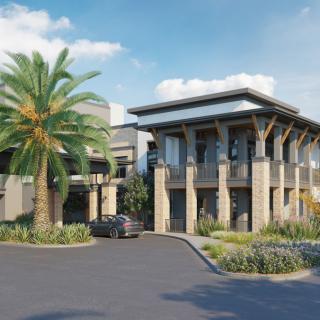
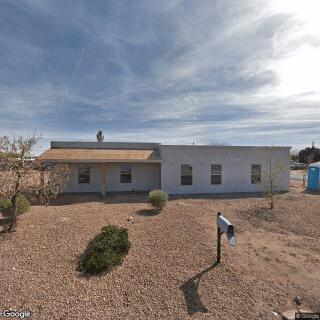
Baraka At Rosegarden Assisted Living is an assisted living community in Mesa, AZ.
Information last verified:
10435 East Monterey Avenue, Mesa, AZ 85209
For more information about senior living options: (866) 208-4318
4.1 from 43 reviews
5 stars
30
4 stars
2
3 stars
3
2 stars
1
1 stars
7
Overall Review of Baraka At Rosegarden Assisted Living
differentiator8 reviews mention this
Cottages feel homelike
Residents and families describe a homelike setting with cottage-style living.
Multiple reviewers say the community feels comfortable and not institutional, with cottages or a smaller “like home” setup standing out. One reviewer mentions a room that felt personal for their loved one, and another highlights that the cottage atmosphere helped make the transition easier. Even among mixed feedback, reviewers reference the memory unit and the outdoor area as part of how the environment affects daily life.
common27 reviews mention this
Care staff are consistently valued
A large share of reviews credit the staff for kind, attentive care.
Many reviewers describe staff as friendly, welcoming, and supportive, often noting regular checking, engagement, and respect for residents. Several families say caregivers helped ease reluctance to move in, supported daily needs, and communicated in a way that made them feel confident. A few reviews are negative about staffing performance in specific memory-care situations, but even those include at least some acknowledgment of staff kindness.
caveat5 reviews mention this
Memory care receives mixed feedback
Memory care reviews include concerns about activities, supervision, and responsiveness.
While some reviewers speak positively about dementia care and the staff’s approach, others raise serious concerns about how memory care is managed day to day. Negative comments include reports of limited engagement and activities, issues with notifying families about incidents, and concerns about safety and care quality. One mixed review also mentions a more depressing tone and points to the outdoor space as an area that could be improved for residents who cannot easily leave.
common2 reviews mention this
Meals are praised, but timing varies
Dining shows both positive impressions and complaints about meal timing.
One reviewer praises the food as part of a positive overall experience, and another highlights that residents are kept engaged through daily life. At the same time, at least one review complains that meals are sometimes late and served cold, and that assistance with meal preparation isn’t always provided for those who need it. Together, the reviews suggest dining quality may be good, but meal service consistency can vary.
How we summarize
Counts show how many written reviews mention each theme; a review can touch several themes, and only frequently mentioned themes are displayed.
Features
Housing
5 resident community capacity
Types of Care
Assisted Living
Board and Care Home
Amenities
Cable or satellite TV
Dining room
Fully furnished
Garden
Housekeeping services
Move-in coordination
Outdoor space
Telephone
Wi-Fi/high-speed internet available
Transportation
Phoenix Sky Harbor International (23 miles away)
Care Services
24-hour supervision
Activities of daily living assistance
Assistance with bathing
Assistance with dressing
Assistance with transfers
Coordination with health care providers
Diabetes diet
Meal preparation and service
Medication management
Special dietary restrictions
Transportation arrangement (medical)
Transportation to doctors appointments
Dining
Diabetes diet
Special dietary restrictions
Activities
Community-sponsored activities
Scheduled daily activities
Nearby Places of Interest
Restaurants
Someburros (0.6 miles)
Fat Willy's (0.8 miles)
Rubio's Coastal Grill (1 miles)
Sonic Drive-In (1.7 miles)
Lin's Grand Buffet (2.1 miles)
Carrabba's Italian Grill (4.2 miles)
Freddy's Frozen Custard (4.5 miles)
Pharmacies
CVS Pharmacy (0.7 miles)
Walgreens (0.8 miles)
Bashas' Pharmacy (0.9 miles)
Walgreens (1.5 miles)
Walgreens (1.8 miles)
CVS Pharmacy (3 miles)
Walgreens (3.1 miles)
Theaters
AMC Superstition East 12 (0.9 miles)
Superstition Springs 25 (4.3 miles)
Physicians
ENT Specialists of Arizona, PC (1.5 miles)
Family First Vision Care - EastMark (2.4 miles)
Barnet Dulaney Perkins Eye Center (2.6 miles)
East Valley Pediatrics (2.6 miles)
Marc Community Resources (3.2 miles)
Stripes Primary Care-a (3.7 miles)
Allen Family Medicine (4 miles)
Cafes
McDonald’s (1.6 miles)
Over Easy (5.1 miles)
The Human Bean (5.4 miles)
Starbucks (6.6 miles)
Starbucks (7.5 miles)
Dutch Bros Coffee (7.6 miles)
Parks
Skyline Park (2.3 miles)
Eastmark Great Park (3.3 miles)
Desert Sky Park (6.1 miles)
Ashley Heights Park (6.3 miles)
Riparian Preserve at Water Ranch (7.2 miles)
Cortina Neighborhood Park North (7.4 miles)
Places of Worship
Church of Jesus Christ of Latter Day Saints (3.8 miles)
Medicaid waivers for assisted living services provide vital support for seniors and individuals with disabilities in need of long-term care, with varying state-specific eligibility criteria and benefits. These waivers cover personal care and case management but often do not fully cover room and board, leading to waiting lists for many applicants.
The article examines the complexities of assisted living for individuals with disabilities, emphasizing the need for tailored care solutions that enhance quality of life and social inclusion, while addressing financial challenges and advocating for community integration. It discusses various housing options, the importance of financial assistance through public benefits, and highlights trends towards integrated and technology-driven solutions in disability-focused housing.
Assisted living for adults with disabilities has transformed to provide personalized care and support services aimed at improving residents' quality of life while balancing independence and assistance. However, low-income individuals often face challenges in affording these services, requiring navigation of various financial resources and advocacy for better policies and solutions.
Get PricingAsk A QuestionSchedule A TourContact Senior Advisor
By clicking submit, you agree to our Partner's Terms of Use. You
also consent to receive calls and texts, which may be autodialed, from our Partner. Your consent is not a condition to
using our Partner's service. Please visit our Partner's Privacy Policy for information about their privacy practices.

 5 resident community capacity
 Assisted Living
 Board and Care Home
 Cable or satellite TV
 Dining room
 Fully furnished
 Garden
 Housekeeping services
 Move-in coordination
 Outdoor space
 Telephone
 Wi-Fi/high-speed internet available
 Phoenix Sky Harbor International (23 miles away)
 24-hour supervision
 Activities of daily living assistance
 Assistance with bathing
 Assistance with dressing
 Assistance with transfers
 Diabetes diet
 Meal preparation and service
 Medication management
 Special dietary restrictions
 Transportation arrangement (medical)
 Transportation to doctors appointments
 Small, personalized community with 24-hour supervision and diabetes care.
 A Detailed Exploration of Assisted Living Medicaid Waivers Across the United States
 Comprehensive Residential Support and Assisted Living Solutions for Individuals with Disabilities
 Comprehensive Supportive Living Arrangements for Adults with Disabilities