
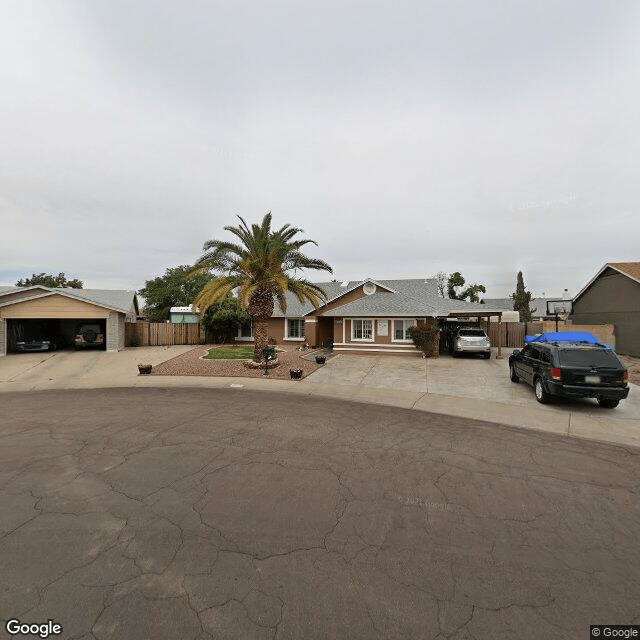
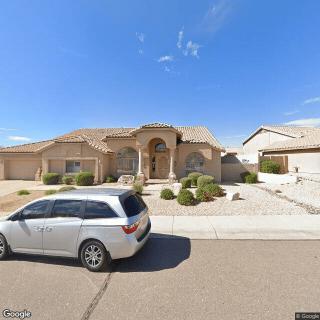
6426 West Del Mar Lane, Glendale, AZ 85306
For more information about senior living options: (866) 208-4318
Miriam's Adult Care Home Costs & Pricing
Miriam's Adult Care Home offers competitive pricing for its services compared to the broader market in Maricopa County and the state of Arizona. For semi-private rooms, residents can expect to pay $2,300 per month, which is significantly lower than the county average of $2,801 and the state average of $2,820. Similarly, those who prefer private accommodations will find Miriam's rates equally appealing; at $2,600 per month, this option is more affordable than both the county's average of $3,318 and the state's average of $3,345. Overall, Miriam's Adult Care Home stands out as a cost-effective choice for families seeking quality care without compromising on comfort.
| Floor plans | Miriam's Adult Care Home | Maricopa County | Arizona |
|---|---|---|---|
| Semi-Private | $2,300 | $2,801 | $2,820 |
| Private | $2,600 | $3,318 | $3,345 |
Memory care communities with a similar price nearby
-
from +$200 / mo
Anc Assisted Living Homes I
$2,500 to $3,500 / month14.8 miles away -
from +$400 / mo
Caring Hearts Senior Care
$2,700 to $3,500 / month11.2 miles away -
from +$200 / mo
Northlands Assisted Living Home
$2,500 / month8.4 miles away -
from -$300 / mo
Tatum Ranch Assisted Living
$2,000 to $3,000 / month16.0 miles away -
About the same

Windsor Luxury Assisted Living, LLC
$2,255 to $5,950 / month14.9 miles away
Overall Review of Miriam's Adult Care Home
Pros
 Miriam’s Adult Care Home is highly recommended for excellent, ongoing care that improves residents’ health and stamina.
- The care provided is loving and kind, with prayers that accompany positive changes in residents’ lives.
- Mirela and the staff are described as a blessing from God.
- The group home is wonderful, leaving families happy and confident in the care their loved ones receive.
- Residents have learned to prepare healthy meals and have achieved weight loss with the group’s support.
- The staff are very nice and patient, and families would readily recommend the home to others.
Review
Miriam's Adult Care Home in Glendale, Arizona is best suited for seniors who want a warm, intimate, home-like environment where care feels highly personalized and daily life is infused with a faith-centered, supportive atmosphere. The strong, positive experiences shared by families point to caregivers who know residents well, provide consistent attention, and offer emotional and spiritual reassurance alongside practical help. This setting prioritizes dignity, ordinary days with meaningful routines, and a sense of community that many families associate with a second family rather than a sterile, institutional feel. For those who value closeness, attentiveness, and a sanctuary-like environment, Miriam’s delivers.
Those weighing options should explicitly consider alternatives if the elder requires more formal medical oversight or a more clinical atmosphere. Specifically, seniors with significant nursing needs, complex wound or medication management, or a memory-care requirement may find a larger assisted living campus or a licensed memory-care unit preferable. Facilities with on-site physicians, dedicated therapy programs, and broader staffing pools can offer the level of medical continuity or specialized cognitive care that some conditions demand. In such cases, Miriam’s strong personal touch should be weighed against the certainty of medical resources elsewhere.
The strongest pros at Miriam’s revolve around personalization and relational care. Reviews describe a staff that is patient, kind, and deeply engaged in residents’ daily well-being, with health improvements noted in a mother’s stamina and vitality after months of attentive care. The home-like setting appears to support healthier habits, such as a resident learning to cook three nutritious meals and achieving weight loss, which speaks to practical, autonomy-supporting programming. A quiet, affirming environment, coupled with regular prayer and spiritual care, adds a layer of holistic wellness that families often treasure as part of daily life.
Where drawbacks logically arise in a small, residential care home, the potential trade-offs become worth considering. The format may come with fewer on-site medical professionals, limited access to specialized therapies, and less formal programming than larger facilities. While the reviews highlight warmth and attentiveness, this is a setting where overnight nursing coverage and round-the-clock clinical oversight are not the default, and urgent medical needs could require transport to external facilities. Families should acknowledge that the intimate crew size can influence consistency of staffing and the breadth of services available under one roof.
Nevertheless, the favorable factors offset those constraints in meaningful ways. The intensity of personalized attention, the trust built through daily routines, and the emotional and spiritual support appear to sustain residents’ quality of life and even bolster health outcomes. The ability to observe real improvements, like enhanced stamina and meaningful progress in daily independence, suggests that the care model here leverages close relationships to drive positive change. In settings where residents prosper on routine, familiar surroundings, and steady, compassionate caregiving, Miriam’s demonstrates a compelling match between values and outcomes.
In the end, Miriam's Adult Care Home stands as a confident recommendation for families seeking a warm, small-scale care home in Glendale that treats residents as individuals and honors their spiritual needs. It suits seniors who prioritize a family-like environment, a steady caregiver presence, and the chance to maintain independence through practical, daily activities. For those whose loved ones require extensive medical management or specialized memory-support programming, exploring larger facilities with formal medical and cognitive-care offerings is prudent. This is a choice built on trust, personal connection, and a practical assessment of care style versus clinical intensity.
 5 resident community capacity
 Assisted Living
 Board and Care Home
 Memory Care
 Activities off-site
 Cable or satellite TV
 Devotional services off-site
 Dining room
 Fully furnished
 Garden
 Housekeeping services
 Indoor common areas
 Move-in coordination
 Outdoor common areas
 Private
 Respite or short term stays offered
 Telephone
 Wheelchair accessible showers
 Wi-Fi/high-speed internet available
 Phoenix Sky Harbor International (17 miles away)
 24-hour supervision
 Assistance with bathing
 Assistance with dressing
 Assistance with transfers
 Diabetes diet
 Diabetic care
 High acuity care
 Incontinence care
 Meal preparation and service
 Medication management
 Special dietary restrictions
 Transportation arrangement (medical)
 Transportation to doctors appointments


 5 Early Indicators of Dementia and What You Can Do
 8 Important Indicators That Memory Care May Be Necessary
 Delving into the Inner World of Dementia: Insights into Thoughts and Awareness