
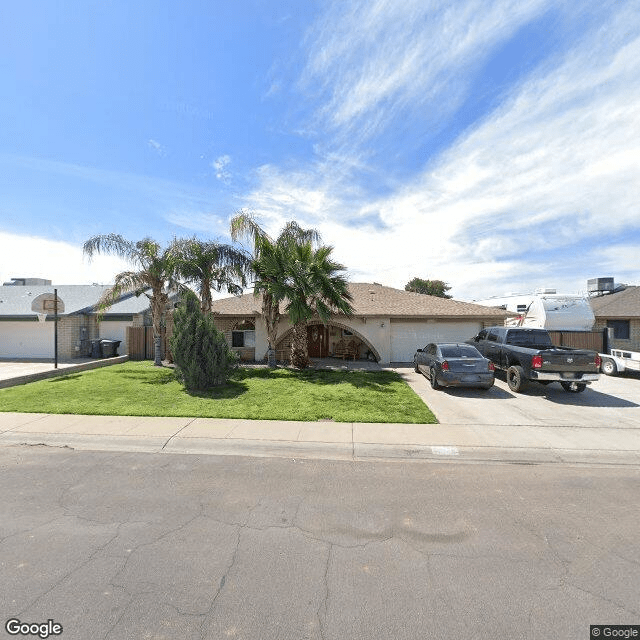
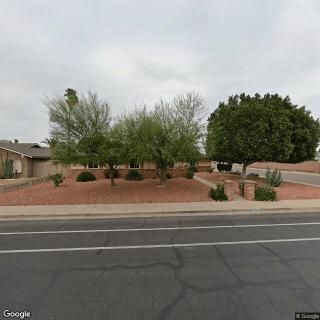
12818 N 44th Lane, Glendale, AZ 85306
To contact a resident: (602) 377-0475
For more information about senior living options: (866) 208-4318
In Touch Elder Care Costs & Pricing
In Touch Elder Care offers competitive pricing for its private room accommodations, currently set at $3,000 per month. This rate is notably lower than the averages observed in Maricopa County and across Arizona, where costs are approximately $3,318 and $3,345, respectively. By providing quality care at a more affordable price point, In Touch Elder Care stands out as a viable option for families seeking compassionate elder care without compromising on comfort or service. This economic advantage makes it an appealing choice in comparison to regional alternatives while ensuring that residents receive the attention and support they deserve.
| Floor plans | In Touch Elder Care | Maricopa County | Arizona |
|---|---|---|---|
| Private | $3,000 | $3,318 | $3,345 |
Senior living communities with a similar price nearby
-
from -$200 / mo

Pinnacle Peak Assisted Living
$2,800 to $3,100 / month15.6 miles away -
from +$500 / mo
A Paradise for Parents Campbell Avenue
$3,500 to $4,500 / month15.0 miles away -
from -$375 / mo

The Eldercare Home Of Tempe
$2,625 to $3,412 / month21.3 miles away -
About the same

Endeavor AL I
$2,950 to $4,200 / month10.8 miles away -
from +$500 / mo

Endeavor AL II
$3,500 to $4,000 / month11.3 miles away
Overall Review of In Touch Elder Care
Pros
 The company consistently delivers quality service, care, and dedication from day one.
- They understand and empathetically respond to families facing serious health challenges.
- They lifted the burden from a mother with heart disease and a father with stage 4 cancer by providing around-the-clock care.
- Ligia Ilea provided a gift to the family that they will be forever grateful for.
- The family would highly recommend the company any day of the year.
Cons
 The process can be an impossible ordeal due to the overwhelming paperwork.
- They were lost in the paperwork, tangled in receipts and bank statements.
- The situation placed a heavy burden on the family.
- The administrative maze caused frustration and stress for the family.
Review
In Touch Elder Care in Glendale is best suited for families facing serious medical needs where round-the-clock supervision and ready access to skilled care are non-negotiable. The two reviews portray a community that delivers comprehensive support from the moment of intake through ongoing management of complex conditions. Families describe staff as knowledgeable, dedicated, and profoundly empathetic to both the elder and the family’s emotional strain. The standout message is clear: for loved ones with heart disease, advanced cancer, or other high-acuity needs, this community functions as a reliable safety net. One reviewer highlights that the facility helped lift a heavy administrative burden, bank statements, receipts, and the like, so the family can focus on care rather than paperwork. Such relief, coupled with around-the-clock attention, marks this option as a purpose-built solution for crisis-level care.
That intensity, while transformative, is most appropriate for certain realities. Alternatives should be considered if independence and a lighter medical footprint are priorities, if cost is a primary constraint, or if cognitive needs point toward memory care specialized settings. For families seeking a more autonomous living experience with optional assistance, a smaller, home-like facility may better preserve a sense of everyday life. Likewise, those facing early-stage memory loss or who want a community that emphasizes wellness and activities rather than constant high-level medical monitoring might find other options more fitting. In short, In Touch Elder Care excels where steady medical oversight, responsive staff, and family-centered coordination are essential; others will benefit from exploring models that emphasize independence and lower acuity.
Key strengths center on availability, competence, and emotional clarity. The reviews repeatedly praise round-the-clock care that covers all needs, suggesting rapid response to changes in condition and continuous monitoring that minimizes risk. The quality of service and level of care are framed as dependable; staff display a depth of knowledge about the community and its resources, translating into smoother transitions, clearer guidance, and fewer miscommunications for families navigating medical logistics. The empathy shown by caregivers helps families cope with the stress of serious illness, turning an overwhelming process into a manageable one. When a specific employee, Ligia Ilea, gets singled out for making a tangible difference, it signals a culture where personal dedication translates into practical outcomes and real gratitude from the care receivers and their loved ones.
With these strengths, the main trade-off, often cost and the degree of independence required, tends to recede in importance. The protective value of 24/7 oversight in the context of heart disease and late-stage cancer care cannot be overstated: rapid intervention, medication management, and coordinated services reduce hospitalizations and crises. The depth of staff engagement also curtails family exhaustion; administrative burdens are lightened as the facility marshals receipts and records, and care planning stays aligned with medical realities. In this light, the benefits not only offset higher costs but also deliver measurable peace of mind. Families gain predictability, continuity of care, and a trusted point person for complex decisions, which can be decisive when navigating end-of-life considerations or advanced care planning.
Practical evaluation steps should reflect these realities. During tours, confirm staff-to-resident ratios, the cadence of overnight coverage, and the facility’s protocol for urgent changes in condition. Inquire about how care plans are developed, updated, and communicated to families, and whether the team coordinates with primary physicians and specialists. Ask for examples of how administrative tasks are handled on a day-to-day basis to verify the promised relief from paperwork is real. Finally, explore nuances such as dietary management, mobility support, and transportation options, ensuring the program aligns with the elder’s medical regimen and daily preferences. A candid conversation about expectations will reveal whether the round-the-clock model is the right fit.
For families facing a decision in Glendale, In Touch Elder Care stands out as a pragmatic, capable choice when constant professional care is the priority. It is not the right pick for those seeking a lighter touch or lower-cost arrangement, but for loved ones whose medical needs demand vigilant oversight and whose families value hands-on coordination, this community delivers. The reviews suggest a track record of compassionate care, administrative support, and staff who stay engaged with both residents and families. The next step is clear: schedule a detailed consultation, request a day-in-the-life tour, and verify that the care plan can be tailored to the elder’s evolving medical and emotional requirements.
 Board and Care Home
 Cats allowed
 Dogs allowed
 Activities off-site
 Beautician on-site
 Devotional services on-site
 Indoor common areas
 Outdoor common areas
 Private
 Private bathrooms
 Respite or short term stays offered
 Swimming pool / hot tub
 Wheelchair accessible showers
 Phoenix Sky Harbor International (14 miles away)
 Ambulatory care
 Diabetic care
 High acuity care
 Incontinence care
 Medication management
 Meals provided


 Highly Beneficial Low-Impact Exercises for Senior Living Residents
 Is In-Home Healthcare Tax Deductible? Your Comprehensive Guide
 Nurturing Well-Being Through Gardening: A Detailed Guide for Senior Enthusiasts