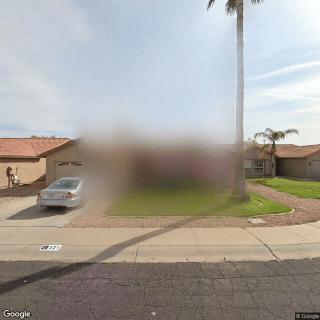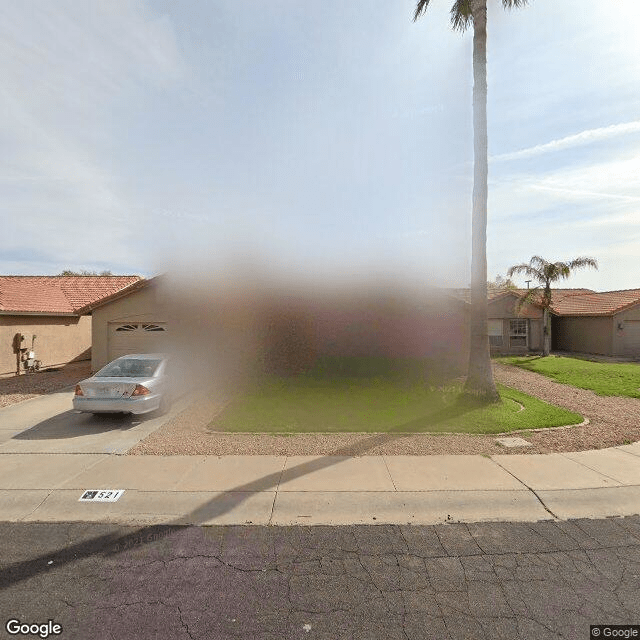
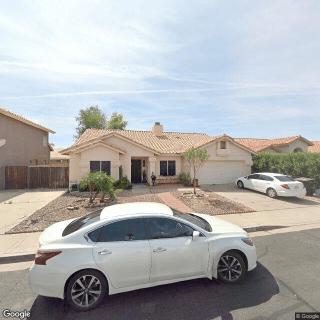
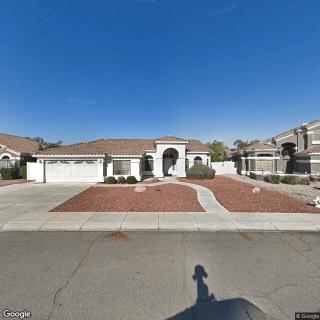
521 W Amoroso Dr, Gilbert, AZ 85233
To contact a resident: (480) 980-5750
For more information about senior living options: (866) 208-4318
Palace Villa Adult Care Home Costs & Pricing
Palace Villa Adult Care Home offers competitive pricing for its residents, particularly when compared to the average costs within Maricopa County and the broader state of Arizona. For semi-private accommodations, Palace Villa charges $1,800 per month, significantly lower than the county average of $2,801 and the state average of $2,820. Similarly, its private rooms are priced at $2,300 per month, which again stands in stark contrast to Maricopa County's typical rate of $3,318 and Arizona's overall average of $3,345. This pricing structure not only positions Palace Villa as an economically advantageous option for potential residents but also highlights its commitment to providing quality care at accessible rates within a competitive market.
| Floor plans | Palace Villa Adult Care Home | Maricopa County | Arizona |
|---|---|---|---|
| Semi-Private | $1,800 | $2,801 | $2,820 |
| Private | $2,300 | $3,318 | $3,345 |
Senior living communities with a similar price nearby
-
from +$145 / mo

Home Instead - Fountain Hills, AZ
$1,945 to $3,525 / month19.3 miles away -
from +$61 / mo

Endeavor Senior In-Home - Mesa
$1,861 / month4.5 miles away -
from +$200 / mo
Garcia's Assisted Living Home LLC
$2,000 / month13.6 miles away -
from +$200 / mo

Santo Nino Villas 2
$2,000 to $2,300 / month2.6 miles away -
from +$200 / mo
Martha Bonilla Care Loving Home
$2,000 to $2,200 / month3.6 miles away
Overall Review of Palace Villa Adult Care Home
Pros
 My mother has been so happy here.
- Rich and Joey are wonderful with her and take such good care of her.
Cons
 Bed bugs!!!
Review
Palace Villa Adult Care Home in Gilbert, AZ is best suited for families seeking an intimate, home-like setting where care is highly personalized and staff form close relationships with residents. This community tends to appeal to seniors who want daily help with activities of daily living but still desire a small, neighborly environment rather than a large, impersonal campus. It works best for residents whose families value direct access to caregivers and a setting where staff can track small changes in mood, appetite, or routine and adapt quickly. In short, Palace Villa suits those who prize hands-on, relationship-driven care over sprawling programs or heavy specialized medical oversight.
That said, several red flags should push families to consider alternatives, especially if cleanliness and predictable outcomes are non-negotiable. The limited number and nature of reviews, one glowing endorsement and one sharply negative report, signal an inconsistent track record. The overall rating sits at three stars from two distinct experiences, suggesting that not every resident will experience the same level of satisfaction or safety. For families who require a robust, systematized approach to health management, medication administration, and housekeeping, this setting may fall short. In such cases, larger, well-established facilities with transparent pest-control histories and clearer quality metrics deserve strong consideration.
The strongest positive thread in the available feedback centers on care relationships. One reviewer notes their mother “has been so happy here” and highlights Rich and Joey as particularly devoted, capable caregivers who consistently attend to her needs. That kind of personal connection can translate into meaningful daily stability: timely help with meals, mobility, laundry, and routine checks that prevent small issues from becoming crises. In a small home environment, caregivers can grant residents individualized attention, adjust routines to personal preferences, and respond to concerns with immediacy. When these relationships land, they transform the experience of aging in place and can be a decisive factor for families.
However, the major caveat in the public record is the presence of bed bugs in the facility. A single harsh report of an infestation is not a trivial matter; it raises questions about the effectiveness of housekeeping, pest control, and ongoing maintenance in an intimate setting where residents share intimate spaces and furniture. In a setting this small, a pest issue can escalate quickly if not addressed with transparent communication, rapid treatment, and ongoing prevention. Until pest-control history is clarified and remediation is consistently demonstrated, this risk remains a critical deterrent for prospective residents who prioritize a clean, hygienic environment as a baseline expectation.
When weighing pros against the cons, the personal-care strength is meaningful but not wholly sufficient to offset a pest-related red flag for many families. The benefit of highly attentive staff and a strong caregiver-resident bond can accommodate seniors who are relatively independent but need daily assistance and companionship. Yet the bed bug concern, coupled with the limited breadth of independent verification (just two reviews on record), means Palace Villa is unlikely to be the right fit for those requiring a predictable, regimented quality of life with rigorous infection-control assurances. Families must decide whether the apparent warmth and flexibility justify the potential for irregularities in cleanliness and system-wide consistency.
Ultimately, Palace Villa may be an appropriate choice for a small cohort of residents whose families can remain actively involved and who prioritize personal attention over scale. For others, especially those who require stronger guarantees around cleanliness, standardized protocols, and measurable quality outcomes, alternatives that offer broader staffing, documented pest-control history, and more transparent performance metrics should be pursued. Prospective residents should visit with a concrete checklist: request to see current room conditions, inquire about pest-control history and recent remediation steps, review state licensure and any citation history, and speak with multiple staff members about daily routines. Only through direct observation and cross-checking with independent resources can a decisive, confidence-inspiring choice be made.
 Board and Care Home
 Cats allowed
 Dogs allowed
 Private
 Private bathrooms
 Phoenix Sky Harbor International (14 miles away)
 Diabetic care
 High acuity care
 Christian services


 Understanding the Sandwich Generation: Stress and Responsibilities for Multigenerational Caregivers
 8 Essential Assistive Devices for Older Adults
 Navigating the Financial Road to Nursing Home Care: In-Depth Guidance and Resources