
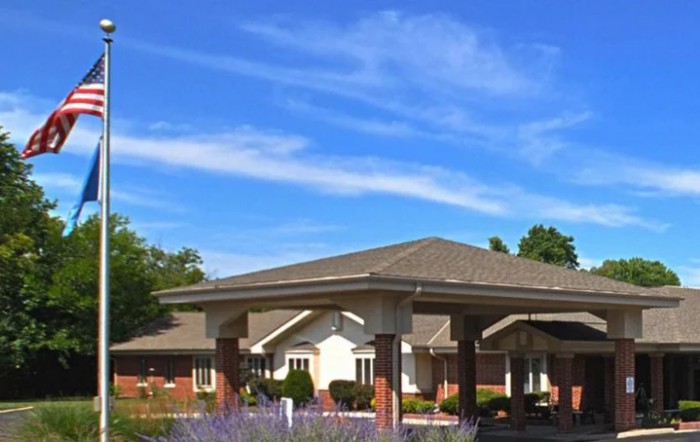
1451 Cleveland Ave, Waukesha, WI 53186
To contact a resident: (262) 547-2123
For more information about senior living options: (866) 208-4318
Overall Review of Virginia Health Care Ctr
Pros
 Some of the staff are very friendly and compassionate, particularly the physical and occupational therapy teams.
- There are good staff here, including Ellie, the nurse manager for the memory unit, as well as Adan and Bonnie.
- The social workers are kind and thoughtful.
- The physical and occupational therapy providers are dedicated and capable.
- The housekeeping staff keep the building reasonably clean despite its age.
Cons
 The administrator is uninvolved, dismissive of concerns, and rarely interacts with residents on the unit.
- Many nurses and direct care staff lack the compassion and conscientiousness expected in this profession.
- The administrator seems completely disconnected, staying in her office and often on her smartphone instead of addressing residents’ needs.
- The administrator never came to the room to address a bent lamp, despite being informed multiple times.
- A nurse argued with a resident about the lack of jelly and told him to "Call the sheriff. I don't care."
- A nurse offered a breathing treatment instead of cough medicine and muttered, "Whatever," when questioned.
Review
This community is best suited for residents who can benefit from targeted rehabilitation services and a generally functional housekeeping operation, provided family members are prepared to stay heavily involved in daily care decisions. The rehab staff, physical and occupational therapy, are the strongest consistent asset, delivering practical support that can help a resident make real progress. In addition, the memory-care segment has a dedicated provider, and the social-work team offers thoughtful guidance through transitions. When the setting is right, the facility can deliver meaningful gains in function and a reasonably clean environment, but those gains rest on the premise that daily caregiving is reliably attentive and that leadership on the floor remains engaged.
Those who should actively consider alternatives include families seeking consistently compassionate bedside care and decisive, hands-on administration. The reviews repeatedly describe a split: some frontline staff show kindness, while others appear detached or even blunt in interactions. An administrator who is rarely seen on the unit and dismissive of concerns is a red flag, as are repeated delays in follow-through after complaints. The pattern suggests that the care climate can swing depending on who is on duty, rather than representing a stable, resident-centered culture. Add in recent staffing moves from another local facility with a questionable reputation, and the calculus shifts toward caution.
On balance, the positive care elements, therapists who connect with residents, plus kind social workers and a capable memory-unit manager, offer a meaningful counterweight to the worst-case scenarios. These professionals can make a tangible difference in comfort, mobility, and emotional support. However, the scale tips away when the main care leaders fail to model compassion and when communication breaks down, leaving families uncertain about medication administration, incident follow-ups, or simple requests like a lamp being properly positioned. In short, the strengths exist, but the vulnerabilities are fundamental enough to outweigh them for most long-term planning.
Key concerns center on leadership absence and inconsistent bedside manners. An administrator who treats concerns as interruptions rather than opportunities to improve undermines trust, while some nursing staff respond with sarcasm or misaligned care , for instance, offering treatments in place of requested medications, or making offhand remarks about a resident’s needs. Such episodes compound stress for residents and families and raise questions about safety and accountability. The lack of timely escalation to corporate leadership compounds the sense that problems will persist without direct, visible oversight.
Families evaluating a move should insist on a deliberate, documented plan to address care gaps. This includes requesting direct access to the administrator for introductions and ongoing check-ins, insight into how staff training is conducted, and evidence of steady leadership presence on the unit. Ask for concrete answers about medication administration, routine care schedules, and response times to concerns. Given recent staff redeployments from River Hills, verify how new hires will integrate without destabilizing caregiving routines. If available, compare with nearby communities that demonstrate higher consistency in staffing and administrative engagement.
Bottom line: the facility offers usable rehab services and decent housekeeping, but core daily care depends too heavily on variable staff behaviors and uneven administrative involvement. For families prioritizing consistent empathy, proactive management, and dependable communication, this is not the ideal choice. If a tester-admission approach is taken, use it to verify whether the floor-level culture has shifted toward genuine resident-centered care, and maintain a clear plan to transition if the experience remains unpredictable. In many cases, steering toward a more consistently managed alternative will yield greater peace of mind and a more predictable daily routine for a loved one.
 Skilled Nursing Facility
 General Mitchell International (17 miles away)

 Understanding Home Health Care: A Comprehensive Guide
 Home Health Care Demystified: A Comprehensive Guide for Families and Caregivers
 Seniors and Modern Transportation: Exploring Uber, Lyft, and Other Ride-Hailing Options