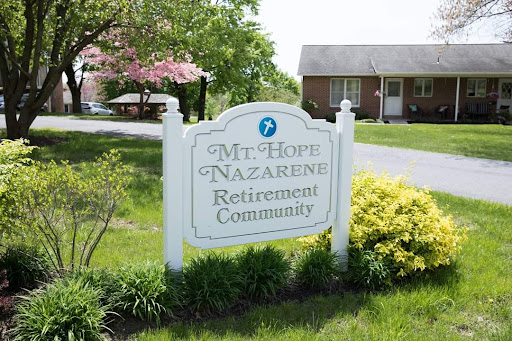

3026 Mount Hope Home Road, Manheim, PA 17545
For more information about senior living options: (866) 208-4318
Overall Review of Mt Hope Nazarene Retirement Community
Pros
 Mount Hope is a wonderful place.
- The staff are pleasant, caring, and giving.
- The therapists are patient and friendly.
- The managers are helpful and kind.
- Families are grateful that their loved ones are well taken care of.
- It is described as a place of healing with a Godly atmosphere.
- Staff go above and beyond to help residents have a smooth transition.
- The facility is clean and staffed by caring people.
- Mount Hope is a small, personal facility where residents are treated like family and enjoy a variety of activities.
Cons
 The facility is run down and the management is awful.
- A resident was kicked out after over ten years, leaving him with nowhere to go.
- It is very sad that a place would do this to someone.
- The incident is cited as evidence that religion and caring are no longer what they used to be.
Review
Mt Hope Nazarene Retirement Community in Manheim is most compelling for families seeking a small, intimate, faith-centered setting where residents receive highly personal attention. This is a place that tends to attract seniors who value a close-knit, home-like atmosphere, consistent staff warmth, and meaningful daily routines. It works best for individuals who don’t demand a glossy, large-campus experience but do prize reliable caregiving, strong community ties, and predictable day-to-day life shaped by church involvement and familiar faces. For residents who thrive on craft activities, organized social events, and a setting that feels like a rural, personal home, Mt Hope delivers.
Those who should consider alternatives are families prioritizing scale, formalized management processes, or advanced clinical capabilities. If a resident requires robust memory-care protocols, highly aggressive medical intervention, or a campus with modern, resort-like amenities, another option may be a better fit. Similarly, if stability in leadership and a consistently disciplined discharge policy are non-negotiables, the concerns raised by some reviewers about management decisions deserve careful scrutiny. In short, this is not the choice for someone seeking a large, trendier facility or a secular, frictionless administrative environment.
The strongest positives, the genuinely caring staff, patient therapists, and the managers’ willingness to help, are repeatedly highlighted as the heartbeat of Mt Hope. Multiple families describe staff as kind, attentive, and dedicated, with caregivers who go the extra mile during transitions from independent living into assisted care and through end-of-life moments. The small size facilitates visible, ongoing relationships; residents are known by name, and staff are described as treating residents like family. Food quality and cleanliness surface in several accounts as notable strengths, reinforcing a sense of comfort and daily stability in a setting that feels manageable and safe. The church atmosphere and the involvement of pastors and church activities further reinforce a nourishing, values-aligned environment for many residents.
That said, the critiques cannot be ignored. A few families voiced serious concerns about upkeep and management, including perceptions that the facility is run-down and that leadership decisions can be abrupt or unsympathetic, culminating in at least one high-profile discharge after decades of residence. This tension between a warm, personal care ethos and occasional perceived rigidity or missteps at the administrative level creates a meaningful caveat. For families weighing options, this means careful due diligence is warranted: visit in person, ask how care plans are updated, and probe how staffing is scheduled, how conflicts are resolved, and how transitions are managed for residents with dementia or complex behavioral needs.
In practice, Mt Hope’s advantages offset many of the drawbacks when the decision centers on a resident who desires a stable, faith-infused, low-to-mid acuity environment. The residence is suited to residents who appreciate routine, personal touches, and a sense of community where caregivers, therapists, and church volunteers are accessible and approachable. Those benefits are amplified by the facility’s small scale, which supports frequent interactions, hands-on supervision, and a culture that families describe as familial and spiritual. The risk is that when management decisions feel heavy-handed or inconsistent, that same intimate setting can become a source of friction rather than reassurance.
Final guidance: Mt Hope Nazarene is a solid, practical match for families seeking a homelike, supportive community with strong staff engagement and a spiritually oriented culture, particularly for low-income or modestly resourced seniors who value personal attention and a quiet, active lifestyle. The main caveat is the management risk some reviews flag; this requires deliberate inquiry and clear expectations around governance, responsiveness, and discharge policies. Pros strongly align with residents who prize daily belonging, meaningful activities, and reliable caregiving; cons are most consequential for those who prioritize formal administration and expansive clinical services. Prospective families should schedule a comprehensive tour, speak with multiple staff members, and compare with alternatives that offer larger campuses or more intensive memory-care programming to ensure the fit is precise.
 50 resident community capacity
 Skilled Nursing Facility
 Beauty salon
 Cable or satellite TV
 Dining room
 Fully furnished
 Garden
 Housekeeping services
 Kitchenette
 Move-in coordination
 Outdoor space
 Restaurant-style dining
 Small library
 Telephone
 Wi-Fi/high-speed internet available
 Harrisburg International (16 miles away)
 24-hour call system
 Activities of daily living assistance
 Assistance with bathing
 Assistance with dressing
 Assistance with transfers
 Diabetes diet
 Medication management
 Mental wellness program
 Special dietary restrictions



 Seniors and Modern Transportation: Exploring Uber, Lyft, and Other Ride-Hailing Options
 Comprehensive Guide to Qualifying for Home Health Care Services
 Powerful Realities of Elder Abuse and the Most Effective Ways to Report It