815 North Country Club Road, Ada, OK 74820
For more information about senior living options: (866) 208-4318
Overall Review of Jan Frances Care Center
Pros
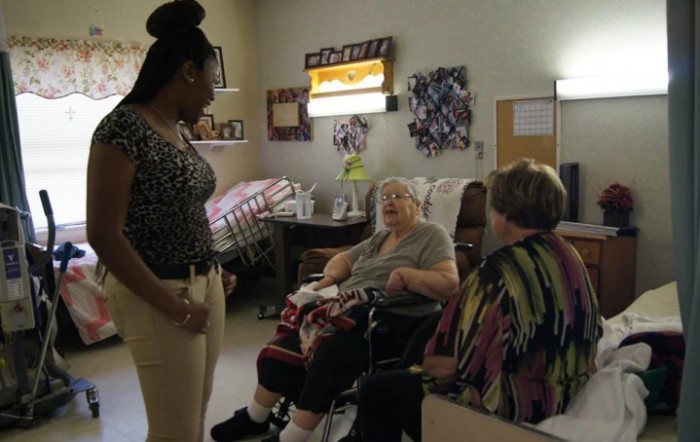
 The staff is great and very professional; they treat the patients with great care and love.
- It is a decent place.
- The facility is described as a place where real princesses stay and get well.
Cons
 They refuse to release a patient to another nursing home even though the doctor has recommended it.
- They give residents the runaround on everything.
- Accidents are frequent enough to prompt questions from the doctor.
- The staff are indifferent to the patients and often treat them poorly.
- They hire non-CNA-certified staff with zero training, which is illegal.
- The facility feels old and rundown.
- Grandmother was treated very poorly and complaints were met with retaliation; half the staff are incompetent and rude.
- They use family-purchased adult pull-ups on other residents, which is humiliating.
Review
Jan Frances Care Center in Ada, Oklahoma is best suited for families operating on a tight budget who need basic nursing-home care and are willing to trade modern amenities for affordability. The facility is repeatedly described as the least expensive option in Ada, presenting a plain, older-style environment rather than a polished, resort-like setting. For loved ones whose primary need is steady daily assistance and whose families can tolerate variability in day-to-day care, this community can meet essential requirements without the premium price tag. It is not a high-end or cutting-edge option, but in a constrained market, it may represent a practical baseline choice.
At the same time, clear caveats push many families to consider alternatives. If a resident requires consistently compassionate staff, highly reliable training, or stronger safety and dignity standards, other facilities merit evaluation. Reviews commonly flag issues with staff attitude and training gaps, with several families alleging indifference or outright poor treatment. There are concrete logistical red flags as well: difficulty transferring a resident when a physician recommends relocation, repeated questions from physicians about accidents, and a perception that information is not handled with transparency. For anyone prioritizing dependable, respectful care, the risk profile here argues strongly for shopping other options first.
There are recognizable positives, and they matter in real-world decision-making. Several reviewers describe portions of the staff as professional and caring, with some frontline workers delivering genuine, supportive care. Some residents benefit from dedicated services such as certain therapists whose contributions are meaningful. The affordability angle also translates into a workable baseline of services for families who lack alternatives. In practice, care can be steady in meaningful moments, and not every shift is negative. These glimmers of reliability can be decisive for families who must balance cost against care needs.
Yet the cons are persistent and substantial. Reports of staff who are not CNA-certified or who operate without adequate training raise safety and compliance concerns. Instances of residents being treated poorly or even like “dogs,” coupled with disruptive behavior such as taking breaks in dangerous proximity to oxygen, create a troubling impression of daily operations. The pattern of runarounds, slow responses to accidents, and hesitancy to honor doctors’ recommendations to transfer a resident compounds the perception of a facility struggling with consistency. The building’s appearance and the social environment, described as rundown with limited activities, reinforce the sense that this is a basic, not an engaging, place to spend years.
Do the positives offset the negatives? For cost-sensitive families, there is some offset where reliable staff and occasional professional support deliver meaningful care in specific moments. However, the weight of safety, dignity, and consistency concerns tilts the balance away from a straightforward endorsement. The overall picture is a mixed one: affordability provides access to essential services, but it does not reliably guarantee the quality of care or the peace of mind that many families expect. In practical terms, Jan Frances can work if risk tolerance is high and stringent oversight is possible, but it does not stand up as a confident, universal recommendation for most seniors needing steady, high-quality care.
The prudent path is to approach with a concrete due-diligence plan. Schedule multiple in-person visits at different times to observe direct caregiver interactions, verify staffing levels, and see how incidents are documented and resolved. Request current care plans, and speak directly with frontline staff to gauge their training and engagement. Ask tough questions about CNA certification, ongoing training, and how the facility handles physician recommendations to relocate a resident. Probe the administration about social programming, discharge planning, and how patient rights are protected. If affordability is non-negotiable, Jan Frances may merit a careful trial, but it should be paired with a clear escalation plan for concerns and a readiness to pivot to a better-supported option if conditions do not meet expectations. For families with the luxury of choice, pursuing other Ada facilities with stronger staffing records and a more robust safety culture is strongly advised.
 132 resident community capacity
 Assisted Living
 Skilled Nursing Facility
 Activities on-site
 Air-conditioning
 Beauty salon
 Cable or satellite TV
 Computer center
 Devotional services off-site
 Dining room
 Fitness room
 Fully furnished
 Gaming room
 Garden
 Housekeeping services
 Indoor common areas
 Kitchenette
 Move-in coordination
 Outdoor space
 Private bathrooms
 Restaurant-style dining
 Small library
 Telephone
 Wellness center
 Wi-Fi/high-speed internet available
 Community operated transportation
 12-16 hour nursing
 24-hour call system
 Ambulatory care
 Assistance with bathing
 Assistance with dressing
 Assistance with transfers
 Diabetes diet
 Diabetic care
 Medication management
 Mental wellness program
 Special dietary restrictions
 Concierge services
 Planned day trips







 An Extensive Exploration of the VA Aid and Attendance Benefit
 Senior Transition Services: Understanding Their Role, Cost, and Importance
 Exploring the Path to Senior Living: A Comprehensive Look at Independent Living and Assisted Living