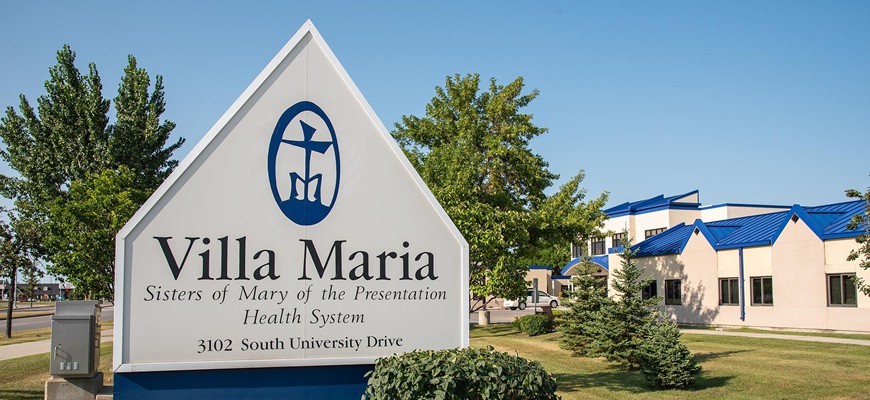
3102 South University Drive, Fargo, ND 58103
For more information about senior living options: (866) 208-4318
Overall Review of Villa Maria - Fargo
Pros
 It has a small home feel with consistent staff caring for residents.
- SMP South's calendar is full of activities that all residents can participate in, regardless of physical or cognitive challenges.
- The meals look really good.
- The staff have gotten to know residents and let them call the shots for what they want to do and where they want to be.
- She smiles when staff approach her.
- They have been very happy with the care their family member receives at St. Catherine South.
- Staff show her a lot of love and she has been happy there, which eases the family's minds.
- It is nice that there is a daycare for employees, and daycare kids interact with the elderly.
- The Deacon is very compassionate.
- They have some good staff.
Cons
 They would not recommend the facility.
- They believe the place should be looked into.
- Very serious things happened to the reviewer’s mom, and she was removed from the facility.
- There is a huge turnover of staff and not enough employees to perform tasks.
- There are too many supervisors at desks and not enough staff to do the work.
Review
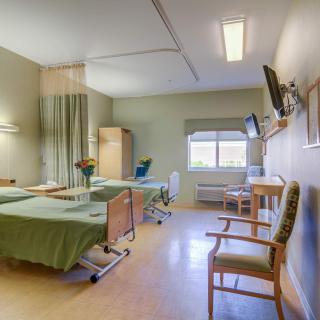
Villa Maria – Fargo is best suited for seniors who want a small, home-like feel coupled with consistently attentive caregiving and access to on-site rehab services. This community fits residents who thrive with personal, predictable routines, where staff take the time to know the individual and tailor daily activities to their preferences. Those who value autonomy within a supported framework will find staff willing to accommodate wants, whether it’s where to be or what to do, without turning daily life into a rigid schedule. The on-site OT, PT, and speech therapies reinforce a clinically grounded, practical level of support, so residents can pursue rehabilitation in a familiar setting without constant relocation. For families seeking a neighborhood-style ambiance where care feels intimate and relationships matter as much as services, Villa Maria often rises to meet that expectation.
That said, not every family will find this community the right fit. Alternatives should be considered for loved ones needing higher-acuity medical oversight or more robust safety nets. Several reviews flag staffing turnover and a perception that frontline care can be uneven, with leadership sometimes appearing stretched. When rapid clinical intervention or vigilant, round-the-clock supervision is essential, such as for residents with complex medical needs or challenging behaviors, a different facility with stronger clinical ratios and more transparent escalation of concerns may be more appropriate. Prospective families should probe whether governance and front-line teams operate in sync, and whether any past quality issues are actively tracked and resolved with concrete, visible improvements.
On balance, the positives in Villa Maria’s profile carry real weight. The environment often feels like a welcoming home, and the staff tend to form genuine, ongoing connections with residents, letting them steer daily choices and activities. This empowerment supports dignity and emotional well-being, which can translate into smoother days and easier cooperation with care plans. Rehab access is practical and integrated, not an afterthought, so residents can keep mobility and speech goals on track without extra transitions. The activity slate appears broad enough to engage residents across physical and cognitive levels, helping to reduce isolation and maintain social belonging. Dining remains a highlight for many families, with meals that look and taste appealing during visits, reinforcing the sense that life there balances nourishment with enjoyment. Weekly religious programming adds an important layer for residents seeking spiritual continuity.
Nevertheless, the cautionary notes across reviews cannot be dismissed. Instances described by some families, where serious concerns prompted a move, underscore that experiences can diverge dramatically. These episodes point to potential reliability gaps and raise questions about how incidents are addressed and learned from. The sense that the executive team can be overly desk-bound while frontline staff are overstretched echoes a governance-versus-operations mismatch that can undermine consistency. Staffing turnover across roles further compounds the problem, making it harder for residents to maintain routines and for families to feel confident in the level of daily care. Prospective residents should demand current staffing snapshots, recent quality metrics, and concrete examples of corrective actions implemented to restore steadiness where past concerns arose.
Decision-making for a loved one in this setting should center on practical diligence. Plan a comprehensive visit to observe genuine daily interactions: note how staff solicit preferences, respond to requests, and maintain resident dignity during routines. Request visibility into current therapy schedules and confirm straightforward access to OT, PT, and ST without friction. Inspect the dining operation, menu variety, dietary accommodations, and the consistency of meals across shifts. Review the activity calendar firsthand and observe whether residents at different independence levels can participate meaningfully. Finally, inquire about safety practices, incident reporting, and staffing ratios, plus the steps taken to address any prior concerns, including how families are kept informed. Spiritual care options, including mass and sacraments, should align with the resident’s beliefs and family expectations if faith is important.
When the fit is right, Villa Maria offers a compelling blend of warmth, practical care, and meaningful engagement. For seniors who prize a neighborly ambiance, steady day-to-day caregiving, accessible rehabilitation, and a diverse, inclusive activity program, this community can deliver substantially. The strongest advantages, home-like atmosphere, consistent caregiving, autonomy-supportive staff interactions, robust rehab access, and an engaging activity roster, substantially offset common drawbacks for many families. Yet the caveats regarding staffing stability and the potential for governance-to-front-line gaps mean it remains essential to compare carefully with peers and demand transparent, up-to-date information on incident resolution and staffing. The prudent path is a guided visit supplemented by conversations with recent residents and families, plus a hard look at current staffing metrics and the community’s track record on safety and quality improvements. With eyes wide open to the trade-offs, Villa Maria can be a sound, well-suited choice for the right resident and the right family.
 140 resident community capacity
 Skilled Nursing Facility
 Air-conditioning
 Beauty salon
 Cable or satellite TV
 Computer center
 Dining room
 Fitness room
 Fully furnished
 Gaming room
 Garden
 Housekeeping services
 Kitchenette
 Move-in coordination
 Outdoor space
 Private bathrooms
 Restaurant-style dining
 Small library
 Telephone
 Wellness center
 Wi-Fi/high-speed internet available
 Hector International (6 miles away)
 Community operated transportation
 12-16 hour nursing
 24-hour call system
 Activities of daily living assistance
 Assistance with bathing
 Assistance with dressing
 Assistance with transfers
 Diabetes diet
 Medication management
 Mental wellness program
 Special dietary restrictions
 Concierge services
 Planned day trips

 Powerful Realities of Elder Abuse and the Most Effective Ways to Report It
 Ten Vital Duties of a Senior Caregiver: A Comprehensive Guide
 9 Stimulating Memory Activities for Seniors: Puzzles, Cards, and Much More