For more information about senior living options: (866) 208-4318
3 from 43 reviews
5 stars
16
4 stars
5
3 stars
2
2 stars
2
1 stars
18
Our Lady Of Mercy Life Center Costs & Pricing
Our Lady of Mercy Life Center offers competitive pricing compared to the broader market in Albany County and the state of New York. For instance, a studio at Our Lady of Mercy is priced at $1,650 per month, significantly lower than the county average of $3,873 and the state average of $4,532. Similarly, their one-bedroom units are available for $2,295, which contrasts favorably with Albany County's rate of $3,440 and the state's average of $4,307. Even for two-bedroom accommodations, Our Lady of Mercy remains economically attractive at $3,195 compared to Albany County's $3,409 and New York state's higher figure of $4,786. This positions Our Lady of Mercy Life Center as an appealing option for those seeking quality living arrangements while being mindful of their budget.
Floor plans
Our Lady Of Mercy Life Center
Albany County
New York
Studio
$1,650
$3,873
$4,532
1 Bedroom
$2,295
$3,440
$4,307
2 Bedrooms
$3,195
$3,409
$4,786
Overall Review of Our Lady Of Mercy Life Center
differentiator7 reviews mention this
Restaurant-style dining gets praise
Dining is described as restaurant-quality more than once.
Several residents and families praise the meals, saying the food was very good and even restaurant-quality, with variety and menu items they enjoyed. One reviewer also points to tailoring, describing special diets for diabetes and other restrictions as handled during their stay. A few other reviews go the opposite direction, reporting food quality concerns or needing to bring food in, so dining satisfaction is not universal.
caveat12 reviews mention this
Nursing support is a mixed picture
Nursing care and call-bell response are inconsistent.
Some families report neglect-type experiences, including delayed responses to calls, leaving residents sitting for hours, or insufficient assistance when help was needed. Others describe highly attentive care during rehab and nursing stays, including medication and health support that kept families from feeling they needed to chase updates. Reviews also mention staffing pressure, with multiple comments pointing to being short-staffed or requiring additional help.
common8 reviews mention this
Rehab staff help residents progress
Rehabilitation therapists are frequently described as hardworking and skilled.
A number of reviews highlight physical and occupational therapy, describing therapists who worked hard and helped residents learn how to get stronger or navigate safely. Several families connect this therapy effort to noticeable improvement over short stays, including progress after orthopedic or mobility-related injuries. Even where other concerns show up, at least some reviewers still credit rehab therapy teams for pushing progress.
common1 reviews mention this
Pricing appears well below benchmarks
Reported costs fall far below county and state benchmarks.
Pricing is shown across unit types, and it indicates the community’s rates are substantially lower than county and state comparisons. At the same time, some reviews still criticize how care was delivered or how billed costs were handled, so lower pricing does not automatically translate to a consistently positive experience. Residents’ and families’ comments about day-to-day care appear to drive satisfaction more than cost comparisons.
How we summarize
Counts show how many written reviews mention each theme; a review can touch several themes, and only frequently mentioned themes are displayed.
Features
Housing
160 resident community capacity
Types of Care
Skilled Nursing Facility
Amenities
Air-conditioning
Beauty salon
Cable or satellite TV
Computer center
Dining room
Fitness room
Fully furnished
Gaming room
Garden
Housekeeping services
Kitchenette
Move-in coordination
Outdoor space
Private bathrooms
Restaurant-style dining
Small library
Telephone
Wellness center
Wi-Fi/high-speed internet available
Transportation
Albany Cty (6 miles away)
Community operated transportation
Transportation arrangement
Transportation arrangement (non-medical)
Transportation to doctors appointments
Care Services
12-16 hour nursing
24-hour call system
24-hour supervision
Activities of daily living assistance
Assistance with bathing
Assistance with dressing
Assistance with transfers
Diabetes diet
Meal preparation and service
Medication management
Mental wellness program
Special dietary restrictions
Dining
Diabetes diet
Special dietary restrictions
Activities
Community-sponsored activities
Concierge services
Fitness programs
Planned day trips
Resident-run activities
Scheduled daily activities
Nearby Places of Interest
Cafes
Starbucks (0.8 miles)
Panera Bread (3.1 miles)
Starbucks (3.6 miles)
Starbucks (4.2 miles)
Panera Bread (4.8 miles)
Starbucks (5.7 miles)
Starbucks (6 miles)
Pharmacies
Walgreens (0.9 miles)
CVS Pharmacy (1 miles)
CVS Pharmacy (1.7 miles)
Walmart Pharmacy (3.1 miles)
Optum Infusion Services (3.1 miles)
Walgreens (3.6 miles)
US Health Tests (3.7 miles)
Physicians
Pattison Theta S (1.3 miles)
Center For Sports Medicine (2.3 miles)
Capital Care Family Practice Guilderland (2.3 miles)
Our Lady of Mercy Life Center offers competitive pricing compared to the broader market in Albany County and the state of New York. For instance, a studio at Our Lady of Mercy is priced at $1,650 per month, significantly lower than the county average of $3,873 and the state average of $4,532. Similarly, their one-bedroom units are available for $2,295, which contrasts favorably with Albany County's rate of $3,440 and the state's average of $4,307. Even for two-bedroom accommodations, Our Lady of Mercy remains economically attractive at $3,195 compared to Albany County's $3,409 and New York state's higher figure of $4,786. This positions Our Lady of Mercy Life Center as an appealing option for those seeking quality living arrangements while being mindful of their budget.
Living wills and advance directives are crucial legal documents that outline an individual's healthcare preferences when they cannot make decisions themselves, enhancing patient autonomy and alleviating family stress during medical crises. The article emphasizes the need for these documents to be personalized, legally valid, and regularly updated, while also encouraging communication about end-of-life wishes among family members and healthcare providers.
The article examines living wills and advance directives, highlighting their significance in expressing healthcare preferences for those unable to communicate due to illness or incapacity. It discusses their historical development, legal components, limitations, practical drafting advice, and the importance of clear communication among families and healthcare professionals regarding end-of-life decisions.
Hospice care focuses on providing comfort and support for individuals nearing the end of life, with Medicare Part A covering services like nursing care and counseling for patients with a terminal illness and a life expectancy of six months or less. While most hospice services are low-cost for eligible patients, families should be aware that certain expenses, such as room and board, may not be covered.
Get PricingAsk A QuestionSchedule A TourContact Senior Advisor
By clicking submit, you agree to our Partner's Terms of Use. You
also consent to receive calls and texts, which may be autodialed, from our Partner. Your consent is not a condition to
using our Partner's service. Please visit our Partner's Privacy Policy for information about their privacy practices.




 160 resident community capacity
 Skilled Nursing Facility
 Air-conditioning
 Beauty salon
 Cable or satellite TV
 Computer center
 Dining room
 Fitness room
 Fully furnished
 Gaming room
 Garden
 Housekeeping services
 Kitchenette
 Move-in coordination
 Outdoor space
 Private bathrooms
 Restaurant-style dining
 Small library
 Telephone
 Wellness center
 Wi-Fi/high-speed internet available
 Albany Cty (6 miles away)
 Community operated transportation
 12-16 hour nursing
 24-hour call system
 Activities of daily living assistance
 Assistance with bathing
 Assistance with dressing
 Assistance with transfers
 Diabetes diet
 Medication management
 Mental wellness program
 Special dietary restrictions
 Concierge services
 Planned day trips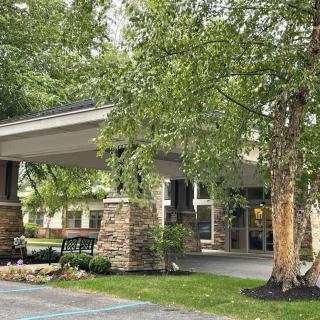
 Attentive staff, clean facility, and a broad activities program.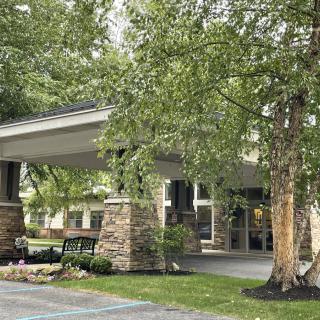



 Comprehensive Exploration of Living Wills and Other Advance Directives
 A Detailed Exploration of Living Wills and Advance Directives
 Comprehensive Guide to Medicare Coverage for Hospice Care