At Arnold Walter Nursing Home, the costs for both semi-private and private rooms reflect a premium compared to the broader averages in Monmouth County and across New Jersey. For a semi-private room, residents can expect to pay $7,950 per month, significantly higher than the county's average of $5,251 and the state average of $5,068. Similarly, the monthly charge for a private room stands at $8,850, which also exceeds both Monmouth County's average of $6,528 and New Jersey's statewide figure of $5,799. This pricing suggests that Arnold Walter Nursing Home may offer specialized services or amenities that justify these elevated costs.
Floor plans
Arnold Walter Nursing Home
Monmouth County
New Jersey
Semi-Private
$7,950
$5,251
$5,068
Private
$8,850
$6,528
$5,799
Skilled Nursing Facilities with a similar price nearby
Residents and families repeatedly describe staff who are attentive and willing to help.
Many reviewers mention friendly, helpful staff on the wings, at the front desk, and during daily care. Several also describe good communication—such as a concierge connecting families to what’s happening and assisting with next steps—along with nurses and aides who show up when needed. A number of reviews contrast that experience with other places they’ve been, saying the difference is how supported they felt day to day.
common7 reviews mention this
Therapy supports real progress
Physical and rehab therapy is frequently described as effective.
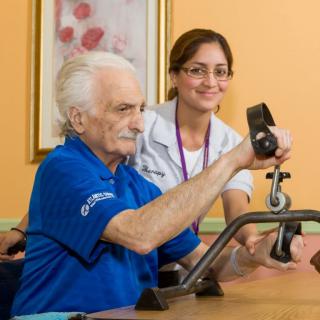
A recurring theme is that therapy helped residents build strength and mobility, with reviewers crediting the PT team for pushing daily work. Some families describe reassurance during rehab—especially early on—while others share outcomes like returning home or being able to walk again. This lines up with the community’s focus on skilled nursing as well as on ADL support and meal preparation to support recovery.
common6 reviews mention this
Meals earn positive mentions
Meals are often described as good and worth noting.
Multiple reviewers say the food is very good or good, and some specifically mention meals arriving when expected. A few reviews also note adjustments or attention to dietary needs, including special restrictions referenced in their dining descriptions. At the same time, other reviewers express concern about food quantity at certain times, which makes dining quality feel inconsistent across experiences.
caveat6 reviews mention this
Care and oversight can be inconsistent
Some reviews raise serious concerns about medical oversight and day-to-day supervision.
A set of negative reviews describe situations where residents reportedly did not receive appropriate care or supervision, including missed attention to feeding, infection-control practices, and timely escalation when conditions worsened. Other issues mentioned include room conditions during a heat wave and claims of insufficient staffing. These complaints conflict with the community’s offered care services such as 24-hour call support and medication management, suggesting experiences may vary significantly by situation.
How we summarize
Counts show how many written reviews mention each theme; a review can touch several themes, and only frequently mentioned themes are displayed.
Features
Housing
202 resident community capacity
Types of Care
Skilled Nursing Facility
Amenities
Air-conditioning
Beauty salon
Cable or satellite TV
Computer center
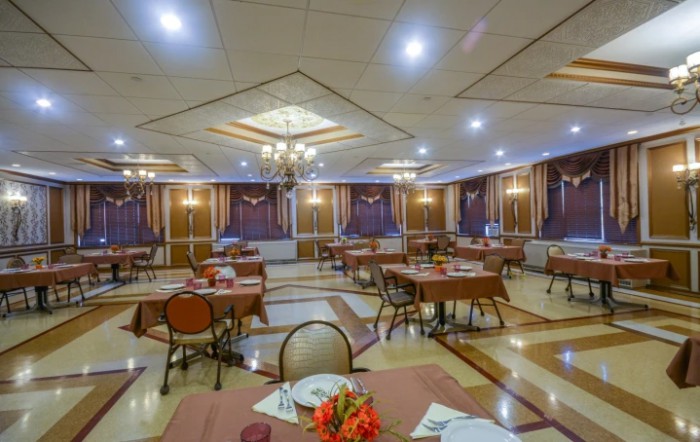
Dining room
Fitness room
Fully furnished
Gaming room
Garden
Housekeeping services
Kitchenette
Move-in coordination
Outdoor space
Private
Private bathrooms
Restaurant-style dining
Small library
Telephone
Wellness center
Wi-Fi/high-speed internet available
Transportation
Newark International (19 miles away)
John F Kennedy International (24 miles away)
Community operated transportation
Transportation arrangement
Transportation arrangement (non-medical)
Transportation to doctors appointments
Care Services
12-16 hour nursing
24-hour call system
24-hour supervision
Activities of daily living assistance
Assistance with bathing
Assistance with dressing
Assistance with transfers
Diabetes diet
Meal preparation and service
Medication management
Mental wellness program
Special dietary restrictions
Dining
Diabetes diet
Special dietary restrictions
Activities
Community-sponsored activities
Concierge services
Fitness programs
Planned day trips
Resident-run activities
Scheduled daily activities
Nearby Places of Interest
Pharmacies
CVS Pharmacy (1 miles)
Walgreens (1.9 miles)
Rite Aid (2 miles)
CVS Pharmacy (2.7 miles)
CVS Pharmacy (4.8 miles)
Walgreens (4.9 miles)
Bayshore Pharmacy (5.4 miles)
Physicians
Dr Avendano (1.9 miles)
Ima Medical Care-Middletown (1.9 miles)
Thompson, Roger M, Md - Family Practice Of Middletown (2.3 miles)
Dr Raj (2.3 miles)
Memorial Sloan Kettering Cancer Center Monmouth (3.6 miles)
De Gennarro Pediatrics & Asc (4.7 miles)
Fair Haven Internal Medicine (6.8 miles)
Transportation
NJT - Aberdeen-Matawan Station (4.2 miles)
Old Bridge P&R Bus Stop (8.4 miles)
Union Hill Rd Park & Ride (10.3 miles)
Cafes
Starbucks (4.7 miles)
Starbucks (8.4 miles)
Starbucks (9.9 miles)
Starbucks (10.3 miles)
Booskerdoo Fresh Roasted Coffee Co. (10.6 miles)
Deli Plus (10.9 miles)
Starbucks (11.4 miles)
Restaurants
Nicholas Barrel & Roost (5.3 miles)
La Ginestra Ristorante Italiano & Pizzeria (5.7 miles)
Trama's at One Willow (7.5 miles)
Salt Creek Grille (7.6 miles)
South Stevens Pub (8.3 miles)
Proving Ground Waterfront Dining (8.5 miles)
Off The Hook Restaurant and Bar (8.6 miles)
Parks
Wolfe's Pond Park (7.1 miles)
Sandy Hook (8.4 miles)
Bloomingdale Park (8.5 miles)
Great Kills Park (10.1 miles)
Seven Presidents Oceanfront Park (11.5 miles)
Hospitals
NJ Spine and Wellness (7.7 miles)
Hackensack Meridian Health Raritan Bay Medical Center (9.9 miles)
At Arnold Walter Nursing Home, the costs for both semi-private and private rooms reflect a premium compared to the broader averages in Monmouth County and across New Jersey. For a semi-private room, residents can expect to pay $7,950 per month, significantly higher than the county's average of $5,251 and the state average of $5,068. Similarly, the monthly charge for a private room stands at $8,850, which also exceeds both Monmouth County's average of $6,528 and New Jersey's statewide figure of $5,799. This pricing suggests that Arnold Walter Nursing Home may offer specialized services or amenities that justify these elevated costs.
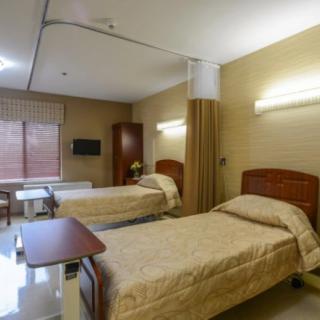
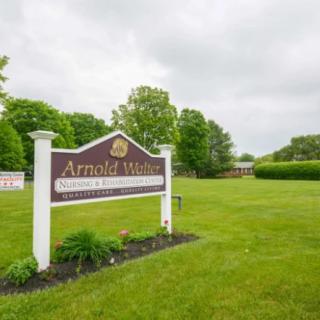
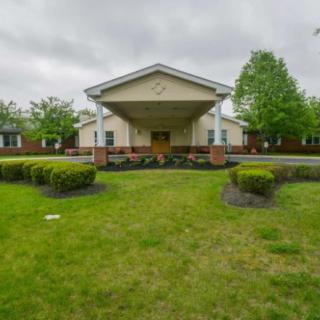
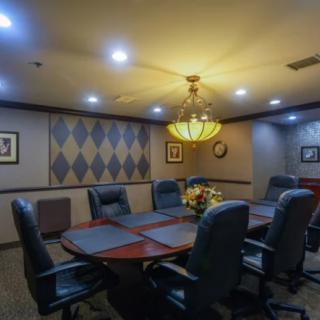
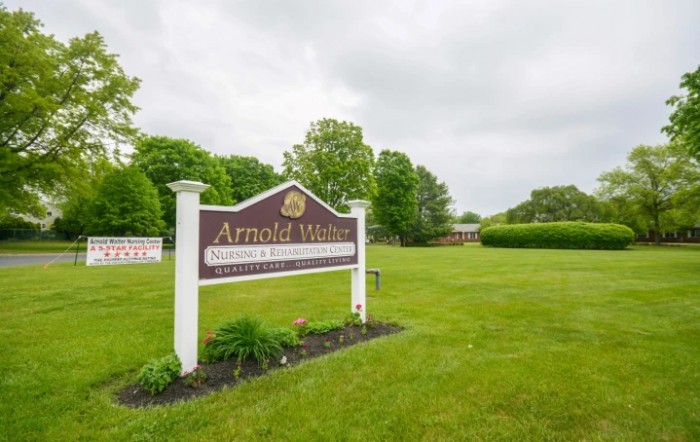
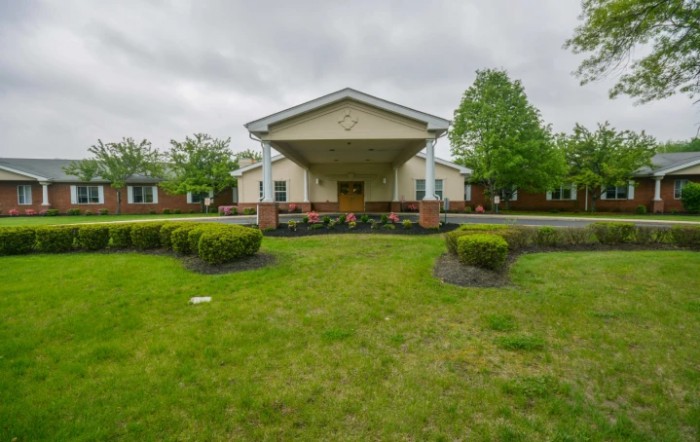
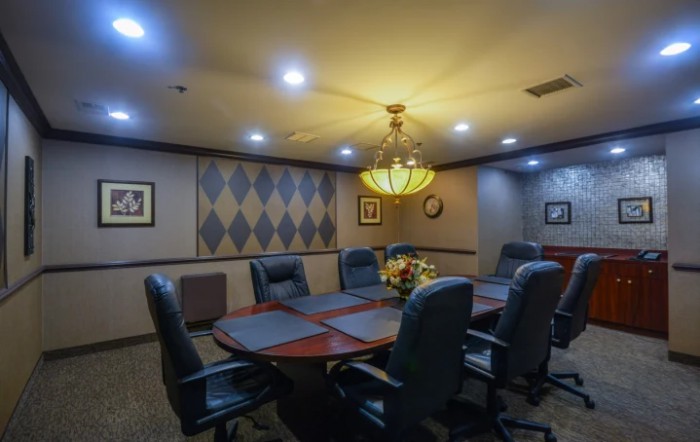
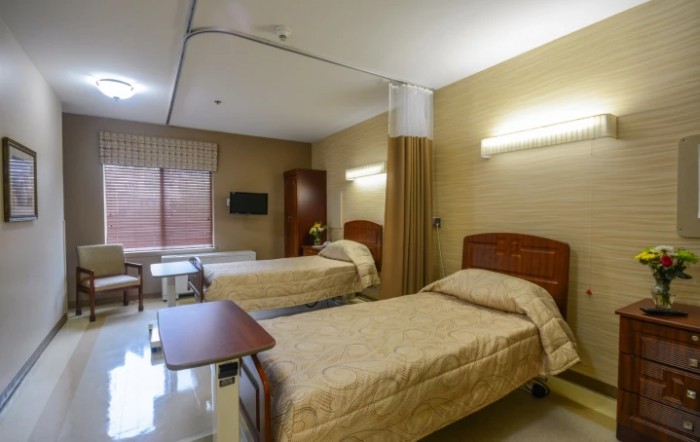
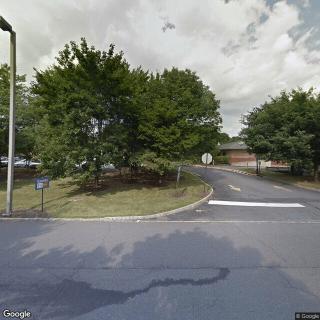
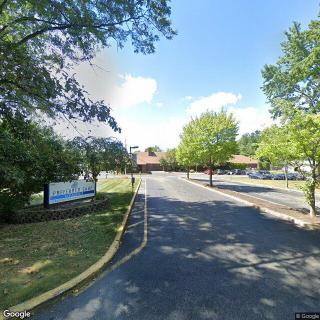
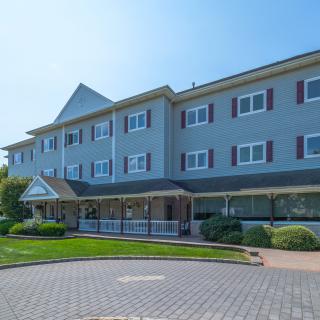
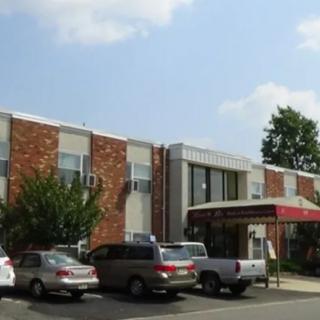
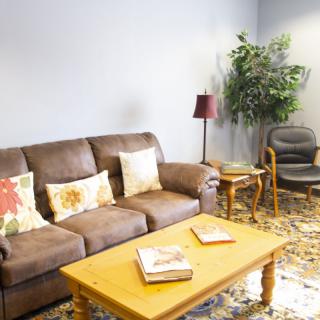
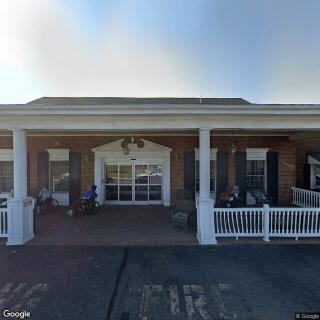
Arnold Walter Nursing Home on seniors.fyi includes 5 photos including images showing landscaping, dining, trees, conference room, office, lighting, artwork, healthcare, and more.
Nearby Communities
Cedar Village at Holmdel
Holmdel Township, NJ
4.3 from 10 reviews
Personalized care with meal prep and medication management, plus dietary accommodations and connectivity (Wi?Fi/telephone).
Villas of Holmdel
Holmdel, NJ
4.8 from 44 reviews
Well-organized with a dedicated memory-care wing, 24/7 staff, and upscale amenities.
Arbor Terrace Middletown
Middletown, NJ
4.6 from 145 reviews
$4,300 to $5,200 / month
Friendly, attentive staff with engaging activities and a clean, well-maintained environment.
Bayside Manor
Keansburg, NJ
4.8 from 97 reviews
$4,600 to $5,200 / month
Warm, home-like atmosphere with caring staff.
Laurel Bay Health & Rehabilitation Center
Keansburg, NJ
4 from 73 reviews
Caring staff and a welcoming, activity-filled community.
CareOne at King James
Middletown, NJ
3.3 from 7 reviews
$2,000 to $7,350 / month
Warm, compassionate staff with good therapy
Atrium Senior Living Of Matawan
Matawan, NJ
3.2 from 13 reviews
Caring staff, responsive aides, and an active, clean environment.
Spring Hills Matawan
Matawan, NJ
3.6 from 38 reviews
$3,300 to $6,300 / month
Clean, welcoming environment with attentive staff and solid dining experience.
Care One At Holmdel
Holmdel, NJ
3.8 from 132 reviews
$8,250 / month
Friendly staff with engaging activities and a nice outdoor patio.
Elder law attorneys assist older adults and their families with legal matters such as estate planning, Medicaid eligibility, and guardianships, while also providing protection against elder abuse. They help navigate complex regulations to safeguard financial resources, ensure well-being, and maintain autonomy for seniors.
Caregiving for an aging parent entails emotional and financial responsibilities accompanied by significant tax implications, including potential benefits from claiming them as dependents and deductions for medical expenses and caregiving costs. Caregivers must understand eligibility requirements, maintain thorough documentation, and consider consulting a tax professional to navigate these complexities effectively.
Low-impact exercises are vital for seniors as they promote health, independence, and social interaction while reducing joint strain. These adaptable activities, guided by healthcare professionals, enhance strength, flexibility, and emotional well-being.
Get PricingAsk A QuestionSchedule A TourContact Senior Advisor
By clicking submit, you agree to our Partner's Terms of Use. You
also consent to receive calls and texts, which may be autodialed, from our Partner. Your consent is not a condition to
using our Partner's service. Please visit our Partner's Privacy Policy for information about their privacy practices.


 202 resident community capacity
 Skilled Nursing Facility
 Air-conditioning
 Beauty salon
 Cable or satellite TV
 Computer center
 Dining room
 Fitness room
 Fully furnished
 Gaming room
 Garden
 Housekeeping services
 Kitchenette
 Move-in coordination
 Outdoor space
 Private
 Private bathrooms
 Restaurant-style dining
 Small library
 Telephone
 Wellness center
 Wi-Fi/high-speed internet available
 Newark International (19 miles away)
 Community operated transportation
 12-16 hour nursing
 24-hour call system
 Activities of daily living assistance
 Assistance with bathing
 Assistance with dressing
 Assistance with transfers
 Diabetes diet
 Medication management
 Mental wellness program
 Special dietary restrictions
 Concierge services
 Planned day trips
 Personalized care with meal prep and medication management, plus dietary accommodations and connectivity (Wi?Fi/telephone).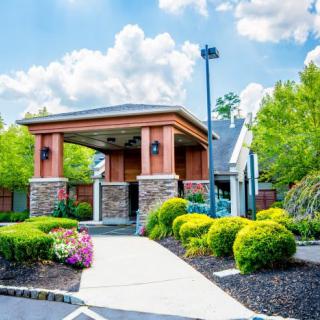
 6 Crucial Ways an Elder Law Attorney Assists Families
 Navigating the Tax Landscape of Caregiving: Credits, Deductions, and Beyond
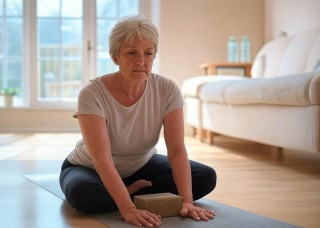 Highly Beneficial Low-Impact Exercises for Senior Living Residents