
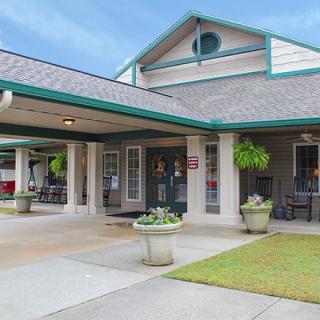
1455 North Lakeland Drive, Meridian, MS 39307
For more information about senior living options: (866) 208-4318
Overall Review of James T Champion
Cons
 Some patients’ belongings have been stolen at the hospital.
- Most staff members aren’t friendly and treat patients horribly.
- Patients are left in their feces and urine for two hours.
- When the call button is pressed, staff answer and say they’ll be right there but never show up.
- Several patients sit in hallways in their Wheelchairs, with one heard saying “take me home” and another hollering from a room.
- Instead of receiving proper care, patients are heavily medicated.
Review
James T Champion is best considered for families in Meridian who have very few alternatives and are able to supervise care closely in a hospital-linked setting. The affiliation with East Mississippi State Hospital signals a structured, monitored environment that some families assume will translate into predictable routines and reliable medical access. Yet that perceived advantage is only meaningful if daily caregiving meets basic standards. Based on the impressions shared, the on-the-ground care can be inconsistent, turning what should be a stabilizing placement into a source of ongoing concern. In short, it works best for those who can remain actively involved and verify care quality rather than rely on the facility alone.
For anyone prioritizing resident dignity, timely assistance, and a clean living environment, alternatives deserve immediate exploration. The accounts describe a care culture where responsiveness is unreliable: call-bell delays, residents left unattended in distress, and staff interactions described as unfriendly or even harsh. Families with loved ones who need frequent help or have complex medical needs will likely find safer, more attentive settings elsewhere. In a market with limited options, the comparison should tilt toward facilities with transparent staffing practices, proven response times, and consistent demonstrations of respectful caregiving, rather than relying on hospital affiliation as a substitute for quality.
From a pure pros-and-cons standpoint, the strongest potential upside rests with hospital ecosystem benefits: on-site medical oversight, access to clinicians, and the possibility of a more regulated routine. The dominant reality, however, is troubling. Semi-private rooms erode privacy, and reports about theft undermine a sense of security. Most damaging are repeated claims of neglect, extended delays after pressing the call button and residents in distress or unattended in hallways. When the core function of the setting is to provide dependable, compassionate care, these gaps markedly erode the value of any perceived medical integration.
That gap between potential and performance places risk front and center in any decision. If oversight exists, its effectiveness hinges on consistent, verifiable caregiving, which the reviews do not confirm. The only plausible offset is the possibility of closer oversight by families, administrators, or external advocates who insist on accountability. Yet the recurring issues, alarmingly slow responses, hygiene lapses, resident distress, suggest oversight is not reliably translating into steady, quality care. In practical terms, the risk-benefit balance heavily favors seeking alternatives unless a clear, proven plan to elevate caregiving standards can be demonstrated before or shortly after admission.
Families evaluating this option should adopt a rigorous, hands-on approach. Schedule visits at various times to observe actual caregiving workflows rather than impressions from signage or brochures. Seek direct conversations with current residents and families to gauge satisfaction, and request tangible data on staffing ratios, turnover, and typical call-bell response times. Review incident logs, safety audits, and medication-management practices; insist on transparency around any past safety concerns and how they were addressed. Ask about staff training, supervision, and the escalation process, plus confirm proximity to emergency services and how the hospital network would be mobilized in a crisis.
Bottom line: James T Champion represents a fallback in a tight market, carrying real caveats that demand vigilant, proactive oversight. The hospital affiliation does not automatically translate into consistently safe, compassionate care, and the firsthand accounts describe otherwise. For families with access to stronger alternatives, those options are clearly preferable. If this community is pursued, it should be with explicit, written care agreements, stringent monitoring, and a concrete plan to resolve every lag in responsiveness and hygiene. Without that, the balance tips decisively toward seeking facilities with proven quality metrics and steadier staffing.
 106 resident community capacity
 Skilled Nursing Facility
 Air-conditioning
 Beauty salon
 Cable or satellite TV
 Computer center
 Dining room
 Fitness room
 Fully furnished
 Gaming room
 Garden
 Housekeeping services
 Kitchenette
 Move-in coordination
 Outdoor space
 Private bathrooms
 Restaurant-style dining
 Small library
 Telephone
 Wellness center
 Wi-Fi/high-speed internet available
 Key (3 miles away)
 Community operated transportation
 12-16 hour nursing
 24-hour call system
 Activities of daily living assistance
 Assistance with bathing
 Assistance with dressing
 Assistance with transfers
 Diabetes diet
 Medication management
 Mental wellness program
 Special dietary restrictions
 Concierge services
 Planned day trips
 Comprehensive on-site amenities and activities





 Urinary Tract Infections in Older Adults: Comprehensive Insights on Symptoms, Treatment, and Prevention
 California's Form 602A: An In-Depth Examination of Senior Care Assessment
 Comprehensive Look at Senior Blood Pressure Charts: Normal and Elevated Levels by Age