

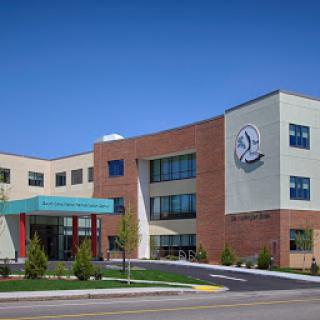
211 Franklin Street, Quincy, MA 02169
For more information about senior living options: (866) 208-4318
Overall Review of John Adams Healthcare Center
Pros
 The nurses are fantastic professionals who go above and beyond to deliver compassionate care.
- The care, including physical and occupational therapy, is outstanding and helps residents regain independence.
- The staff are caring and hardworking, creating a supportive and healing environment.
- The activity crew is well organized and provides a safe, engaging space for residents to connect and enjoy themselves.
- The facility is clean and well maintained, with maintenance and cleaning staff contributing to residents’ comfort.
- Families and residents report positive experiences and would highly recommend RegalCare for rehabilitation and ongoing care.
Cons
 The facility has repeated staff neglect and ongoing cleanliness and hygiene problems that are unacceptable in a healthcare setting.
- Medical care and responsiveness are inconsistent, with basic needs not addressed in a timely manner.
- Communication with families is poor and often requires repeated follow-ups to obtain minimal information.
- There are serious safety concerns, including incidents of theft, which should never occur in a facility caring for vulnerable residents.
- The leadership is described as a revolving door of staff and untrained, unprofessional management with little accountability and no meaningful improvement.
- Billing is an accounting mess, with incorrect charges and missing payments, causing ongoing confusion.
- Many reviewers label RegalCare as one of the worst nursing homes and strongly advise against sending loved ones there.
Review
This community is best suited for seniors who require focused post‑acute rehabilitation and skilled nursing, with a strong emphasis on physical therapy and daily clinical attention when staffing is stable. When the rehab team is intact, residents can make meaningful strides: nurses and therapists who bring genuine professional care, a program that emphasizes mobility and independence, and a clean, organized environment that supports recovery. It is not a purely long-term, hands-off option; it delivers notably solid rehab outcomes for those who can navigate the fluid leadership history and the realities of turnover. In short, the strongest case here is for families prioritizing a high-caliber rehab track and willing to contend with leadership and communication variability as an unavoidable backdrop.
Those who should consider alternatives are families seeking steadiness above all else: a facility with reliably consistent administration, transparent billing, and minimal turnover. If long-term residence requires predictable follow-through from a single care team, or if a priority is an unbroken chain of communication with a stable administrator, this community may not be the best fit. Prospective families who fear repeating cycles of unanswered calls, misapplied bills, or gaps in care planning will likely find better alignment elsewhere. For residents needing a consistently proactive front office and uninterrupted care coordination, alternatives offer reduced risk of the friction that has shown up repeatedly in reviews.
On the upside, the strongest offset to the main concerns lies in the core clinical teams. When nursing staff are attentive and compassionate, and therapists deliver targeted, goal-driven rehab, residents regain mobility, confidence, and independence at a pace that earns trust from families. The facility’s rehabilitation ecosystem, extended nursing support, attentive aides, and the visible involvement of physical and occupational therapy, produces tangible wins for many patients. Activity programming and maintenance teams also receive praise in several accounts, suggesting a capable, person-centered culture when leadership is aligned. These elements demonstrate that, at its best, the center can function as a high-quality recovery hub.
The more troubling reality emerges in the inconsistency of leadership, communication, and administrative reliability. A recurring pattern in the feedback is a revolving door of management and a front‑line that struggles to answer phones, return calls, or coordinate care plan meetings. Billing disputes, incorrect charges, and delayed or missing follow-ups underscore a weak administrative spine that undermines otherwise solid clinical care. Reports of safety and neglect concerns, ranging from delayed responses to basic needs, to incidents described as theft, to questions about whether care appropriately targets urgent medical issues, cultivate a climate of distrust that no family wants to navigate. Even when some reviews claim improvement after leadership changes, the volatility resurfaces, making long-term confidence hard to sustain.
Given the mixed signals, families should approach decisively: demand a current read on leadership stability, request an in-person, problem-focused care plan meeting, and verify the exact pathways for urgent communications. Before choosing, seek a candid account from the DON and the nursing supervisor about staffing levels, recent turnover, and how care coordination is implemented daily. Directly inspect the cadence of responses to inquiries, the timeliness of pain management, and the consistency of daily routines for residents. Ask for a concrete example of a recent care-plan adjustment and who signs off on it. Finally, insist on a transparent billing review and a clear escalation path for any safety concerns. These steps will reveal whether the present administration can offer durable reliability or if another option better fits the family’s expectations for governance, safety, and communication.
In the end, this facility operates like a rehabilitation-centric environment that can deliver exceptional clinical outcomes when the stars align, but it remains a decision fraught with governance risk. For families where rehabilitation needs are the primary driver and there is capacity to monitor performance, discharge planning, and billing with some diligence, the potential upside justifies consideration. For anyone prioritizing a stable, predictable long-term home with constant administrative responsiveness and a proven track record of consistency, it is prudent to compare a few other options. The right choice hinges on whether stable leadership and flawless follow-through are non‑negotiable or whether high-quality therapy and diligent nursing, when available, suffice to meet that loved one’s recovery goals.
 71 resident community capacity
 Skilled Nursing Facility
 Air-conditioning
 Beauty salon
 Cable or satellite TV
 Computer center
 Dining room
 Fitness room
 Fully furnished
 Gaming room
 Garden
 Housekeeping services
 Kitchenette
 Move-in coordination
 Outdoor space
 Private bathrooms
 Restaurant-style dining
 Small library
 Telephone
 Wellness center
 Wi-Fi/high-speed internet available
 Gen Edw L Logan International (9 miles away)
 Community operated transportation
 12-16 hour nursing
 24-hour call system
 Activities of daily living assistance
 Assistance with bathing
 Assistance with dressing
 Assistance with transfers
 Diabetes diet
 Medication management
 Mental wellness program
 Special dietary restrictions
 Concierge services
 Planned day trips







 Comprehensive Look at Senior Blood Pressure Charts: Normal and Elevated Levels by Age
 Top Canine Companions for Older Adults
 Comprehensive Guide to Blood Pressure Charts for Older Adults: Understanding Normal and High Readings by Age