For more information about senior living options: (866) 208-4318
3.3 from 43 reviews
5 stars
17
4 stars
9
3 stars
0
2 stars
2
1 stars
15
Chateau De Notre Dame Costs & Pricing
Chateau De Notre Dame offers an attractive pricing structure for its residents, particularly when compared to the broader costs in Orleans Parish and the state of Louisiana. For instance, a studio apartment at Chateau is priced at $1,000, significantly lower than the parish average of $3,377 and the state average of $3,235. The same trend continues with one-bedroom units - $1,220 at Chateau versus $3,787 in Orleans Parish and $3,413 statewide. Two-bedroom accommodations are available for $1,405 at Chateau, contrasting sharply with the parish's average of $3,982 and the state's average of $3,878. Though semi-private and private rooms command higher prices at Chateau - $3,450 and $3,930 respectively - they still remain competitive against local averages of $4,013 and $4,638 in Orleans Parish. Overall, Chateau De Notre Dame presents a compelling value proposition for potential residents seeking quality housing options in a vibrant community while enjoying significant savings compared to surrounding markets.
Floor plans
Chateau De Notre Dame
Orleans Parish
Louisiana
Studio
$1,000
$3,377
$3,235
1 Bedroom
$1,220
$3,787
$3,413
2 Bedrooms
$1,405
$3,982
$3,878
Semi-Private
$3,450
$4,013
$3,598
Private
$3,930
$4,638
$4,521
Overall Review of Chateau De Notre Dame
common4 reviews mention this
Religious life and devotion
Catholic worship and devotional programming come up repeatedly in resident and family feedback.
Several reviews highlight daily Catholic Mass and opportunities to attend in the chapel or view it from residents’ rooms. Families also mention religious-focused activities like Mass and other devotional programming as part of the community experience. For some visitors, the facility’s Catholic orientation and services are a key part of what makes the building feel “spiritual.”
common4 reviews mention this
Activities keep families engaged
Families describe ongoing activities that go beyond therapy and basic routines.
Reviews mention a steady stream of planned events and group-style programming, including bingo, arts and crafts, and faith-related events. Some families also describe outside visitors and community events like music and school-related entertainment. A few visitors also say their loved ones were not able to participate as much as they expected, which affects how much activity they personally saw.
differentiator3 reviews mention this
Skilled nursing and therapy support
Skilled nursing and physical therapy are a frequent focus of what families praise.
When residents were in the skilled nursing unit or rehab, multiple reviews describe positive therapy experiences. Families specifically call out the physical therapy team and note that therapy and group sessions were part of daily life during rehab stays. One negative review contrasts that rehab time with concerns about how assistance or care happened outside of therapy windows.
common3 reviews mention this
Meals are a mixed point
Dining quality is discussed, with several families saying the meals were good.
Some families specifically praise meal quality, describing meals as good and avoiding a “hospital taste.” At least one review raises concerns about diabetes meal planning, saying diabetics had to eat the same meals as non-diabetics. Another review suggests dining can be a disappointment in quality or variety.
caveat4 reviews mention this
Communication and staffing concerns
Communication delays and staffing shortfalls come up in the more critical reviews.
Multiple reviews describe difficulty reaching staff by phone or getting timely help when a need came up. Several critical comments connect poor responsiveness to understaffing, residents being left without assistance, or staff needing time to respond. At the same time, other reviews say staff were present and helpful, so experiences appear inconsistent depending on the unit and timing.
How we summarize
Counts show how many written reviews mention each theme; a review can touch several themes, and only frequently mentioned themes are displayed.
Features
Housing
171 resident community capacity
Studio apartments
Types of Care
Assisted Living
Independent Living
Skilled Nursing Facility
Amenities
Activities on-site
Air-conditioning
Beautician on-site
Beauty salon
Cable or satellite TV
Computer center
Devotional services off-site
Dining room
Fitness room
Fully furnished
Gaming room
Garden
Guest parking
Housekeeping services
Indoor common areas
Kitchenette
Laundry
Move-in coordination
Outdoor space
Party space
Private
Private bathrooms
Resident parking
Restaurant-style dining
Small library
Telephone
Wellness center
Wi-Fi/high-speed internet available
Transportation
New Orleans International (9 miles away)
Community operated transportation
Transportation & parking
Transportation arrangement
Transportation arrangement (non-medical)
Transportation to doctors appointments
Care Services
12-16 hour nursing
24-hour call system
24-hour supervision
Activities of daily living assistance
Ambulatory care
Assistance with bathing
Assistance with dressing
Assistance with transfers
Diabetes diet
Diabetic care
Meal preparation and service
Medication management
Mental wellness program
Physical therapy
Special dietary restrictions
Dining
Diabetes diet
Meals provided
Special dietary restrictions
Activities
Activities off-site
Activities on-site
Community-sponsored activities
Concierge services
Devotional activities offsite
Fitness programs
Planned day trips
Religious services
Resident-run activities
Scheduled daily activities
Languages Spoken
English
Nearby Places of Interest
Pharmacies
Walgreens (0.4 miles)
Castellon Pharmacy (1.2 miles)
CVS Pharmacy (1.3 miles)
Walgreens (1.4 miles)
Walgreens (1.5 miles)
Walgreens (1.5 miles)
Winn-Dixie (1.7 miles)
Parks
Pig Newton Park (0.6 miles)
New Orleans City Park (2.3 miles)
The Fly (2.8 miles)
Restaurants
El Pavo Real (0.9 miles)
Mona's Cafe (1.2 miles)
Banks Street Bar & Grill (1.3 miles)
The Boot (1.3 miles)
Juan's Flying Burrito (1.4 miles)
Uptown Grill (1.5 miles)
Katie's Restaurant & Bar (1.5 miles)
Cafes
Starbucks (1.6 miles)
Grounded Coffee Cafe (1.7 miles)
Cafe Du Monde City Park (2.2 miles)
French Truck Coffee (2.8 miles)
The Vintage (2.9 miles)
French Truck Coffee (2.9 miles)
HiVolt Coffee (3 miles)
Hospitals
SE Louisiana Veterans Hospital (1.7 miles)
The Gayle and Tom Benson Cancer Center (1.8 miles)
LSU Medical - 1400 Poydras (2.2 miles)
Touro Infirmary (2.6 miles)
St Charles Surgical Hospital (2.7 miles)
Ochsner Medical Center, International Department, Magnetic Resonance Imaging (2.8 miles)
Chateau De Notre Dame offers an attractive pricing structure for its residents, particularly when compared to the broader costs in Orleans Parish and the state of Louisiana. For instance, a studio apartment at Chateau is priced at $1,000, significantly lower than the parish average of $3,377 and the state average of $3,235. The same trend continues with one-bedroom units - $1,220 at Chateau versus $3,787 in Orleans Parish and $3,413 statewide. Two-bedroom accommodations are available for $1,405 at Chateau, contrasting sharply with the parish's average of $3,982 and the state's average of $3,878. Though semi-private and private rooms command higher prices at Chateau - $3,450 and $3,930 respectively - they still remain competitive against local averages of $4,013 and $4,638 in Orleans Parish. Overall, Chateau De Notre Dame presents a compelling value proposition for potential residents seeking quality housing options in a vibrant community while enjoying significant savings compared to surrounding markets.
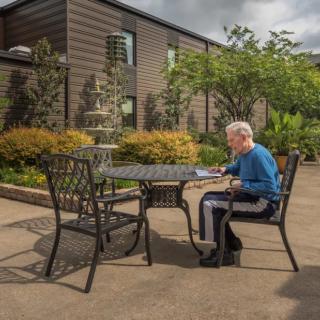
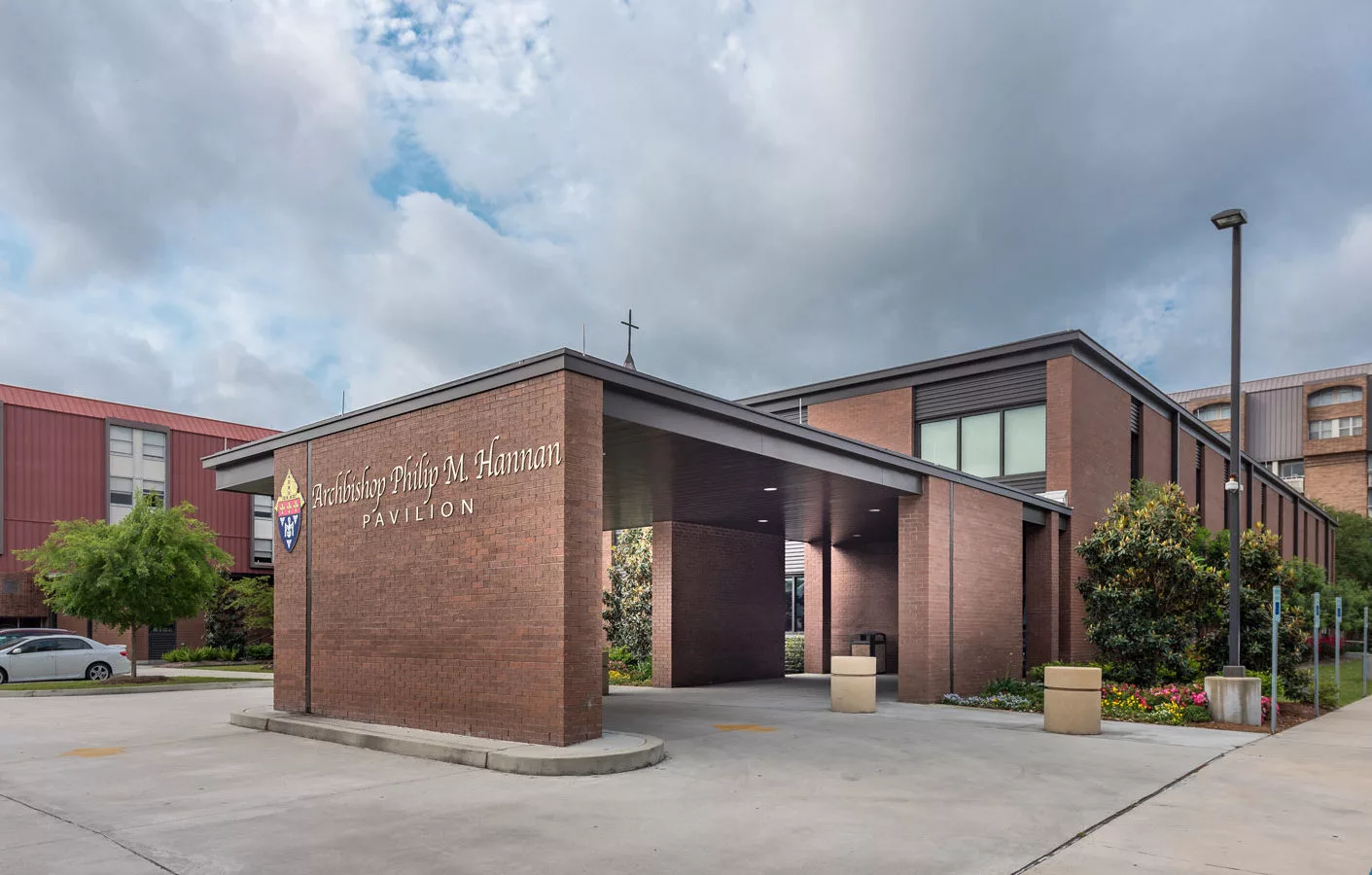
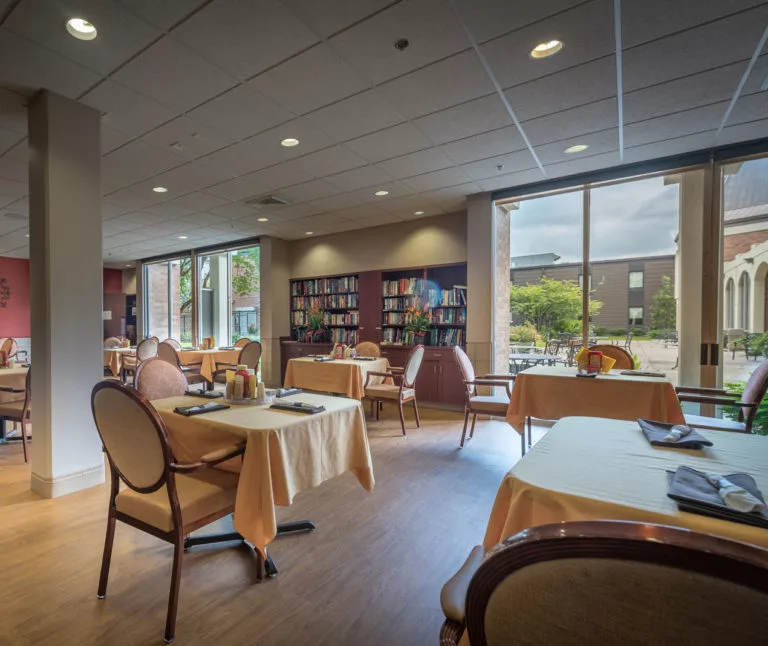
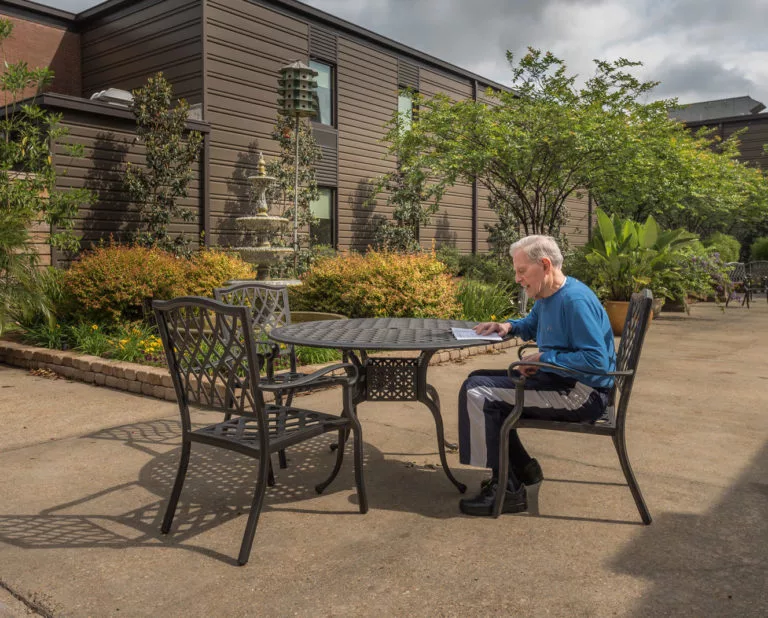
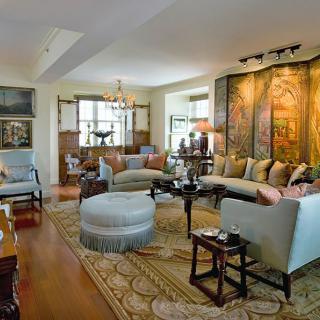
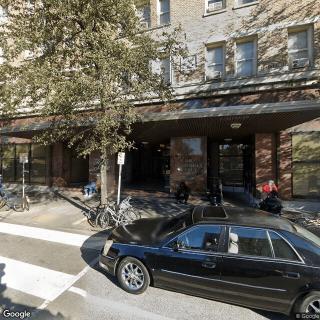
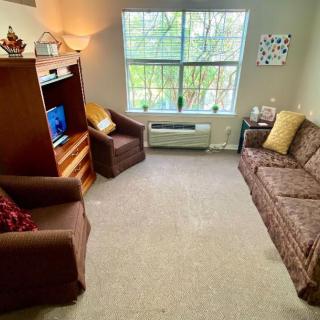
Chateau De Notre Dame on seniors.fyi includes 3 photos including images showing garden, patio, building, architecture, exterior, entrance, brick, interior, and more.
Nearby Communities
Chateau de Notre Dame Assisted Living
New Orleans, LA
Wide range of care levels with restaurant-style dining.
M Mc Gregor Jones Health Care
New Orleans, LA
Excellent access to nearby pharmacies, physicians, hospitals, parks, and dining options.
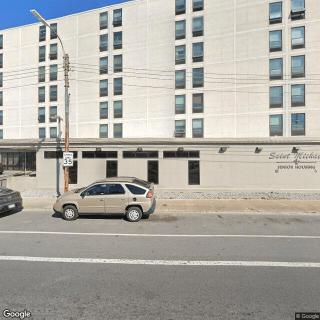
St Michael Senior Housing
New Orleans, LA
2.5 from 6 reviews
Vibrant assisted living with strong access to medical care and nearby dining.
St Margaret's Daughters Home
New Orleans, LA
3.5 from 6 reviews
Caring staff with strong rehabilitation support and a clean, well-maintained environment.
House Call 2000
New Orleans, LA
Excellent access to nearby medical services and diverse amenities (cafes, parks, pharmacies, restaurants, hospitals).
Old Metairie Gardens I
Metairie, LA
4.9 from 37 reviews
Small, intimate community with 24/7 care and restaurant-style dining.
Lambeth House
New Orleans, LA
4 from 29 reviews
Beautiful, spacious apartments with excellent dining and attentive staff.
Tivoli Place Apartments
New Orleans, LA
3.1 from 10 reviews
$600 to $900 / month
Very affordable rents relative to Orleans Parish and state averages; pet-friendly.
Ville St. Marie Senior Living Community
Jefferson, LA
4.8 from 49 reviews
$2,415 to $3,535 / month
Caring staff and welcoming community with engaging activities and good dining.
Assisted living in 2025 offers a crucial balance of independence and support for seniors, with costs varying from $2,500 to over $7,000 per month based on factors such as location and care level. Understanding pricing complexities, including regional differences and potential hidden fees, is essential for families to plan financially while ensuring quality care for their loved ones.
The guide outlines the complexities of Medicaid coverage for assisted living, highlighting significant state-to-state variations, limited coverage often restricted to personal care services, and the existence of specialized waivers for certain needs like memory care. It advises families to consult local Medicaid offices for options while emphasizing the importance of understanding state-specific regulations and facility policies.
Medicaid coverage for assisted living varies by state and is primarily available to low-income individuals, with eligibility dependent on strict income and asset limits. Some states offer HCBS waivers for specific services in assisted living, but families must generally cover room and board costs, and should verify facility acceptance of Medicaid while considering potential waiting lists.
Interior, Windows, Bookshelves, Library, Reading Area, and Daylight
Building, Architecture, Entrance, Exterior, and Brick
Garden, Outdoor, and Patio
Get PricingAsk A QuestionSchedule A TourContact Senior Advisor
By clicking submit, you agree to our Partner's Terms of Use. You
also consent to receive calls and texts, which may be autodialed, from our Partner. Your consent is not a condition to
using our Partner's service. Please visit our Partner's Privacy Policy for information about their privacy practices.

 171 resident community capacity
 Studio apartments
 Assisted Living
 Independent Living
 Skilled Nursing Facility
 Activities on-site
 Air-conditioning
 Beautician on-site
 Cable or satellite TV
 Computer center
 Devotional services off-site
 Dining room
 Fitness room
 Fully furnished
 Gaming room
 Garden
 Guest parking
 Housekeeping services
 Indoor common areas
 Kitchenette
 Laundry
 Move-in coordination
 Outdoor space
 Party space
 Private
 Private bathrooms
 Restaurant-style dining
 Small library
 Telephone
 Wellness center
 Wi-Fi/high-speed internet available
 New Orleans International (9 miles away)
 Community operated transportation
 12-16 hour nursing
 24-hour call system
 Ambulatory care
 Assistance with bathing
 Assistance with dressing
 Assistance with transfers
 Diabetes diet
 Diabetic care
 Medication management
 Mental wellness program
 Physical therapy
 Special dietary restrictions
 Concierge services
 Planned day trips
 English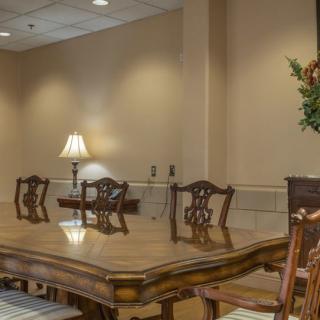
 Wide range of care levels with restaurant-style dining.


 Understanding the True Cost of Assisted Living in 2025: A Comprehensive Guide
 Understanding Medicaid Coverage for Assisted Living: A Comprehensive Guide
 How and When Medicaid May Cover Assisted Living Costs