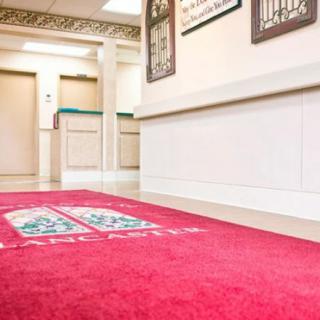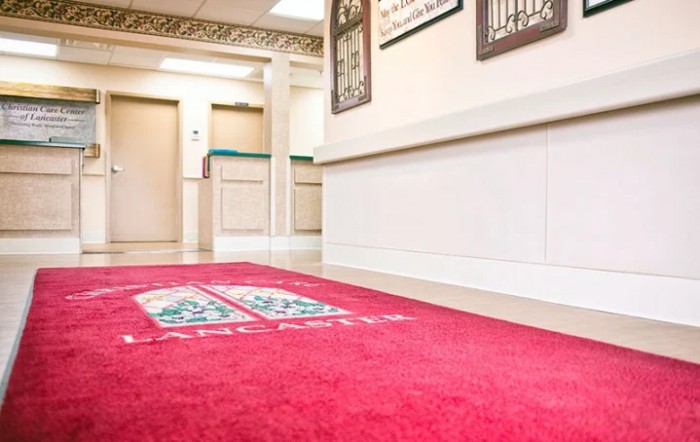
308 West Maple Avenue, Lancaster, KY 40444
For more information about senior living options: (866) 208-4318
Overall Review of Landmark Of Lancaster Rehabilitation And Nursing Care
Pros
 The team of healthcare professionals is top-notch and shows care and compassion for the community.
- They go above and beyond to provide the best possible care.
- Maplewood is a wonderful place for loved ones, with attentive staff.
- The activities department consistently organizes engaging activities for residents, including animal day and a prom.
- Samantha is attentive to residents' needs.
- The staff are dedicated, loyal, and take pride in caring for residents.
- The nurses are very nice and helpful, and the dietary staff are caring.
- The facility is clean, well-staffed, and safe, with a welcoming and inviting environment.
Cons
 Some CNAs are good, but others are not; many have attitudes and treat residents as if they are stupid.
- The facility is described as absolutely horrible, with neglect, unclean conditions, and rude staff.
- The hallway sink doesn’t work, leaving residents with no place to wash their hands.
- The staff are described as rude and not nice, ever.
- The facility allegedly revoked a Durable Power of Attorney and harassed the reviewer when concerns about care were raised.
- A resident was found laying in filth with a dirty diaper and a bedsore, indicating neglect.
- A patient was transferred to another facility without notification or permission.
- Call bells were left unanswered for extended periods, leaving residents without assistance.
Review
Landmark Of Lancaster Rehabilitation And Nursing Care in Lancaster, KY is best suited for families that prioritize consistent, people-centered care and an active, engaged environment for their loved ones. It works well for residents who need a solid combination of short-term rehabilitation and long-term daily support, with an emphasis on social engagement, meaningful activities, and staff who know residents by name. Those leaning toward a traditional, hospital-adjacent setting with a built-in safety mindset will find comfort in the facility’s structure and routines. For families seeking a pristine, modern campus with uniformly flawless service across every shift, this community demands careful scrutiny and proactive oversight, because several reviews highlight notable inconsistencies that can tilt the experience one way or the other.
On the positive side, the strongest case for Landmark rests on the caliber and dedication of its caregiving team. Numerous accounts describe nurses and CNAs who display genuine care, compassion, and professional attitude toward residents, with specific staff members singled out for their attentiveness and ongoing support. The facility earns credibility from long-tenured, loyal employees who take pride in their work and view the residents as more than a job. Families consistently note that the care philosophy centers on treating residents with dignity, maintaining a respectful environment, and sustaining a sense of home. In tandem with this, the activities program stands out as a real asset: outings, themed days, and opportunities for family participation keep residents engaged, providing both cognitive and emotional benefits. Short-term rehab success stories reinforce that the clinical side can deliver tangible strength gains and a solid bridge back to home life when therapy is well-integrated with daily care.
Yet the picture is not uniformly positive, and the management of day-to-day operations emerges as a meaningful fault line in several reviews. A subset of CNAs and frontline staff are described as having less-than-ideal attitudes or inconsistent responsiveness, and complaints about call bells going unanswered for extended periods surface repeatedly enough to warrant serious concern. These contrasts matter because, in a setting where timely assistance and reliable oversight are critical, even a few gaps in attentiveness can undermine trust and safety. A handful of postings raise alarms about cleanliness, management decisions, and the handling of critical tasks like documentation or administrative actions that residents’ families rely on for peace of mind. These reports are balanced by other testimonials praising cleanliness and organization, but the variance is enough to suggest that reliability across shifts is not guaranteed.
The key pros, staff compassion, continuity, and resident-centered activities, do offset some of the most troubling cons, but only when leveraged by vigilant family involvement and clear care planning. For families who can commit to regular visits, ongoing conversations with care teams, and a proactive approach to monitoring call-response and daily living needs, Landmark can deliver stable, compassionate care with meaningful social engagement. The hospital-origin design, cited by some reviewers as contributing to a robust safety framework, can translate into thorough protocols and safer handling of residents during emergencies. When therapy teams are integrated with ongoing daily support and when the same caregivers interact with residents across shifts, the risk of fragmented care diminishes and the overall experience becomes cohesive rather than episodic. In essence, the strong interpersonal culture and rehabilitative momentum can substantially soften the impact of staffing inconsistencies, provided families stay closely involved.
Nevertheless, the decision to choose Landmark should be conditioned by a clear-eyed assessment of risk and expectations. Alternatives become compelling for families who require near-perfection in call-response times, or for those prioritizing a consistently modern campus with uniformly high ratings across every service dimension. For residents with complex memory care needs or for families worried about the potential for neglect or delay in basic daily tasks, exploring other communities with stronger 24/7 attention guarantees and more standardized staffing ratios may be prudent. The loudest cautions, delayed calls, contested care decisions, or visible lapses in cleanliness and oversight, underscore a need for direct, proactive engagement: establish a written care plan, insist on transparent shift handoffs, and request clear escalation paths for any issue. In short, Landmark is best approached with an intentional plan for oversight and a willingness to engage actively with the care team.
The final assessment favors families who want a compassionate, activity-rich setting and who can invest time and attention to oversight. Landmark Of Lancaster offers a credible degree of warmth, patient respect, and rehabilitation momentum that can translate into meaningful quality of life improvements for both short-term and long-term residents. It is less suited for those who demand uniformly flawless execution, perfect staffing consistency, or a campus environment that feels brand-new from day one. When the family commits to staying engaged, asking the hard questions, and tracking care indicators closely, Landmark can be a solid, even excellent, match for many seniors and their caregivers. For others, the risk calculus points toward exploring alternatives with more predictable staffing, tighter response times, and a newer facility footprint, where the comfort of consistent daily execution might outweigh the charm of community-driven activities and the deeply personal care that Landmark sometimes provides at its best.
 96 resident community capacity
 Skilled Nursing Facility
 Air-conditioning
 Beauty salon
 Cable or satellite TV
 Computer center
 Dining room
 Fitness room
 Fully furnished
 Gaming room
 Garden
 Housekeeping services
 Kitchenette
 Move-in coordination
 Outdoor space
 Private bathrooms
 Restaurant-style dining
 Small library
 Telephone
 Wellness center
 Wi-Fi/high-speed internet available
 Community operated transportation
 12-16 hour nursing
 24-hour call system
 Activities of daily living assistance
 Assistance with bathing
 Assistance with dressing
 Assistance with transfers
 Diabetes diet
 Medication management
 Mental wellness program
 Special dietary restrictions
 Concierge services
 Planned day trips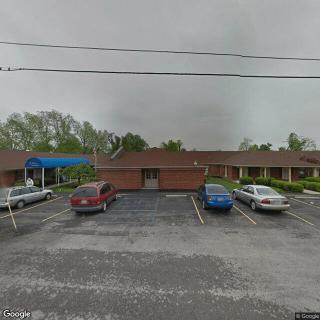


 Understanding the Nuances of Palliative Care and Hospice: A Comprehensive Exploration
 Is In-Home Healthcare Tax Deductible? Your Comprehensive Guide
 Nurturing Well-Being Through Gardening: A Detailed Guide for Senior Enthusiasts