

405 Central Ave, Highland Park, IL 60035
To contact a resident: (847) 432-6080
For more information about senior living options: (866) 208-4318
Abbott House LLC Costs & Pricing
Abbott House LLC offers competitive pricing for their care services compared to the broader market in Lake County and the state of Illinois. For a semi-private room, Abbott House LLC charges $4,290 per month, which is significantly lower than the county average of $6,875 and even more so than the state average of $5,146. Similarly, the cost for a private room at Abbott House LLC is $4,590, again undercutting both Lake County's average of $6,113 and Illinois's overall average of $5,049. These price points indicate that Abbott House LLC not only provides quality care but does so at rates that are considerably more affordable than many other options in the region.
| Floor plans | Abbott House LLC | Lake County | Illinois |
|---|---|---|---|
| Semi-Private | $4,290 | $6,875 | $5,146 |
| Private | $4,590 | $6,113 | $5,049 |
Skilled Nursing Facilities with a similar price nearby
-
About the same

The Clare
$4,300 / month21.8 miles away -
from -$340 / mo
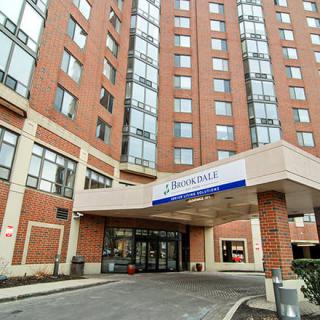
Brookdale Oak Park
$3,950 to $7,220 / month20.5 miles away -
About the same

Belmont Village Senior Living Glenview
$4,210 to $8,100 / month9.1 miles away -
from -$290 / mo

The Admiral at the Lake, a CCRC
$4,000 to $9,000 / month16.3 miles away -
from +$360 / mo

Glen Oaks Nursing Home
$4,650 to $5,700 / month2.7 miles away
Overall Review of Abbott House LLC
Pros
 The staff are phenomenal and care about the residents.
- The director and staff ensure residents are safe and treated with respect.
- The facility is clean and well maintained.
- The staff are friendly and easy to interact with.
- The center is well staffed and supportive for residents.
- Questions and concerns are answered promptly by the team.
- The location in Highland Park allows residents to walk around town after signing out with staff.
- All levels of care are available, helping residents feel safe, healthy, and able to grow.
Cons
 The facility is described as hell incarnate, with cockroaches, terrible food, assaults, a lack of support, and residents being treated like children.
- Staff fail to address predatory behavior by older men toward young female residents.
- Residents are discharged with an incorrect amount of medications and the staff refuse to fix the error.
- There is no focus on transitioning residents out; it feels like they are left to rot away in the facility.
- The reviewer calls Abbott House disgraceful and warns others not to send their family there, also claiming some positive reviews are bots.
Review
Abbott House in Highland Park is best suited for adults who need structured, facility-based mental health and recovery support with strong medical and therapeutic oversight. The program appears built around a contained, resident-focused approach where counselors, prescribers, and care managers coordinate care and monitor progress. For families seeking a place that can provide ongoing medication management, routine doctor appointments, and an environment designed to keep residents within a therapeutic framework, Abbott House is a reasonable target. However, this is not a universal fit; those prioritizing pristine safety records, modernized amenities, flawless operations, or advanced elder-care features may want to look elsewhere. In particular, families who worry about safety, responsive problem-solving, or rigorous discharge planning should consider alternatives with more consistent performance across inspections and peer reports.
What many families will need to weigh upfront are the troubling reports that recur across some reviews. Accounts of pests, substandard meals, and a perceived lack of practical support are hard to overlook. Stories of residents being treated like children, concerns about inappropriate behavior by other residents, and medication administration mistakes cannot be dismissed. A portion of the feedback also describes a pattern of discharge or follow-through that feels incomplete, with families left managing the fallout rather than receiving a clear, proactive plan. When these concerns surface repeatedly, they diminish confidence in the facility’s day-to-day reliability and raise legitimate questions about risk management. Yet not all experiences align with these critiques, and some families affirm safe environments, respectful staff, and effective medical coordination.
On the upside, the core strengths cited repeatedly point in a favorable direction for the right use-case. Several reviews commend the leadership and the staff’s attentiveness: administrators or care managers who respond to questions, nurses who coordinate medications, and clinicians who can arrange timely medical or mental-health appointments. A number of residents feel safe and well cared-for, with others emphasizing the facility’s cleanliness and the steady presence of a team that treats residents with dignity. The facility’s state accreditation and its ability to connect families with doctors for ongoing care also stand out as meaningful advantages, particularly for clients who require constant therapeutic or psychiatric management within a residential setting. In situations where stability, consistent oversight, and a clear, physician-led plan are paramount, these positives matter greatly.
The juxtaposition of strong staffing and safety-oriented claims with reports of management gaps and quality-control lapses creates a nuanced picture. The building is described as old and sometimes dreary, which can weigh on a resident’s mood and a family’s impression of long-term comfort. Yet several reviews emphasize that the people, the directors, care managers, and clinical team, hold the line on safety and respect, and that a well-coordinated care network exists behind the scenes. The variability across reviews suggests that experiences may depend on specific shifts, leadership at any given time, and how actively a family engages with the care team. For decision-makers, this means due diligence cannot stop at a tour; it must extend to requesting recent incident logs, speaking directly with the program director, and probing how discharge planning is executed in practice.
For families considering Abbott House, a practical due-diligence framework is essential. Ask to review the most recent state inspections and any open complaints, and request a candid discussion about medication-handling protocols, incident reporting, and how the facility handles safeguarding in shared living spaces. Inquire about transition planning: what happens when a resident nears readiness for step-down or discharge, who coordinates follow-up care, and how families are kept informed of progress. Seek out references from families with experiences similar to the loved one’s needs, and insist on meeting frontline staff who would be directly overseeing daily routines. If fit hinges on robust, predictable operations, insist on concrete timelines, service-level expectations, and a written plan that clarifies who is responsible for what.
In the end, Abbott House represents a credible option for adults seeking a structured, medically integrated residential program with dedicated staff and active clinical oversight. The strongest case for placement rests with those whose priorities include ongoing mental-health support, medication management, and the reassurance that a professional team will coordinate care and monitor progress closely. The strongest caveat is the persistent possibility of safety lapses, quality-control gaps, or inadequate discharge planning that can erode confidence and undermine recovery efforts. Families must weigh the tangible benefits of steady medical attention and a care-driven environment against the real risk of inconsistent experiences and operational shortcomings. If safety, reliability, and a transparent, well-executed transition plan are non-negotiable, exploring alternatives with a more uniform safety record and clearer client outcomes becomes essential.
 Skilled Nursing Facility
 Private
 Chicago O'Hare International (15 miles away)
 High acuity care








 Comprehensive Exploration of Living Wills and Other Advance Directives
 A Detailed Exploration of Living Wills and Advance Directives
 Comprehensive Guide to Medicare Coverage for Hospice Care