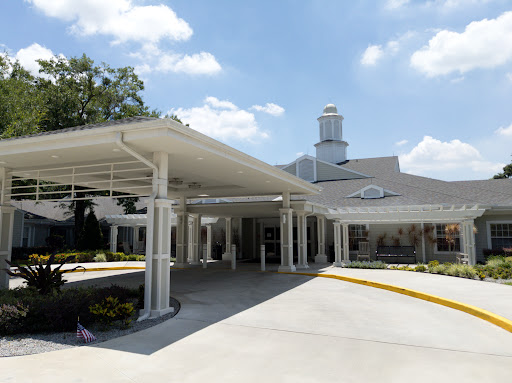
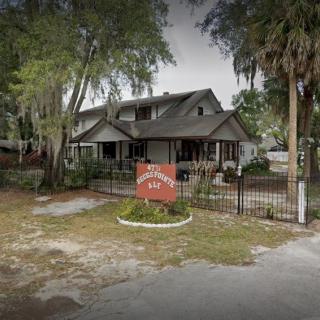
305 East Oak Street, Apopka, FL 32703
For more information about senior living options: (866) 208-4318
Adventhealth Care Center Apopka North Costs & Pricing
Adventhealth Care Center Apopka North offers private room accommodations at a monthly cost of $4,200. This rate is notably higher than both the average costs in Seminole County, which stand at $3,953, and the broader state average for Florida, which is approximately $3,699. While this pricing reflects a premium compared to local and statewide benchmarks, it likely encompasses a range of specialized services and amenities designed to enhance patient care and comfort. Potential residents should consider these factors when evaluating their options for long-term care in the area.
| Floor plans | Adventhealth Care Center Apopka North | Seminole County | Florida |
|---|---|---|---|
| Private | $4,200 | $3,953 | $3,699 |
Skilled Nursing Facilities with a similar price nearby
-
from +$272 / mo

Azpira at Windermere
$4,472 to $6,916 / month12.5 miles away -
from +$150 / mo

The Blake at Hamlin
$4,350 to $6,775 / month15.8 miles away -
from -$341 / mo

Village on the Green a CCRC
$3,859 to $5,144 / month6.0 miles away
Overall Review of Adventhealth Care Center Apopka North
Pros
 The nursing care she received saved her life, both physically and emotionally.
- The staff on the Azalea wing are extraordinary professionals.
- Felicia made the transition seamless with regard to doctor visits, insurance documentation, and follow-ups.
- Janet, the front desk receptionist, was extremely friendly and always helpful.
- Garth and Susie provided devoted, attentive care for my mother over many months.
- Ophelia, the morning CNA, lovingly cared for my mother.
- The Transitional Care Coordinator went above and beyond to ensure that my mom's admission went smoothly.
- The Solaris staff truly cares and radiates warmth in their smiles and everyday interactions.
- North Campus is a great place with awesome staff, a clean, caring, and compassionate facility.
Cons
 The walk-in clinic was described as poorly run, with appointment times meaning nothing.
- A patient was left in bed for 23 hours a day, leading to a UTI and toxic shock.
- They lost one of the patient’s hearing aids.
- Solaris Healthcare Apopka's customer service was unresponsive and hampered by high staff turnover.
- AdventHealth North Apopka was described as the worst AdventHealth visited, with a six-hour wait, a rude attitude, and no social distancing during a COVID test.
- The reviewer noted appallingly bad experiences that left them unable to sleep due to worry.
Review
AdventHealth Care Center Apopka North is best suited for families confronting post-hospital rehab needs who prize personal, hands-on attention from a team that clearly cares about each patient’s recovery. The strongest value here is a cohort of compassionate nurses, therapists, and social staff who partner with families to shepherd a plan from admission through discharge. When rehabilitation is the priority, post-surgery recovery, stroke recovery, or a difficult hospital stay, the unit-level warmth and the availability of coordinators can translate into meaningful gains. This is not the right pick for those who demand flawless operational discipline, perfectly predictable scheduling, and a uniformly hands-on approach to every routine task.
Those weighing alternatives should note that the center’s most persuasive upside sits with its caregiving presence and discharge planning support. If a family wants a transition-focused environment, where a social services director and a capable transitional care team coordinate doctor visits, insurance follow-ups, and home-readiness steps, this campus can deliver. The positives recounted by families consistently point to dedicated frontline staff, strong bedside compassion, and a readiness to go the extra mile to help a loved one regain function and dignity. For families who have previously faced chaotic clinics or unclear discharge timelines, the contrast in care continuity can be substantial.
The evidence of strong care is not merely anecdotal. Reviews highlight standout personnel who model the kind of care families value: caregivers who feed, bathe, and check on residents with a level of attentiveness that feels personal; nurses who coach families through medical nuances; and social services professionals who map out transitions with patience and clarity. In particular, praise centers on the Azalea wing’s staff, wound and bedside nurses, and a social services team that earns trust through consistent, reassuring communication. When these elements align, the pathway from hospital to home feels navigable rather than murky, and that is a decisive advantage for rehabilitation-driven stays.
Yet the cons surfaced in a troubling light and deserve frank accounting. One sharply negative account describes a patient left in bed nearly the entire day, with a later infection and a grievous safety lapse that culminated in a hospital transfer. Another review recounts missed operational signals, appointment timing treated as advisory rather than binding, and even a lost hearing aid. Together, these alerts paint a real risk profile: care quality can be exceptionally high on individual shifts, but systemic or process gaps can undermine safety and peace of mind. The risk is not theoretical; it surfaces as a pattern in at least a couple of the experiences shared, which means families must scrutinize bedside supervision, daily schedules, and the facility’s escalation procedures before settling in.
To turn these realities into a practical decision, prospective residents should demand concrete assurances. Ask to review staffing patterns by shift, RN coverage during peak rehab times, and the cadence of daily therapy sessions. Request a clear, written discharge planning workflow that ties medical requirements to home-care instructions, equipment needs, and follow-up appointments. Visit with the care director or the rehab team to observe how they coordinate with families and track progress. If possible, request a trial period or a detailed tour of the Azalea wing to gauge whether the atmosphere and routines align with expectations for safety, cleanliness, and restraint-free mobility coaching.
In the end, AdventHealth North Apopka offers a compelling proposition for rehab-focused families who value genuine caregiver compassion and proactive discharge planning, paired with an ability to forge meaningful connections between patients, families, and clinicians. The strongest argument in favor is the culture of care and the visible commitment of staff to guide a loved one back to independence. The strongest counterargument centers on real safety and process risks that have appeared in several accounts, suggesting the need for vigilant oversight and earnest due diligence. For families with low tolerance for operational variability, exploring alternatives with a track record of consistent scheduling, rapid response, and fewer safety incidents is prudent. For others, a thorough hospital-to-home rehabilitation plan here can still be a solid, legitimacy-tested bridge to greater independence.
 120 resident community capacity
 Skilled Nursing Facility
 Air-conditioning
 Beauty salon
 Cable or satellite TV
 Computer center
 Dining room
 Fitness room
 Fully furnished
 Gaming room
 Garden
 Housekeeping services
 Kitchenette
 Move-in coordination
 Outdoor space
 Private bathrooms
 Restaurant-style dining
 Small library
 Telephone
 Wellness center
 Wi-Fi/high-speed internet available
 Orlando International (21 miles away)
 Community operated transportation
 12-16 hour nursing
 24-hour call system
 Activities of daily living assistance
 Assistance with bathing
 Assistance with dressing
 Assistance with transfers
 Diabetes diet
 Medication management
 Mental wellness program
 Special dietary restrictions
 Concierge services
 Planned day trips


 6 Crucial Ways an Elder Law Attorney Assists Families
 Navigating the Tax Landscape of Caregiving: Credits, Deductions, and Beyond
 Highly Beneficial Low-Impact Exercises for Senior Living Residents