
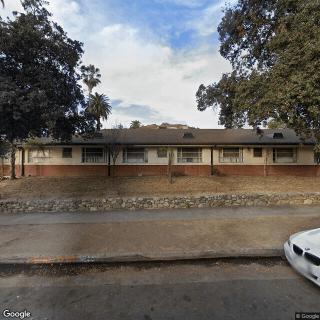
1470 North Fair Oaks Avenue, Pasadena, CA 91103
For more information about senior living options: (866) 208-4318
Overall Review of Eisenhower Healthcare Center
Pros
 The staff are very friendly and the patients are wonderful.
- The nursing staff is very good.
- The facility has a home-like feel and is very impressive.
- The therapy and nursing care were highly regarded.
- The environment is welcoming and inclusive, with no racism reported.
Cons
 The caretakers and nurses are careless, seen standing around on their phones while patients scream for help, and no nurse is to be found.
 - The facility is described as a dump with no phones in the rooms and a broken nurse call button, making it useless.
- The place is horrible and could drive a sane person to madness, with calls to report it to the health department.
- It reminds the reviewer of the movie I Care a Lot, implying predatory or neglectful care.
- It is dirty and unsafe, with unattended patients, unsupervised smoking outside, and a strong odor of urine and defecation in the air.
- The therapy is a total joke, lacking family contact and focusing on insurance to push out patients; a wound doctor allegedly released a patient with bed sores illegally.
Review
Eisenhower Healthcare Center in Pasadena is best suited for families pursuing short-term rehabilitation where a warm, personable staff and a home-like atmosphere can support recovery, provided vigilant advocacy is in place. It is not ideal for residents requiring constant, highly reliable nursing oversight or for those with complex medical needs that demand immediate, round-the-clock response. For long-term care or for patients with significant behavioral health challenges, this setting is unlikely to deliver the safety net and predictability that increasingly informed families expect. In short, this is a facility to consider only when an active family or designated advocate can push for consistent care and rapid problem resolution.
Those weighing options should still look at alternatives with stronger safety cultures and more dependable systems. Facilities in the same market that emphasize staffing consistency, reliable nurse call responses, and clean, well-maintained environments deserve serious consideration. If rehab is the priority, seek programs with transparent progress tracking, stable therapy teams, and clear communication channels with families. For residents likely to require extended supervision or more intensive clinical oversight, hospital-based skilled nursing or a facility with documented wound-care expertise and robust governance will typically outperform Eisenhower when consistency and safety are non-negotiable.
On the upside, several reviews note a friendly staff and a home-like vibe, which can ease anxiety for families and patients at the outset. When therapists are accessible and engaged, rehabilitation progress can be meaningful, and some nurses demonstrate competence and compassion in day-to-day care. Those elements matter because recovery hinges on patient engagement and a sense of routine. Yet these strengths exist in tension with reports of inconsistent responsiveness and operational gaps. The unevenness is the defining feature: warmth and potential for meaningful therapy are real, but they are not guaranteed.
The principal drawbacks are not cosmetic; they hit safety, dignity, and general reliability. Accounts describe caregivers who seem disengaged, with at least one night manager cited as dismissive or unhelpful. The nurse call system and room telecommunication appear unreliable, and some rooms lack phones entirely. Unpleasant odors, unsanitary conditions, and unattended patient needs, water, help, or basic comfort, signal deeper issues with monitoring and housekeeping. Alarming anecdotes about unsupervised smoking and hazardous patient flow around entrances amplify concerns about risk management. If management behavior contributes to a culture of indifference, the resulting erosion of trust makes good outcomes unlikely without constant family intervention.
These pros do not sufficiently offset the cons for most families. The practical benefit of a friendly staff and a potentially productive rehab program is real, but it is overwhelmed by safety and hygiene concerns and by systemic lapses in accountability. For families who can supervise closely, institute daily verify-and-report routines, and insist on rapid escalation for problems, some rehabilitation gains may still be realized. For others, especially those with cognitive impairment, high medical needs, or limited ability to advocate, it is hard to justify the ongoing risk. The risk/return profile leans clearly toward alternatives that promise steadier care, tighter supervision, and fewer surprises.
When considering Eisenhower, approach with a concrete playbook. Demand a live demonstration of the nurse call system and observe several shifts to gauge consistency. Speak with current residents or family members about how therapy teams coordinate care and how wound or medical issues are addressed in a timely fashion. Request recent inspection findings, staffing ratios, and a clear discharge or transition plan that protects safety after a stay ends. Clarify the smoking policy and ensure there are strict controls around patient movement and safety. If the facility cannot commit to measurable improvements, prompt responses, reliable room amenities, and transparent communication, families should pursue alternatives with confidence, choosing settings where safety, cleanliness, and accountable care drive every daily decision.
 71 resident community capacity
 Skilled Nursing Facility
 Air-conditioning
 Beauty salon
 Cable or satellite TV
 Computer center
 Dining room
 Fitness room
 Fully furnished
 Gaming room
 Garden
 Housekeeping services
 Kitchenette
 Move-in coordination
 Outdoor space
 Private bathrooms
 Restaurant-style dining
 Small library
 Telephone
 Wellness center
 Wi-Fi/high-speed internet available
 Burbank-Glendale-Pasadena (12 miles away)
 Community operated transportation
 12-16 hour nursing
 24-hour call system
 Activities of daily living assistance
 Assistance with bathing
 Assistance with dressing
 Assistance with transfers
 Diabetes diet
 Medication management
 Mental wellness program
 Special dietary restrictions
 Concierge services
 Planned day trips



 A Comprehensive Exploration of Common Misunderstandings about Powers of Attorney
 Senior Move Management: Understanding the Role, Value, and Associated Costs
 Weight Training for Seniors: Building Strength and Vitality