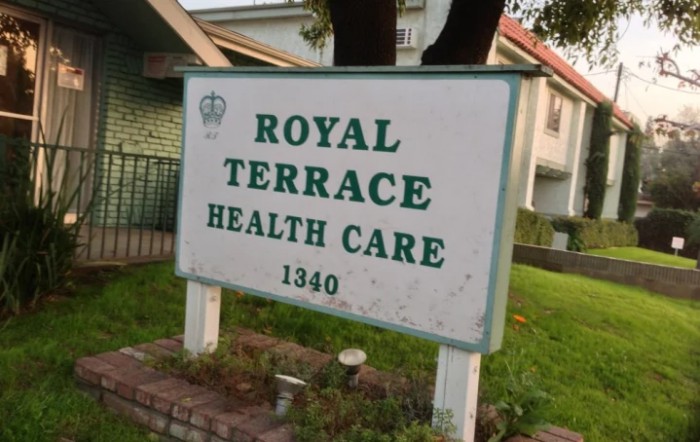


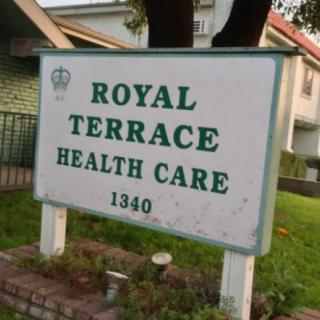



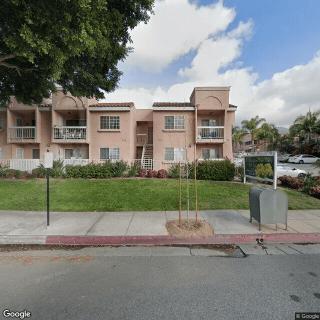
1340 Highland Avenue, Duarte, CA 91010
For more information about senior living options: (866) 208-4318
Overall Review of Royal Terrace Healthcare
Pros
 The staff members who all helped to care for her are amazing.
- The social worker, Jennifer, was very helpful.
- Activities director Judith, Allie & others from the activities dept. were great.
- The nurses were superb, especially May, who helped to allay their fears when they arrived.
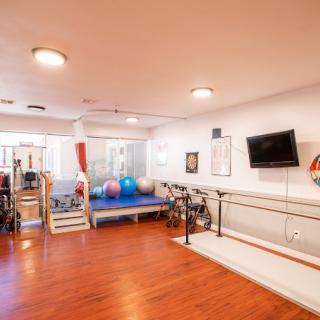
- Chris & his physiotherapy team & the occupational therapy team did a wonderful job.
- The CNAs were so caring, especially Nancy.
- The rehab staff is so kind, motivating and extremely caring.
Cons
 The facility is awful.
- The staff treat residents like trash and are disrespectful, even mocking and threatening them.
- The mother-in-law was not treated well, and she ended up in the hospital five times.
- Nurses claimed the patient was fine while delaying doctor contact, and her condition worsened.
- The place is useless for caring for the sick.
- They demanded visitors wear masks in 2025, which was deemed ridiculous.
Review
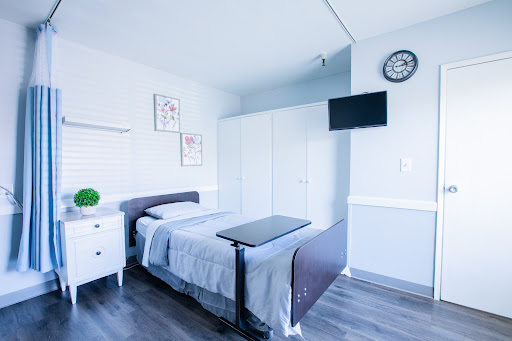
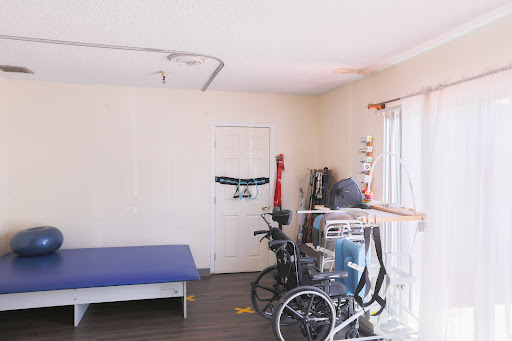
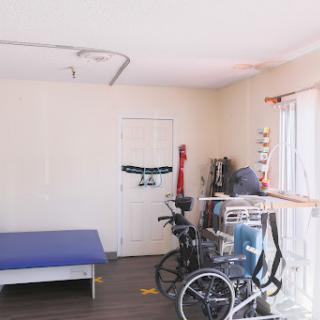
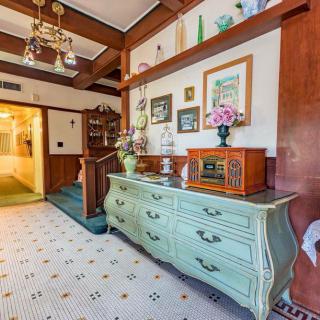
Royal Terrace Healthcare in Duarte is best suited for families facing an acute rehabilitation decision who want a genuinely warm, home-like environment paired with a robust physical therapy program. The center of gravity here is the rehab team: therapists who can help a resident regain walking and daily independence, supported by attentive nurses and CNAs who make daily care feel personal rather than clinical. For a loved one who arrives with mobility challenges or after a serious illness, the facility’s strongest selling point is proven, hands-on rehabilitation that often translates into meaningful functional gains. When the goal is to rebuild strength, balance, and confidence in a setting that feels less institutional and more community-driven, Royal Terrace delivers.
Those who should consider alternatives are families prioritizing consistent interpersonal experience and reliable safety oversight across every shift. Several reviews signal that care quality can be highly variable depending on staff mood and management communication. If a loved one requires steady, uniformly respectful handling, transparent accountability, and predictable responses to concerns, exploring other nearby options may reduce the risk of episodic dissatisfaction. Long-term residents, in particular, may want to assess whether the routine care and daily interactions align with expectations for ongoing, non-rehabilitative needs. The facility’s reputation appears uneven, making some decisions riskier for families seeking a consistently calm, tightly run environment.
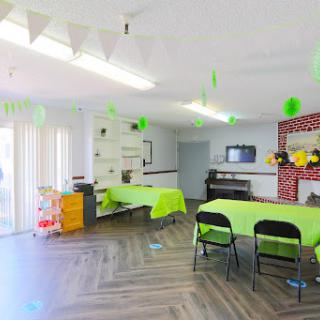
The strongest upside lies in the rehab engine: the therapists’ ability to mobilize patients who arrive unable to walk and leave with regained function, and the nurses and CNAs who reinforce progress with daily encouragement. The reviews repeatedly praise specific therapists and staff who deliver patient-centered care, making a tangible difference in mobility and mood. A number of families describe a “home away from home” vibe with staff who are genuinely kind, patient, and resourceful. This level of devotion can offset the friction that sometimes arises in care settings, especially when a loved one’s recovery hinges on steady, skilled intervention and emotional support. Yet the flip side is real: other families recount episodes of disrespect, miscommunication, or perceived neglect, including reports of delays in addressing concerns and even alarmingly negative experiences around safety and well-being. In short, the rehab advantage is compelling but not universally guaranteed.
When balancing the pros against the cons, the rehab payoff often remains compelling enough to warrant serious consideration, but only with rigorous safeguards. If choosing Royal Terrace, families should insist on a clearly documented care plan with direct, ongoing access to the therapy team and assigned nursing leadership. Demand daily progress notes, a predictable therapy schedule, and a named point of contact who can rapidly surface concerns. Visiting early and repeatedly to observe how staff interact with residents and how they respond to calls or questions can reveal more than any marketing page. A trial stay or short-term admission focused on rehab could provide real-world insight into whether the environment supports both clinical progress and personal dignity. Without that level of direct engagement, the uneven experiences captured in reviews could reemerge.
The facility’s numbers reflect the experience gap: a 3.7 rating from 24 reviews with a broad spread, 15 five-star impressions, 7 one-star warnings, indicates a project with high variance in actual day-to-day experiences. That discrepancy matters for decision-making. Positive narratives cluster around effective therapy, compassionate nursing, and staff who create a feeling of warmth. Negative reports center on interpersonal friction, perceived neglect, and distrustful communication with families. For a family weighing options, this suggests Royal Terrace can deliver exceptional rehab outcomes for the right resident and the right family dynamic, but it also harbors the potential for serious, emotionally taxing experiences if staffing alignment, oversight, and culture do not align with expectations.
Bottom line: Royal Terrace Healthcare can be an excellent fit for a senior whose priority is aggressive, professionally delivered rehabilitation in a setting that feels like a home base rather than a hospital. The strongest advocates point to real functional gains and genuinely caring staff who elevate the recovery process. However, the breadth of negative accounts cannot be ignored. If a family cannot tolerate inconsistent interactions, perceived neglect, or questionable bedside manners, or if long-term, non-rehab care is the core need, the prudent move is to broaden the search and compare options with clearer, consistently demonstrated quality metrics. For families willing to engage actively, set firm expectations, and monitor closely, Royal Terrace remains a viable, potentially rewarding choice, provided the care plan, leadership contact, and therapy oversight are locked in from day one and revisited regularly as progress unfolds.
 58 resident community capacity
 Skilled Nursing Facility
 Air-conditioning
 Beauty salon
 Cable or satellite TV
 Computer center
 Dining room
 Fitness room
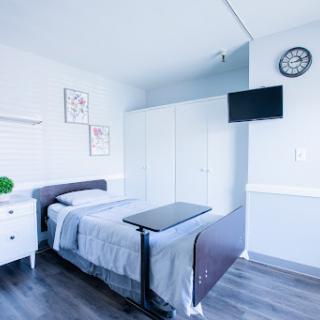
 Fully furnished
 Gaming room
 Garden
 Housekeeping services
 Kitchenette
 Move-in coordination
 Outdoor space
 Private bathrooms
 Restaurant-style dining
 Small library
 Telephone
 Wellness center
 Wi-Fi/high-speed internet available
 Ontario International (22 miles away)
 Community operated transportation
 12-16 hour nursing
 24-hour call system
 Activities of daily living assistance
 Assistance with bathing
 Assistance with dressing
 Assistance with transfers
 Diabetes diet
 Medication management
 Mental wellness program
 Special dietary restrictions
 Concierge services
 Planned day trips





 9 Stimulating Memory Activities for Seniors: Puzzles, Cards, and Much More
 Managing Nursing Home Expenses After Medicare Coverage Ends
 Is a Geriatric Care Manager the Right Choice for Your Family?