
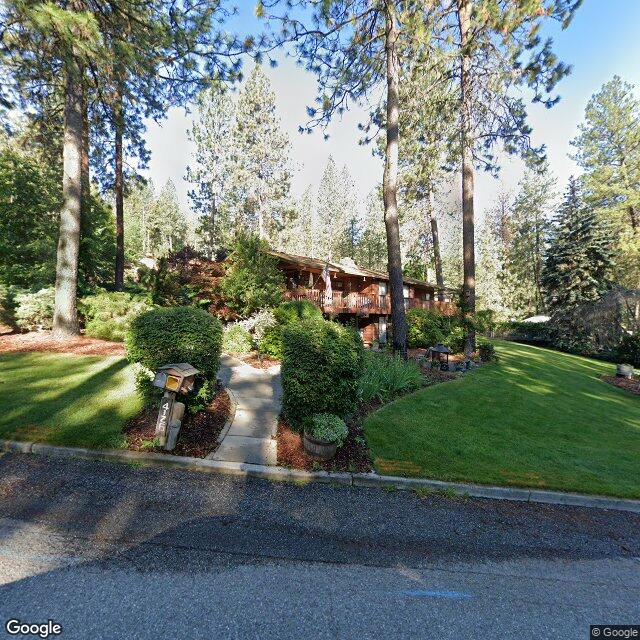
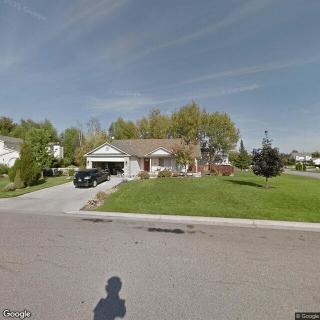
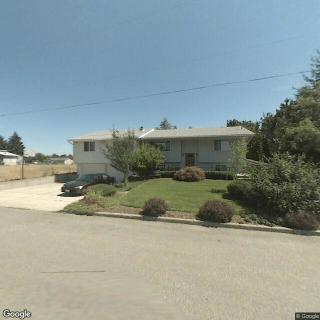
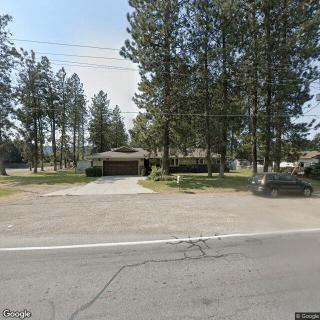
4126 S Adams Road, Veradale, WA 99037
To contact a resident: (509) 926-8168
For more information about senior living options: (866) 208-4318
Arletta's Adult Care Home Costs & Pricing
Arletta's Adult Care Home offers a range of room types that are priced at a premium compared to the local and state averages. For semi-private accommodations, residents can expect to pay $6,000 per month, significantly higher than Spokane County's average of $3,863 and Washington State's average of $4,267. Private rooms also reflect this trend at $7,000, contrasting sharply with the county's typical rate of $4,111 and the state's average of $4,772. Similarly, both studio and one-bedroom options are priced at $7,000 each - again well above Spokane's averages of $3,609 for studios and $3,852 for one-bedrooms. While Arletta's Adult Care Home provides specialized services and amenities that may justify the costs for some families seeking quality care for their loved ones, it is clear that its rates are notably higher than those found in both Spokane County and broader Washington State.
| Floor plans | Arletta's Adult Care Home | Spokane County | Washington |
|---|---|---|---|
| Semi-Private | $6,000 | $3,863 | $4,272 |
| Studio | $7,000 | $3,609 | $4,128 |
| 1 Bedroom | $7,000 | $3,852 | $4,634 |
| Private | $7,000 | $4,111 | $4,774 |
Memory care communities with a similar price nearby
-
from -$500 / mo
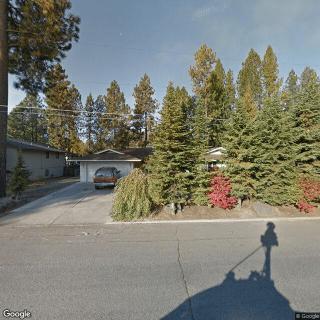
Classy Retreat
$5,500 / month9.7 miles away -
from -$405 / mo
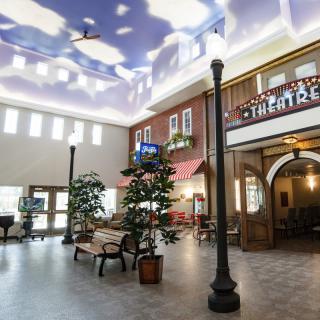
Columbia Landing of Spokane
$5,595 to $7,660 / month6.9 miles away -
from -$805 / mo
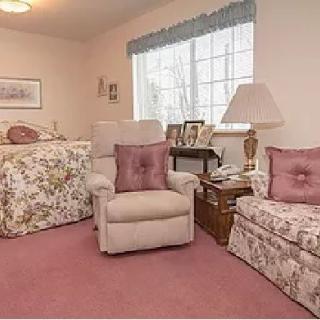
Colonial Court
$5,195 / month3.7 miles away -
from +$200 / mo
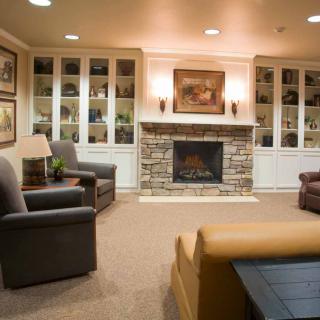
Creekside Inn Memory Care Community
$6,200 to $7,800 / month20.9 miles away -
About the same
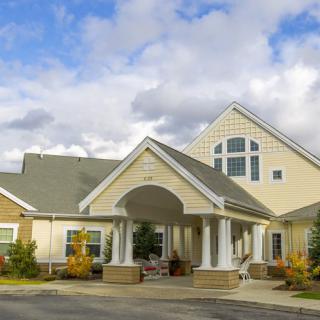
Brookdale Nine Mile
$5,985 to $8,325 / month14.9 miles away
Overall Review of Arletta's Adult Care Home
Pros
 Arletta loved and cared for Mom until the very last moment and extended that care to the family as well.
- Her holistic approach to elder care keeps residents up and out of bed, eating healthy, enjoying regular meals, exercising, staying active, and being pampered until the end.
- She cares about residents' entire well-being and quality of life.
- If a bed is available, Arletta's is the place to go—she's the best.
- Families will always hold a special place in their hearts for Arletta.
- Arletta's Adult Care Home is very nice.
Cons
 The facility didn’t have 24-hour care.
- Without 24-hour care, it would not have been a perfect place for their loved one.
Review
Arletta’s Adult Care Home in Veradale, Washington is best suited for seniors who crave a warm, home-like setting where personal attention and a holistic approach to well-being are the norm. This community thrives on daily vitality: residents are encouraged to get up and stay active, eat thoughtfully, and be pampered as part of a comprehensive care philosophy. Families seeking a caregiver who treats quality of life as the primary metric will find a home here that prioritizes daily routines, social connection, and individualized support. With a high satisfaction signal reflected in a 4.8 rating from five reviews, Arletta’s stands out as a small-scale option where relationships matter and care feels deeply personal. It is particularly well-suited for older adults who are functionally capable of independent and assisted living activities but want a tightly managed, loving environment rather than a larger facility atmosphere.
Those weighing alternatives should consider settings that offer around-the-clock supervision or more structured medical oversight, especially if medical fragility or dementia requires constant monitoring. The strongest caveat in the Arletta’s model is the absence of 24-hour care. For families whose loved one requires continuous staff presence, rapid response to nighttime needs, or specialized dementia programming, a larger assisted living community or a dedicated memory care residence may deliver the level of assurance and clinical support that Arletta’s does not explicitly provide. In short, this home shines when supervision is solid during the day and caregivers are available for daily tasks and social engagement, but it may not meet the expectations of those who require constant vigilance.
From a practical standpoint, the chief advantages at Arletta’s are tangible and well-executed. The caregiver’s holistic method translates into more than meals and medications; it encompasses staying active, engaging residents in meaningful routines, and prioritizing overall well-being. The emphasis on healthy meals, regular physical activity, and opportunities to be “up and out of bed” each day creates a rhythm that preserves dignity, independence, and mood. The attention to “being pampered” signals a level of personal care that can reduce anxiety for families who want their loved ones to feel cherished, not simply managed. Any family evaluating Arletta’s should expect a setting where staff know residents well, adapt to preferences, and treat daily living as a coordinated plan rather than episodic care.
Yet the second review introduces an important constraint: the lack of 24-hour care. This gap matters most when nighttime needs or around-the-clock medical supervision become a factor. It’s not merely about sleep; it’s about having ready assistance during the hours when fatigue, alarms, or sudden symptoms can occur. For a resident who requires continuous monitoring or who benefits from overnight nursing presence, this is a meaningful consideration. The absence of 24-hour care also invites questions about how night shifts are covered, how emergencies are handled after hours, and what contingencies families should arrange. Taken together with the positive daily-care perspective, this conundrum defines a boundary line: Arletta’s excels at daytime, relationship-centered living, while it is less suited to those needing constant professional oversight.
When the pros are weighed against the main limitation, Arletta’s still presents a compelling value proposition for the right resident. The very elements that make it feel intimate and attentive, personalized routines, a home-like setting, ongoing activity, and a focus on quality of life, are precisely what many families want for a loved one who does not require constant medical intervention. The small-scale environment often yields quicker staff rapport, more flexible scheduling around preferences, and stronger social bonds among residents. The cost will likely reflect the intimate care model, and the risk of limited after-hours support is the practical trade-off. Families should approach this with a concrete plan for after-hours care if necessary, leveraging community resources or outside caregiver support to fill gaps when night supervision is essential.
For decision-makers, the call is clear. Arletta’s is a premier fit for seniors who value a responsive, affection-forward, activity-rich daily life in a compact, home-like setting. It is less suitable for those who cannot live without 24/7 staffing, continuous clinical oversight, or dementia-specific programming. Prospective families should verify bed availability promptly, given the stated urgency in some testimonials, and insist on a clear, written plan detailing staffing levels, emergency procedures, and what happens after hours. A visit will reveal the tempo of daily life, the warmth of interactions, and whether the caregiving style matches the loved one’s temperament and needs. In the end, Arletta’s stands out as a highly dependable, person-centered option for the right senior, with an honest understanding of where it excels and where alternatives may better align with more intensive care requirements.
 Board and Care Home
 Memory Care
 Activities off-site
 Beautician on-site
 Devotional services off-site
 Indoor common areas
 Outdoor common areas
 Private
 Respite or short term stays offered
 Wheelchair accessible showers
 Spokane International (15 miles away)
 Diabetic care
 High acuity care
 Incontinence care
 Medication management
 Kosher

 Understanding Medicaid Coverage for Assisted Living: A Comprehensive Guide
 How and When Medicaid May Cover Assisted Living Costs
 A Detailed Exploration of Assisted Living Medicaid Waivers Across the United States