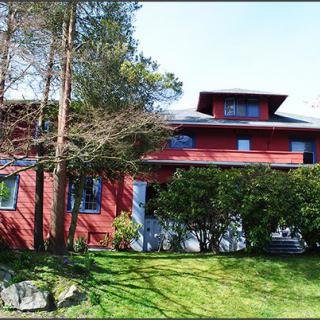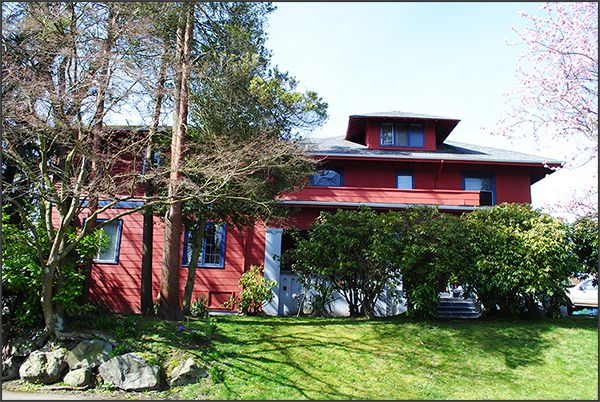
1103 16Th Avenue, Seattle, WA 98122
For more information about senior living options: (866) 208-4318
Overall Review of Spring Manor
Pros
 The services are good.
- The program helps those who really need help.
- It focuses on preventing homelessness by supporting people in need.
Cons
 The services are terrible.
- Case management is awful.
Review
Spring Manor in Seattle is best suited for seniors and adults who need hands-on support within a safety-forward, mission-driven setting. The community appears to prioritize practical help for residents whose daily needs require structure and oversight, with a clear emphasis on preventing vulnerable individuals from slipping into homelessness or wandering without supervision. For families seeking a place where staff actively engages those who truly require help and where the tone is purposeful and caregiving, this option offers a meaningful fit. Residents who can participate in a routine and rely on available assistance to maintain daily independence may find a sense of belonging here.
However, those who expect consistently excellent case management and flawless service should weigh alternatives carefully. The most critical caveat voiced in the negative review centers on case management and the reliability of services, suggesting that complex care coordination cannot be taken for granted. If a resident requires tight oversight, frequent care-plan updates, timely problem resolution, or proactive advocacy with physicians and outpatient providers, Spring Manor may fall short. Families should compare facilities with proven, high-touch case-management capabilities or separate service coordinators to ensure needs are met without gaps.
On the upside, the positive observations point to a community with real heart and a mission to help people in meaningful ways. The positive comments, summed up as “Good” by one reviewer and the note about purposeful help for those who truly need it, indicate a warm, supportive environment where staff invest effort into residents’ well-being. Those benefits matter and can translate into better daily morale, reduced loneliness, and a sense of protection for vulnerable adults. Yet these strengths work best when paired with dependable operations; otherwise, goodwill alone cannot compensate for inconsistent service delivery.
To assess fit, prospective residents should request concrete assurances about care coordination. Inquire about how case management is organized: the naming of a dedicated case manager, frequency of meetings, and how care plans are created, updated, and followed. Ask for a tour that includes time with staff who would be involved in everyday support, and ask for references from current families. Observing how requests are handled on a trial basis, and checking whether medications, appointments, and transportation are reliably managed, will reveal the day-to-day reality behind the rhetoric.
Context matters. The spectrum of experiences, one strongly negative review focused on service quality, contrasted with multiple positive notes, suggests variability in execution. Staff consistency, turnover, and the ability to translate mission into steady practice are likely the deciding factors. For a resident with steady needs that can be met within a predictable framework, Spring Manor can deliver safety and companionship in a meaningful way. For those whose care hinges on meticulous, continuous coordination, the apparent gaps in case management deserve serious attention before committing.
Bottom line: Spring Manor is a practical choice for families seeking a purpose-driven environment that actively helps residents who truly need assistance, provided expectations align with the facility’s capacity for reliable case management. The strongest guardrails against disappointment are explicit, written care plans, clear accountability, and checks on service delivery. Alternatives should be considered for anyone requiring high-frequency oversight, rapid problem-solving, or specialized medical coordination. In the Seattle area, this community earns its stripes for mission and warmth, but only the measured family will know if the balance between heart and systems is right for their loved one.
 57 resident community capacity
 Memory Care
 Activities on-site
 Air-conditioning
 Beauty salon
 Cable or satellite TV
 Computer center
 Devotional services off-site
 Dining room
 Fitness room
 Fully furnished
 Gaming room
 Garden
 Housekeeping services
 Indoor common areas
 Kitchenette
 Move-in coordination
 Outdoor space
 Private bathrooms
 Restaurant-style dining
 Small library
 Telephone
 Wellness center
 Wi-Fi/high-speed internet available
 Seattle-Tacoma International (11 miles away)
 Community operated transportation
 12-16 hour nursing
 24-hour call system
 Ambulatory care
 Assistance with bathing
 Assistance with dressing
 Assistance with transfers
 Diabetes diet
 Diabetic care
 Medication management
 Mental wellness program
 Special dietary restrictions
 Concierge services
 Planned day trips





 Why Do Dementia Patients Sleep So Much? Understanding Oversleeping, Stages, and Care Approaches
 8 Key Indicators That Suggest It May Be Time to Transition from Assisted Living to Skilled Nursing Care
 Nourishing the Mind: Essential Dietary Approaches for Dementia