
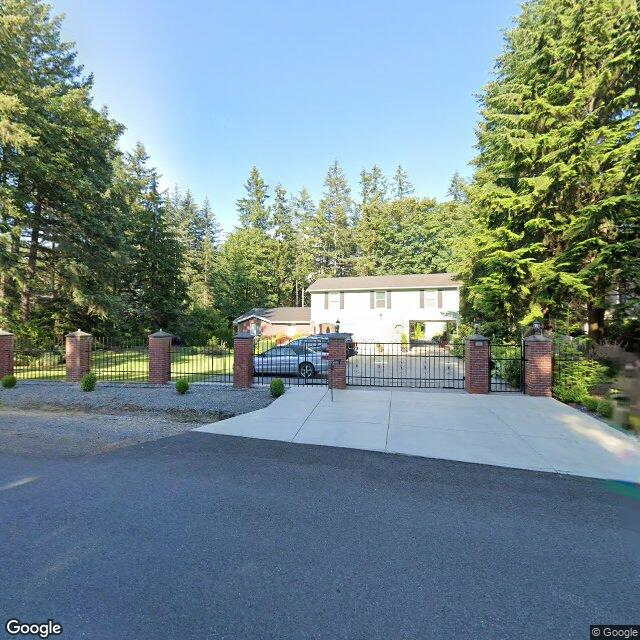
1902 245th Ave. SE Daniel runs tiburon estates AFH, Sammamish, WA 98075
To contact a resident: (425) 391-5385
For more information about senior living options: (866) 208-4318
Ponderosa Trails Costs & Pricing
In Ponderosa Trails, the monthly costs for accommodations are positioned at $5,500 for both private rooms and one-bedroom units. This pricing reflects a premium when compared to the broader market in King County, where similar options are available at an average of $5,034 for private rooms and $5,127 for one-bedroom units. When we expand our view to the state level in Washington, the costs reveal even more savings; state averages stand at $4,772 for private rooms and $4,632 for one-bedroom apartments. Thus, while Ponderosa Trails offers a distinct living experience that may justify its higher cost, it is important to note that it sits above both county and state averages in terms of monthly expenses.
| Floor plans | Ponderosa Trails | King County | Washington |
|---|---|---|---|
| Private | $5,500 | $5,034 | $4,774 |
| 1 Bedroom | $5,500 | $5,127 | $4,634 |
Memory care communities with a similar price nearby
-
from +$1000 / mo
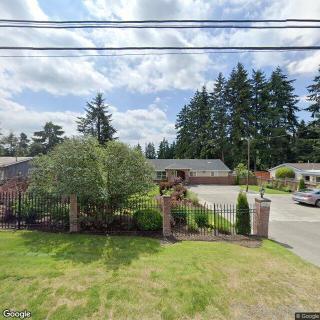
The Promised Land
$6,500 / month16.7 miles away -
from +$500 / mo
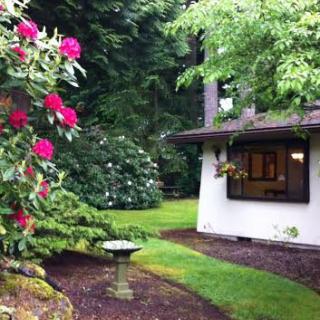
Home Away From Home LLC
$6,000 to $7,000 / month23.4 miles away -
from +$500 / mo

Elderly Home Care
$6,000 to $8,000 / month14.0 miles away -
from +$250 / mo

Fieldstone Rolling Bay and Fieldstone Memory Care
$5,750 to $8,895 / month23.3 miles away -
from +$500 / mo
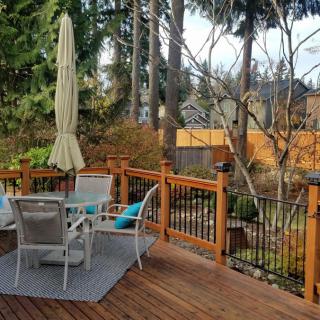
Blue Horizon Adult Family Home
$6,000 to $7,000 / month13.4 miles away
Overall Review of Ponderosa Trails
Pros
 The care and cleanliness are superb, and the meals are very good.
- The family that runs the place is lovely and very caring.
- The facility is immaculately clean and always smells great.
- It has a subdued and quiet atmosphere that respects residents’ space.
- The care setup is impressive, with a homelike environment and comfortable, spacious living.
- The community is working out very well for the loved one.
Cons
 The owner is not helpful or friendly to residents.
- She scolds residents even when they don’t understand what is wrong.
- Staff turnover is very high; workers cannot stay for her demanding and unkind management.
- She complains about everything and does not understand or care for the caregivers or residents.
- Activities are never planned and no fun is offered to residents.
- The tour was pushy and high-pressure, leaving the visitor uncomfortable.
- The environment is dark and depressing.
- The owner did not stay with residents through the night.
Review
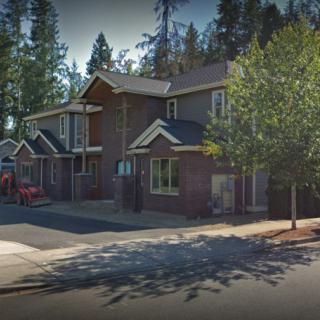
Ponderosa Trails in Sammamish is best suited for seniors who want a clean, quiet, home-like setting with dependable meals and a family-operated touch, and who do not require a highly active social calendar or aggressive administrative responsiveness. The community works for families seeking a warm, intimate atmosphere where care feels personal and the environment is consistently neat. It will not be the first choice for those who expect a vigorous activity program, highly proactive leadership, or rapid responsiveness to every request. For residents who prize structure and social engagement, alternatives with more robust programming and steadier management should be on the short list.
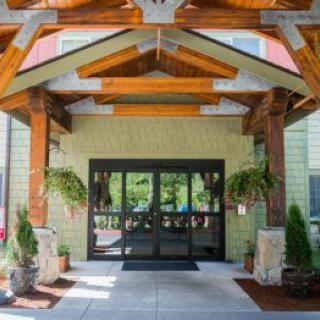
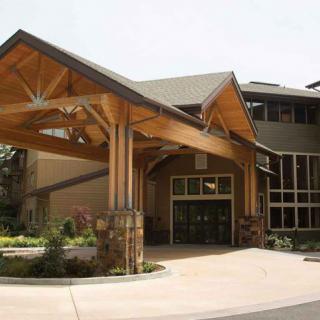
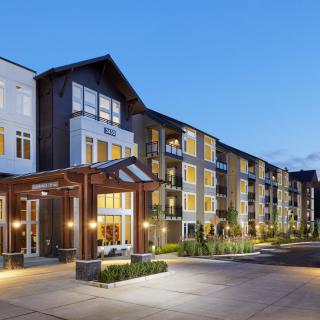
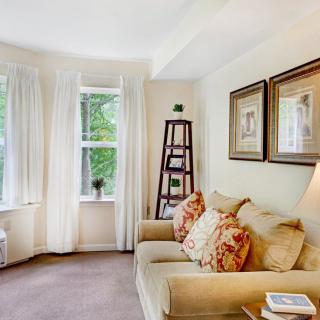
On the upside, the facility earns credit for care and cleanliness that are consistently described as superb, along with meals that residents regard as very good. The living spaces are comfortable and spacious, and the overall environment is homelike, with a subdued, quiet pace that some families specifically want for their loved one. The family that runs the place is described as lovely and caring, contributing a personal, hands-on tone to daily life. These strengths translate into a dependable baseline of hygiene, nutrition, and a calm, orderly setting that can feel like a true home for residents who are less enthusiastic about structured activities.
The most consequential drawbacks lie with management and programming. Several reviews paint a picture of an owner who is not helpful or friendly, sometimes scolding residents and appearing demanding toward staff. High staff turnover, a consequence some families fear when leadership is unstable, undermines consistency of care and familiar faces the resident comes to rely on. Activities are reportedly scarce, leaving residents without regular social or cognitive stimulation. The atmosphere can feel dark or depressing to visitors, and concerns were raised about the owner’s absence at night and a perception that administrative listening to family input is limited. A tour experience described as pushy further cautions families to vet the communication style before committing.
These tensions do not erase the genuine positives, but they do shift the decision calculus. For residents who value pristine cleanliness, reliable meals, and a quiet, low-stimulation home, the pros may be enough to offset the cons, provided the resident is largely independent and does not require aggressive problem-solving from staff on a daily basis. The family-run ethos can be a meaningful advantage for families seeking visible care and a personal touch. Yet the lack of consistent staffing and the sparse activity calendar are real frictions for anyone who wants daily engagement, predictable advocacy from administration, and a strong sense of clinical or social integration.
Decision-makers should enter any visit with a clear checklist: observe how staff relate to residents in real time, ask about staff retention rates, request sample menus and a calendar of activities, and verify how night coverage is handled. Probe whether the owner is visibly present on site after hours, and whether administration actively solicits and acts on family input. Above all, align expectations with the resident’s temperament and social needs: if quiet, private space and impeccable cleanliness trump engagement and frequent oversight, Ponderosa Trails offers a solid, endearing fit. If, however, consistent leadership, robust activity programming, and steady, long-term staffing are non-negotiables, considerable exploration elsewhere is warranted.
In sum, Ponderosa Trails presents a mixed picture: top-tier cleanliness, good meals, and a quiet, home-like atmosphere supported by a caring, family-owned approach. The decisive gap lies in management dynamics and the breadth of programming, which can undermine resident satisfaction for those requiring ongoing engagement and highly reliable administrative responsiveness. For families prioritizing a serene, tidy, family-supported environment, this community can work well. For those needing spirited activity calendars, predictable leadership, and strong day-to-day continuity, it is prudent to compare options with more stable staffing and more proactive governance.
 Board and Care Home
 Memory Care
 Activities off-site
 Bath tubs
 Beautician on-site
 Devotional services off-site
 Indoor common areas
 Outdoor common areas
 Private
 Private bathrooms
 Respite or short term stays offered
 Wheelchair accessible showers
 Seattle-Tacoma International (17 miles away)
 Diabetic care
 High acuity care
 Incontinence care
 Medication management
 Kosher
 Christian services

 Dementia, Paranoia, and Caregiver Guidance: Understanding the Connection
 Engaging Memory Care Activities That Enhance Quality of Life
 When to Transition from Assisted Living to Memory Care: Key Indicators, Steps, and Finding the Right Community