
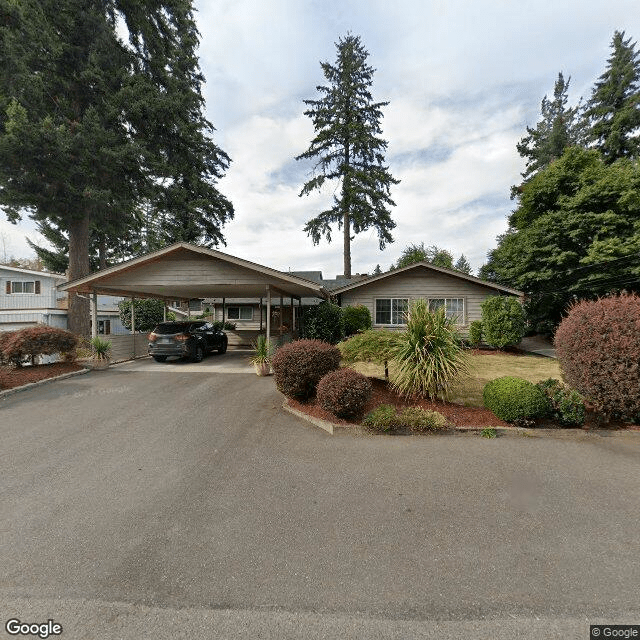
11442 Southeast 186th Street, Renton, WA 98055
To contact a resident: (425) 793-7425
For more information about senior living options: (866) 208-4318
Tiffany Park Costs & Pricing
At Tiffany Park, the costs for various room types reflect both competitive pricing and a commitment to quality care. For private rooms, residents can expect to pay between $3,750 and $5,500 per month, which is notably lower than the average costs in King County ($5,034) and across Washington State ($4,772). Semi-private accommodations are priced at $5,000 monthly, exceeding local averages yet still aligning well with regional offerings that are slightly lower. For those seeking more spacious studio options, Tiffany Park sets its rates at $6,000 per month - higher than averages in both King County ($4,464) and the state ($4,126). Overall, while Tiffany Park's semi-private and studio rates might be on the higher side compared to surrounding areas, its private room pricing presents a more affordable alternative amid rising costs elsewhere.
| Floor plans | Tiffany Park | King County | Washington |
|---|---|---|---|
| Private | $3,750 to $5,500 | $5,034 | $4,774 |
| Semi-Private | $5,000 | $4,430 | $4,272 |
| Studio | $6,000 | $4,464 | $4,128 |
Memory care communities with a similar price nearby
-
from -$375 / mo
Evergreen Manor Senior Care Inc
$3,375 to $7,500 / month17.9 miles away -
from +$250 / mo

Riverton Home Care
$4,000 to $5,000 / month5.6 miles away -
from +$250 / mo
Gentle Care Home
$4,000 to $5,500 / month2.9 miles away -
from -$250 / mo

Twin Lakes Haven Adult Family Home
$3,500 to $8,000 / month11.7 miles away -
from -$250 / mo
Ahadi Care Adult Family Home
$3,500 to $4,000 / month20.7 miles away
Overall Review of Tiffany Park
Pros
 Monica Podar and her staff at Tiffany Park are wonderful.
- They have made every effort to help mom through her transition to a new place.
- They have gone above and beyond continually to make her feel welcome and comfortable in her new home.
Review
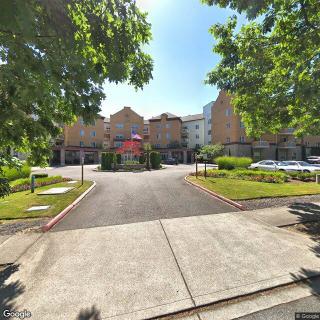
Tiffany Park in Renton is best suited for families that prize a strongly person-centered transition into assisted living, where the move is treated as a careful handoff rather than a checkbox to check. The standout factor is the staff’s willingness to lean in when a loved one arrives, turning a potentially stressful change into a welcome, familiar experience. One family reports that Monica Podar and her team were wonderfully attentive, making every effort to ease mom’s move and continually ensuring she felt at home. That level of purposeful warmth translates into less anxiety for both resident and family, and it makes the first weeks feel less unsettled and more like stepping into a trusted routine.
Those considering Tiffany Park should explicitly evaluate whether the program’s strengths align with needs that go beyond companionship and general activity. For caregivers seeking rigorous medical oversight, unified memory-care specialization, or the breadth of services found in larger campuses, alternatives may be more appropriate. Similarly, budget constraints or the desire for a broad spectrum of on-site clinical resources could steer families toward communities with different pricing models and a more expansive service mix. Tiffany Park’s value proposition rests on personal attention and a homelike atmosphere, which may sit differently for those prioritizing scale or depth of medical support.
The primary advantage here is unmistakable: staff devotion to residents, especially during the transition phase. The narrative centers on a team that anticipates needs, communicates proactively with families, and creates a sense of belonging from day one. This kind of engagement reduces relocation stress, supports adaptation to new routines, and can foster quicker social integration for a resident who might otherwise feel displaced. In practical terms, that means fewer moments of confusion, stronger daily morale, and smoother coordination with family members who want reassurance about care continuity.
With the limited review data, the main potential drawbacks aren’t spelled out, but their absence is itself telling. The strongest risk in a setting like Tiffany Park is whether the high-touch, transition-focused care remains consistently available as needs evolve or as resident census shifts. In advisory terms, the pros, personalized onboarding, visible staff investment, and a welcoming atmosphere, do offset typical concerns about isolation and adjustment for many families. Yet that offset depends on ongoing staff stability, clear care planning, and the ability to scale attention if medical or cognitive needs intensify.
Families moving toward a decision should verify several practical details before committing. Inquire about typical staff-to-resident ratios across day and night, how care plans are developed and revised, and how quickly staff respond to calls or changes in condition. Ask how transitions are supported for residents with memory challenges, what specialized training exists for frontline staff, and how meals, activities, and transportation are organized to sustain engagement over time. Also seek transparency about longer-term implications, how the community handles escalating needs, shifts in care intensity, and coordination with outside clinicians.
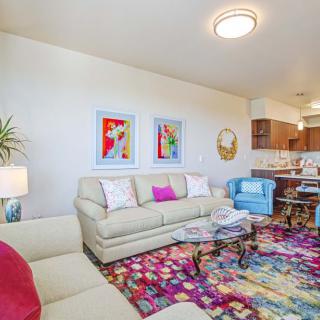
In the end, Tiffany Park stands out for those who value a compassionate, staff-driven approach that minimizes the stress of moving into assisted living. It is a compelling choice for families seeking a warm, welcoming environment where a dedicated team makes a tangible difference in daily life and early adaptation. For families whose priorities include extensive medical oversight, memory-care specialization, or cost structures that favor larger facilities, it remains prudent to explore alternatives and compare how those environments manage continuity of care over the long term. A purposeful visit will reveal whether the warmth and proactive care observed in the described experience translate into sustained satisfaction and reliability for a loved one’s evolving needs.
 Board and Care Home
 Memory Care
 Activities on-site
 Beautician on-site
 Devotional services on-site
 Indoor common areas
 Outdoor common areas
 Private
 Private bathrooms
 Respite or short term stays offered
 Wheelchair accessible showers
 Seattle-Tacoma International (6 miles away)
 Ambulatory care
 Diabetic care
 High acuity care
 Incontinence care
 Medication management
 Meals provided
 Comprehending Evening Confusion in Dementia: Causes, Manifestations, and Support
 Delirium and Dementia: Unraveling the Key Differences
 Are Dementia and Alzheimer's Disease Lethal? A Comprehensive Exploration