

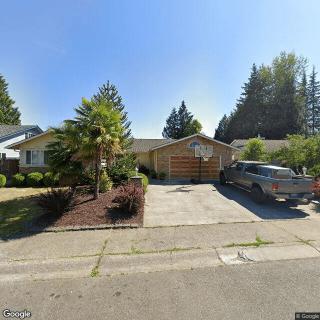
968 Peru Avenue East, Port Orchard, WA 98366
To contact a resident: (360) 871-9418
For more information about senior living options: (866) 208-4318
Willow Creek AFH 1 Costs & Pricing
Willow Creek AFH 1 offers competitive pricing for its accommodations in comparison to the broader Kitsap County and Washington state averages. For semi-private rooms, the monthly cost at Willow Creek is $3,600, which is notably lower than both the county average of $4,280 and the state average of $4,267. Private rooms and one-bedroom units are priced at $4,200, aligning closely with the county's private room rate of $4,406 but still below the state average of $4,772 for similar options. Overall, Willow Creek AFH 1 represents a compelling choice for those seeking affordable yet comfortable living arrangements in this region.
| Floor plans | Willow Creek AFH 1 | Kitsap County | Washington |
|---|---|---|---|
| Semi-Private | $3,600 | $4,280 | $4,272 |
| Private | $4,200 | $4,406 | $4,774 |
| 1 Bedroom | $4,200 | $4,453 | $4,634 |
Memory care communities with a similar price nearby
-
from -$225 / mo

Evergreen Manor Senior Care Inc
$3,375 to $7,500 / month22.1 miles away -
from -$600 / mo

Caring Adult Family Home #1
$3,000 / month23.7 miles away -
from +$400 / mo

Riverton Home Care
$4,000 to $5,000 / month14.5 miles away -
from -$600 / mo

Home Care in Kent Inc.
$3,000 to $3,500 / month20.6 miles away -
from +$400 / mo
Gentle Care Home
$4,000 to $5,500 / month22.3 miles away
Overall Review of Willow Creek AFH 1
Pros
 The home has great caregivers.
- The home has great food.
- The staff are kind and attentive.
- The food is very good.
- They provide excellent care.
- The facility is clean.
- The staff are friendly.
- They are satisfied with everything.
Cons
 Willow Creek is described as knowingly hiring a resident manager who was abusive to residents and staff for years.
- The state conducted an investigation based on these allegations and told Willow Creek to fire the abusive manager.
- After the manager supposedly agreed to leave, she reportedly returned to work at the house and remained there.
- The reviewer would never put someone they love into Willow Creek.
- The owner is claimed to care only about income and not work as a caregiver in any of her own homes.
- The reviewer urges others to look into the investigations on Willow Creek before considering the place.
Review
Willow Creek AFH 1 in Port Orchard is best suited for families seeking a small, home-like setting where daily caregiving feels personal, meals are solid, and staff appear consistently kind. The small-home atmosphere can deliver genuine warmth, with residents who respond well to attentive caregivers and a calm, domestic environment. For someone who values daily familiarity, predictable routines, and the comfort of a intimate living space over clinical polish, this community can feel like the right fit. The upside, friendly staff, good food, and a clean, well-kept home, matters to families prioritizing humane, everyday quality of life over elaborate programming.
That said, serious caveats demand attention. Prospective residents with paramount concerns about governance, safety, and accountability should consider alternatives. Two persistent artfacts in the public narrative center on a resident manager who was described as abusive and the fact that state investigators urged Willow Creek to remove that leadership. The negative reports imply that management oversight slipped for an extended period, which is not a trivial risk for families entrusting a loved one to care. If transparent leadership, rigorous safeguards, and demonstrable corrective action are nonnegotiable, a different option with a longer, cleaner record may be preferable.
The strongest positive signals, the staff’s kindness, attentiveness, and the quality of meals, do offer real counterweight to the concerns, but they do not fully neutralize them. Families that prize a warm, caregiver-connected experience will likely find this environment durable and reassuring on most days. Cleanliness and residential charm reinforce the sense of home, and when the wind is in the right direction, the daily care feels genuinely capable. Yet, the cloud of governance questions leaves a lingering doubt: can the care remain consistently excellent if leadership is unstable or if accountability mechanisms falter? The answer hinges on whether current ownership has enacted credible reforms and ongoing oversight.
For families weighing Willow Creek against alternatives, a disciplined due-diligence plan is essential. Visit unannounced, speak with several frontline caregivers, and request current staffing rosters and shift patterns to gauge continuity for the person who will be providing intimate daily care. Ask for recent state inspection reports, corrective action plans, and a frank discussion about any past investigations and their resolutions. Inquire whether leadership participates in regular quality checks and how concerns are escalated and tracked. This is not merely a tour; it is a verification of ongoing governance, a crucial complement to the firsthand impressions of warmth and cuisine.
Residents who require more structured clinical oversight or a facility with broader resources may want to steer toward larger licensed communities with published, routine inspections and stronger governance guarantees. If the fear is repeated staff mismanagement or a perception that owners prioritize income over resident welfare, Willow Creek demands rigorous, ongoing validation of leadership integrity. Families should consider whether they can maintain vigilant oversight without becoming second-on-site managers themselves. In short, the decision rests on whether the homey feel and personal caregiver attention can be sustained in the long term under scrutinized leadership.
Bottom line: Willow Creek AFH 1 offers a compelling, homelike living option with commendable daily care and robust meals, best suited for families willing to place faith in governance reform and proactive oversight. For those who cannot tolerate unresolved questions about management accountability or who require a facility with stronger, verifiable protections against staff misconduct, exploring alternatives is prudent. The choice hinges on balancing the genuine warmth and daily care against the weight of governance red flags and the confidence that leadership has, in fact, changed for the better.
 Board and Care Home
 Memory Care
 Cats allowed
 Dogs allowed
 Activities on-site
 Bath tubs
 Beautician on-site
 Devotional services on-site
 Indoor common areas
 Outdoor common areas
 Private
 Respite or short term stays offered
 Wheelchair accessible showers
 Seattle-Tacoma International (14 miles away)
 Ambulatory care
 Diabetic care
 High acuity care
 Incontinence care
 Medication management
 Meals provided
 Christian services








 A Holistic Dementia Care Guide: Effective Strategies for Memory Support
 Memory Care Pathways: A Holistic Guide to Dementia Support
 Comprehending Evening Confusion in Dementia: Causes, Manifestations, and Support