

2711 Mckinley Place SE, Port Orchard, WA 98366
To contact a resident: (360) 895-3153
For more information about senior living options: (866) 208-4318
Sacred Heart Adult Home Care Costs & Pricing
At Sacred Heart Adult Home Care, the monthly costs reflect a premium for the personalized services and supportive environment they provide. For a semi-private room, residents can expect to pay $5,000, which is notably higher than both the average cost in Kitsap County ($4,280) and across Washington State ($4,267). The private room option comes with an even steeper price tag of $6,500, surpassing local averages of $4,406 in Kitsap County and $4,772 statewide. While these figures may seem elevated compared to regional norms, they represent the quality of care and individualized attention that Sacred Heart Adult Home Care strives to deliver to its residents.
| Floor plans | Sacred Heart Adult Home Care | Kitsap County | Washington |
|---|---|---|---|
| Semi-Private | $5,000 | $4,280 | $4,272 |
| Private | $6,500 | $4,406 | $4,774 |
Senior living communities with a similar price nearby
-
from +$750 / mo

Fieldstone Rolling Bay and Fieldstone Memory Care
$5,750 to $8,895 / month11.1 miles away -
from +$500 / mo

Twin Lake Adult Family Home
$5,500 to $6,500 / month19.1 miles away -
About the same
Peace and Pleasant Care Adult Family Home II
$5,000 to $6,000 / month19.2 miles away -
from -$695 / mo

Penrose Harbor at Heron's Key
$4,305 to $7,332 / month13.0 miles away -
from +$500 / mo

3 Tree Vista Adult Family Home, LLC
$5,500 / month12.8 miles away
Overall Review of Sacred Heart Adult Home Care
Pros
 They were professional and compassionate.
- There were no problems with any recommendations they gave.
- Their needs were understood and they received valuable information to make a decision.
- The service would have been a good fit if it had met all their needs.
Cons
 They were not the best fit for the client's price, location, and availability.
- They would have been a good place if they had met all the client's needs.
Review
Sacred Heart Adult Home Care in Port Orchard is most suitable for families that want a clear, information-driven intake and a compassionate touch as they weigh senior-living options. The right match here is a senior who needs light to moderate daily assistance and whose decision will hinge on practical factors such as price, proximity, and current availability. This community shines for families that value candid guidance, a thorough explanation of what services are included, and a decision-support process that helps separate good fits from true bargains.
Those who should consider alternatives are the budget-sensitive or those with very specific location requirements. If the primary concern is the lowest possible price, an ultra-close location, or immediate admission with no wait, other options may deliver quicker alignment. The review hints that Sacred Heart may not always be the best fit when price or location imposes a hard constraint, or when vacancy timing is uncertain. In such cases, families should actively compare other facilities that can tick these boxes more reliably.
The strongest pros here are practical and client-centered. The intake experience is delivered with professionalism and genuine empathy, and staff are attuned to the family’s stated needs. This results in information that is not merely descriptive but actionable, enabling families to model costs, understand what care is included, and create a realistic plan for different care scenarios. In a decision-heavy process, having this level of clarity and reassurance is a meaningful asset that can reduce guesswork and paralysis.
However, the main cons cannot be ignored. The factors most likely to derail suitability are price, location, and availability. If Sacred Heart cannot meet budget expectations, or if the distance from family members or essential services proves impractical, or if vacancies don’t align with the onset of need, the facility’s advantages may be overshadowed. These constraints mean that even an excellent intake experience may fail to translate into a timely, affordable placement for some families.
In terms of how the positives balance the drawbacks, the honest, needs-focused guidance is a compelling offset, when the budget and logistics align. For families that can accommodate the cost structure, the local footprint, and a realistic placement timeline, Sacred Heart represents a sensible, supportive option that treats decision-making with respect and clarity. The facility’s honest conversation about what is feasible remains a valuable compass in a crowded market.
Practically, families evaluating Sacred Heart should approach with a concrete plan: request current pricing ranges and what is included, confirm the exact location and drive time, and obtain an up-to-date view of vacancy status and waitlists. Ask for a detailed tour and a sample care plan to see how daily living assistance would be structured. If a hold is possible, clarify terms and timelines. By pairing the clear intake strengths with a tight check on price, location, and availability, families can determine whether Sacred Heart will deliver the reliable fit they need or whether it’s prudent to pursue alternatives that better meet those non-negotiables.
 Board and Care Home
 Activities on-site
 Bath tubs
 Devotional services off-site
 Indoor common areas
 Outdoor common areas
 Private
 Respite or short term stays offered
 Seattle-Tacoma International (15 miles away)
 High acuity care
 Medication management
 Kosher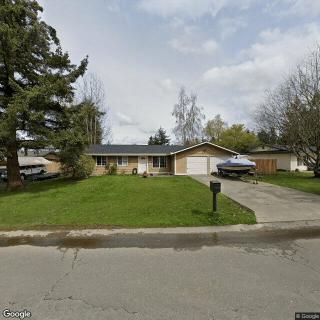




 Financing Long-Term Nursing Home Care Through Social Security: A Thorough Exploration
 Essential Knowledge on Pneumonia in Older Adults
 Exploring Palliative Care in the Home: A Comprehensive Overview